This is probably the most common question that any professional writer (or any writer really) gets asked. And the answer is usually the same: You read, you write. But beyond that there are some questions you need to answer for yourself.
The first, and most important, is why do you want to write? Most people don’t want to be writers. They want approval, recognition, money – all things that there are easier and better ways to get. Pretend, if you would, that your future self showed up on your doorstep tomorrow and told you that you’d never get published, your work would never be shared outside of whatever reading group you joined, and you would die in a house fire that would also consume all of your works, preventing any from being published posthumously. Would you still write?
If the answer to that is yes, then the next question you need to decide on is what type of writer do you want to be. There’s an attitude among those that make a living at writing that unless you’re drawing a paycheck then you aren’t a “real” writer. And they can’t be blamed for this. It’s a tough racket and you need to tell yourself something to feel good about it. But it’s also hogwash. Emily Dickinson didn’t make dime one off her writing and if you want to tell me she wasn’t a writer I’d say you deserve a slap in the face. Conversely, Stephen King is a writer and he’s got more money than Algeria.
So do you want to write for you? Or for someone else? The most successful writers ultimately write for themselves, but spend years writing for other people. Stan Lee spent decades writing what other people told him to write until he got so fed up he finally wrote one book the way he wanted and was stunned to find that it was an outrageous success. But he wouldn’t have been able to do that if he didn’t have the tools writing for other people had given him. Another writer I’m acquainted with spent years writing copy for a wood catalogue (wood, as in planks of) until he finally developed the skills he needed to successfully write his own stuff. Trust me, spending a few years figuring out how to make wood sound interesting will sharpen your pencil better than an MFA.
My only advice in this regard would be that if you want to make a living writing, never write for anyone else unless they are paying you. Otherwise, thank them for their time and go back to your copy editing job. Can’t find a job writing? Find a job that’s interesting (EMT, lawyer, teacher) and write about that.
If you want to write for yourself, your task is really no less difficult. Although, if you’re in this situation your either an insomniac or you’ve carved out a chunk of time every day to write, you’ll ultimately be beset by doubts that you are wasting your time. And that may be true. There are over 7 billion people on the planet, a good chunk of which want to be writers (or perhaps just creators). What makes your voice unique? What do you have to say that isn’t being by said by everyone else?
Even thinking about the enormity of that task makes me want to cry a little. You’ll spend years in solitary work trying to answer that question. When you find the answer, though, it will be no different than the monk who awakens from his daily meditation to realize he knows who he is. When you figure out who you are and how that informs your writing, validation from outside sources just doesn’t have the meaning or weight it once did.
So there’s the simple fact that what type of writer you want to be has a lot more dimensions to it than the type of financial success you want to achieve. So start with deciding what type of writer you want to be, which is about as complicated a question as deciding who you want to be as a person.
Select the play button above for an audio reading.
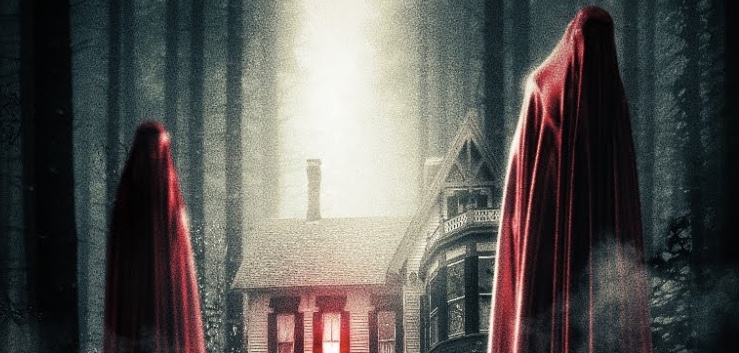
No one wanted the job, so we picked by lottery. Out there in the woods, we did it by choosing straws. Normally, the guards would choose, but when it came to the witch’s house, they stood aside. They were guards, not executioners.
Tommy got the short straw, so he was sent in. It was a bright, clear October day. The guards took him off the chain and he smiled, free and standing in sunshine for one moment. The door to the witch’s house was as dark as midnight, though, and he disappeared through the liminal space of the threshold.
We waited. We waited as long as we could. While we did, the guards ordered us to clear out underbrush, gathering wood for the night’s fire and to make sure a lightening strike didn’t burn down the house. There wasn’t another one for miles around and no one wanted the witch without a home. That would leave her walking through the forests, with no way to find her. Since the plague, we needed to know where she was, even if it was just to avoid her.
When the sun started to go down, the guards ordered us to gather up. No one protested. We carried our bundles of wood and shuffled back to camp, our chains clinking all the way.
No one ever saw Tommy again. That night, though, we found where the witch had lain the panacea by the fire. It was a good deal.
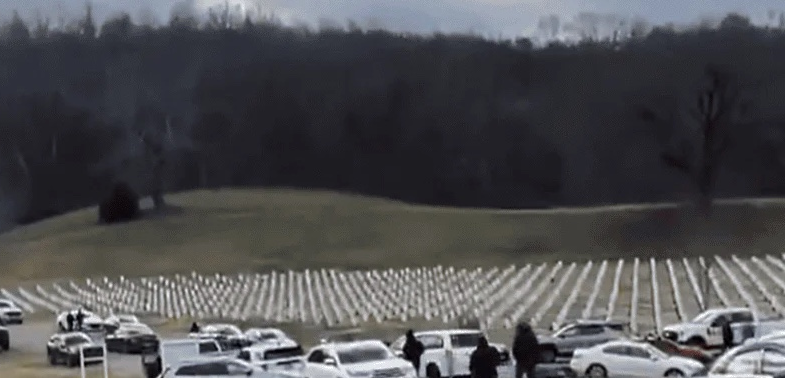
The town had indeed rolled out for the funeral. Even before they returned to the cemetery long lines of cars formed to impede their progress. Eventually, the plot that was their destination became clear by the headstone with its decorations, big and small, lolling up the green hill’s gentle elevation. Rafi did not often dwell on death, but admitted to himself that this was a lovely place if one wished to be interred.
As if Wayne’s death had its own gravity, the burial plot was surrounded by rings of people, all in somber dress. The road nearest the site was filled with cars, the closest being a long black hearse, with police cruisers in front and behind. The rest of the vehicles, Rafi noted, appeared to be of the huge variety Americans preferred.
McPherson requested he park far from the ceremony. There was little choice with all of the traffic, but Rafi was glad to park where his taxi would not be scratched or dented by careless drivers. As he put on the parking break, McPherson hopped out. She walked around to driver’s side and stared through the glass, prompting Rafi to roll down his window.
The analyst smiled and asked, “Well?”
“Indeed, I am well. I feel no need to get closer to the private business of this man’s death.”
McPherson leaned away from the car, making certain he had a view of the crowd and vehicles surrounding the funeral. “I’d hardly call it private.”
While the analyst had a point, Rafi also saw the many white faces that topped black clothes, a stark contrast without a gradient between them. He shook his head, “Urquhart has already demonstrated it is not welcoming to outsiders.”
“C’mon, Rafi. We won’t get too close. I need an extra set of eyes.”
“For what?”
“To see the things I don’t.” McPherson said this as if it were obvious.
“Very well,” Rafi conceded, stepping out of the car.
Fortunately, the analyst chose the top of a knoll under a poplar tree, far from the crowd. From under it, the pair had a clear view of the proceedings.
Curious, Rafi asked, “What will we learn from here?”
“Oh, c’mon Rafi. This is a classic moment. We’re strangers watching a funeral from afar, standing in the shade of a tree. Try to enjoy it.”
“Enjoy what?”
“The mystique, the mystery, being in the moment. Whatever you want to call it. Now shut up and watch.”
To Rafi, the crowd was largely one indistinguishable blob, an ouroboros of mourning that surrounded the casket. The only exception was a man standing in the center with the coffin and the hole it was soon to be placed in. Taller and thinner than most in the crowd, he also wore a stole of white, red and gold. All of this marked him as some kind of holy man. With a full head of gray hair, he had no need for a hat to protect his head from the spring sun, but raised both hands as he exhorted the large crowd. His voice was almost audible from where Rafi and the analyst stood.
“That must be Pastor Neumann,” McPherson said. To Rafi, as rough as it could be, McPherson’s voice always carried a somewhat musical nature, as if she were thinking of a song. Now, though, it was flat, toneless. Rafi decided he did not like this Pastor Neumann.
“Whelp,” McPherson’s voice returned to its normal legerity. “I don’t see anyone else skulking about. That’s disappointing.” For the first time, Rafi took his eyes from the crowd and looked across the cemetery’s open areas to find that the analyst was correct. They were the only ones at the event not participating. Why this was disappointing to McPherson, he couldn’t say.
The pair watched the funeral which proceeded in the way of most funerals; gathering sad faces, some weeping, some empty, words of promise from a holy man, the lowering of the casket, then an eventual dispersal of the crowd. What made this different than any other mourning ritual Rafi had witnessed was the presence of so many police, never to be trusted in any country he had traveled through. Even at their distance, Rafi felt he was gathering stares from these men. This was not strange to him. However, as the crowd began to separate and become individuals again, Rafi felt others stare as well.
While Randall Wayne was clearly important to the town, Rafi surmised he must have had no family in Urquhart. No grieving wife or children were a part of the receiving line. Only the pastor and the police chief shook hands and muttered words of commiseration to departing mourners. No surprise to Rafi, who had witnessed Randall’s charm.
When only a few mourners remained McPherson popped off the tree she was leaning against and began the long walk to the gravesite. Neumann murmured to each of the individuals as they passed him. One or two, he embraced. The policeman, though, had removed his sunglasses, so Rafi saw his angry glances at their approach. Rafi tried to keep his rising heart rate under control, feeling his hands dampen as they got closer.
With the last person off, McPherson closed the distance and Niall faced the pair. Rafi noted his glare was much more intimidating than the reflective shield of his glasses. The big man turned to McPherson and said, “What do you want?”
The pastor turned to them with his head of gray hair. For a man who appeared advanced in age, his shoulders filled out his black suit, making him nearly as imposing as the police chief. Not as tall as Niall, he still towered above McPherson and Rafi. Unlike his law enforcement counterpart, though, Neumann smiled widely, revealing straight, white teeth. “Now Chief, that’s not a very Christian attitude.”
“These two aren’t Christian,” Niall’s reply was immediate and certain.
“Well, we won’t change that by being rude.” The pastor extended his hand into the nebulous region between Rafi and McPherson. “I’m Pastor Charles Neumann.”
McPherson took his hand, Rafi grateful to have the decision removed from him. “Please to meetcha,” said the diminutive analyst. “I’m Aggie McPherson. This is my associate Rafi Mohan.”
Niall layered his next words with derision. “Spectral analyst. Goes after spooks and specters.”
Neumann chuckled, almost too loud for a cemetery, as he took back his hand. He indicated their surroundings with his eyes. “Well, you’ve come to the right place.”
McPherson returned the smile, which to Rafi’s surprise held some warmth. “You believe in ghosts, pastor?”
“I believe in the Holy Spirit,” he replied. “So I believe in the unseen.”
“I think that’s quite a bit more than the chief here.”
The Pastor sneaked a smirk at Niall. “I think you’ll find that many in Urquhart are haunted.”
McPherson perked up at this. “How so?”
“Aren’t all of us haunted by past deeds and mistakes?” Neumann swung his gaze between McPherson and Rafi. “I think you two might be familiar with that.”
“Don’t you know it,” McPherson replied without hesitation. “Most of the time it’s not places that are haunted, it’s people.”
Neumann nodded knowingly. “All too true. So what brings you to Urquhart?”
Niall growled, “Don’t waste time with these two.”
Fuzzy brows coming together, Neumann frowned at his comrade. “There’s no need to be rude, Niall.” The chief only grunted lowly as the pastor continued to McPherson, “So what can we do for you?”
“We’re visiting because Randall Wayne was fleeing a number of crimes when he died on his way to Urquhart.”
“What?” The holy man turned to Niall. “Did you know about this?”
“I know what they’re claiming. I checked this morning. There weren’t any warrants out for Wayne.”
Neumann leveled his gaze at Niall. Under the pastor’s penetrating stare, the police chief rolled his shoulders in his uniform. He added, “He may have been the person of interest in a number of high profile robberies.”
“And you didn’t tell me about this?”
Niall stood straight, eyes straight ahead. “I didn’t know. And being a person of interest doesn’t mean he was guilty of anything.”
“And who was he a person of interest to? The Feds, the X’Komish, the Slakterquay PD?” Rafi found his eyes going between the two men as Neumann spoke, wondering at a holy man’s casual knowledge of possible trouble-seekers.
“The Feds think the X’Komish and the woman they have in custody are responsible.”
“Oh,” McPherson dragged out the word. “That’s not true. There’s nothing that indicates that the X’Komish were responsible for the thefts.”
“They are sheltering a primary suspect,” Niall answered.
McPherson spoke to the pastor. “She’s in a reservation hospital because she’s dying of heavy metal poisoning. She’s X’Komish, so they’re trying to give her treatment rather than having her die in jail.”
Neumann shook his head. “I’m sorry, but I’m confused. What does this have to do with specters? Or our town?”
McPherson shrugged. “Hopefully nothing. But Wayne was a suspect in several thefts of a seemingly impossible nature, with very high payouts. When confronted with this information, he immediately headed here. He died when his car burst into flame on the highway.”
“Yes,” the pastor spoke the words as someone who saw the body. “I thought that was an accident.”
“Not likely,” McPherson went on. “Did you know Randall Wayne was a member of the Legion of Silver Shields?”
“Silver what?”
“Silver Shields. It’s a white supremacist group, headquartered near Slakterquay.” Rafi envied the analyst’s perfect pronunciation of the strange Norwegian word.
Neumann, though, brought his eyebrows together. “That’s unsettling. There are a number of our flock that have fled from Slakterquay to seek peace here.”
McPherson took off her big sunglasses so her violet eyes were clear to the pastor. “You’ve got a lot of former military out here.”
“We do. We’ve set up Iobairt to provide housing and help some of the more troubled veterans reintegrate into society.”
“Yeah, we saw the neighborhood earlier today. Spoke to Sergeant Coward.”
Neumann chuckled. “He of the unfortunate name.”
“All too true. Nice enough guy. Any former law enforcement living in Iobairt?”
Neumann pursed his lips, then, “No. All former military.”
“Really?” McPherson seemed surprised, not something Rafi was accustomed to seeing. “Because I did a little asking around before we headed this way. A lot of the people who moved in after the fire were former law enforcement. Mostly from Southern California, but from all over the country as well.”
“I suppose that’s true.”
“I thought you said there weren’t any former police living in Urquhart.”
“You asked if there were any living in Iobairt.”
“Quite right. But with housing prices being what they are, how do police afford it? The veterans have help, but with the merry band of Silicon Valley disruptors buying up homes during the pandemic, how would cops afford to live here?”
“It’s true the coastal elite have bought up a lot of real estate, but the fire caused home prices to crash,” answered Nuemann.
McPherson tilted her head, examining the pastor from a new angle. “That doesn’t make sense. Supply and demand would suggest the fewer houses there are, the more they would cost.”
“I don’t know much about economics, Ms. McPherson, but I’m not sure what you’re getting at.”
“Just McPherson. Or inspector. Take your pick.” The analyst grinned as she said this, as if offering the pastor his choice of fabulous prizes.
“And I understand not getting economics.” McPherson emphasized the second verb of her sentence. “But what I don’t get is how you don’t know about the Silver Shields when they’ve crossed paths with law enforcement many times. And a number of cops living here were asked to retire early after racial confrontations, excessive force, or dangerous behavior.”
“Now listen here – ” Niall attempted to interrupt McPherson but was cut off by the pastor.
“Well, now, it sounds like you know more about my flock than I do.” Rafi watched Neumann as his smile became rigid. “That’s embarrassing. But I still find it hard to believe that Randall Wayne was a member of this Silver Shields group.”
“Do you now? Well, I suppose that would be surprising to anyone. One of his buddies, Boswell Hull, got picked up with a van full of firearms near a church in Slakterquay.”
“That’s awful.” Neumann intoned solemnly.
“I read about that,” Niall added dismissively. “Someone phoned in a bomb threat. No one was hurt.”
Neumann raised his eyes slightly to the sky. “Thank Heaven for that.” He brought his gaze back to McPherson. “Well, inspector, you’ll pardon me, but my duties for today are not yet done.”
McPherson smiled and placed her large sunglasses back on her face. “Of course. Do you mind one more question?”
“Very well.”
“Do you know a man named Haddo Skull?”
At that, the pastor began a good laugh, but remembering he was in a graveyard, turned it into a cough into his hand. McPherson didn’t laugh, but watched him until he said, “Oh my, you’re serious. What a, uhm, unconventional name. No, I’ve never met anyone named Haddo Skull.”
Adjusting her dark glasses, McPherson watched the pastor. Then, “Well, thank you for your time.”
The pastor smiled. “On a dreary and sad day inspector, I can say that I appreciate your questions.” Next to him the police chief placed his own sunglasses onto his broad nose, reminding Rafi of a photo he had seen of MacArthur.
“Speaking of which,” McPherson added in the way Rafi had seen her do when she actually had many more questions, “for the new neighborhood, why did you pick the name Iobairt?”
The pastor’s face dropped into seriousness. “It came to me through divine revelation.”
“Really?”
“Yes. It speaks to the tree of life.”
McPherson paused, sunglasses seeming to vibrate with a minute electric current. “Actually, it doesn’t.”
At this contradiction, Neumann became as stone, his voice carrying a hint of the police chief’s obvious displeasure. “I believe it’s a kind of birch.”
“No, Iobairt is an old word, but I know it. It means sacrifice.”
McPherson let the word sink in, then smiled in a way that Neumann wasn’t anymore. “Well, we’ll let you get back to your duties.”
The pastor’s grin flickered briefly back to life. “Yes. Thank you.”
The analyst turned and walked briskly back in the direction of the taxi. Caught between forces, Rafi had to control an urge to flee back to his vehicle.
Select the play button above for an audio reading.
Fatima’s only reprieve from leadership was her gender. She was glad that she did not need to bear responsibility for heading the council. Her brother would, by right of his birth, would take it instead. She wanted nothing more than to ride free on the horses, find a man she loved, and bake bread for the children they would have together.
Until their father fell ill and her brother, Asadel, became regent in his place. In an eagerness Fatima never expected, her brother heaped trouble upon trouble onto the council he led. Disputes were settled in his friend’s favor, gifts were sent to flatter his growing ego, even basic duties such as overseeing the herd began to go untended.
When it became too much, she disappeared one night, only to return as Filaq, lost brother to the tribe. Her father recognized her, answering the council’s questions of her heritage with a nod. A wave of his hand indicated he wished Filaq to be his regent.
While Asadel seethed, Faliq was welcomed as a fair arbiter, a wise master of the herdsman, and one who lived as humbly as the rest. Perhaps most admired of all, was the time Faliq spent with his father, even though he could not speak and communicating with him could be as difficult as interpreting tea leaves.
In his anger and jealousy at being usurped, Asadel began to spy on the new regent, even going so far as to follow when they went to pass water. Seeing Filaq crouch in the bushes, he strode forward to confront the sibling he knew to be Fatima, seeking to reestablish his dominance.
Few knew what became of Asadel. Even fewer mourned him.
From his taxi, Rafi watched the exchange between his boss and the formally dressed policeman become more heated. After McPherson touched the big ruddy officer a second time, the cop tried to smack her hand away. Only a quick retraction of the offending member prevented physical contact, causing Rafi to sigh with relief. The last thing he wanted was to have to bail McPherson out of jail in this gora town.
As quickly as she had walked to the burial site, the inspector zipped back to the car. Sliding into the backseat, she abruptly announced, “Well, I figured out what Wayne was doing with all that money he stole.”
“What?” Rafi looked at his boss through the rearview mirror. “How did you determine this?”
“This here town’s sheriff told me,” McPherson said in a cowboy sing-song.
“He admitted to you he was an accomplice in grand larceny?”
McPherson peered over the edges of her sunglasses, violet eyes meeting Rafi’s in the mirror. He opted not to point out he was being sarcastic to let her reply, “No. Wayne’s been been ‘contributing’ to the community. It sounds like he’s been contributing in some very expensive ways.” In what felt like one of McPherson’s non-sequiturs that almost every conversation with her involved, she asked, “Mind looking something up for me?”
Rafi had stopped asking why McPherson didn’t get a smartphone a long time ago. He got his out, checked his data reception, then said, “Certainly.”
“Do a quick search on fires in Urquhart, particularly around a place called Iobairt. Would have happened in the last few years.”
Rafi duly tapped in the words as he heard them (Ee Uh Birch fire) and reported to the inspector he found nothing. McPherson gently corrected him to the improbable spelling of Iobairt. With a few corresponding details, Rafi found several results. “Iobairt is a neighborhood in Urquhart. It was once named Shangri-La, but that burned down two years ago and was rebuilt as Iobairt.” He read on, adding, “A fitting name for a residential community in a place with such a strange name as Urquhart.”
“Yes. Urquhart and Iobairt are from the same root language.”
Rafi nodded, pretending to understand. “The wildfire was in 2024. It says that the fire nearly consumed all of Urquhart. Arson was suspected.”
“Dry seasons are getting drier,” McPherson remarked dryly. “Sometimes I think the human race has parked its car on the railroad tracks and doesn’t believe in trains.”
“We are all mad dogs and Englishman,” Rafi agreed, then returned to the article. “There was a homeless encampment outside of town and many think it started there. But the transients living there made into the wind, so none were apprehended. Few were hurt, but it cost the insurance companies very much money.” Rafi didn’t think he was an analyst, but he had been around McPherson long enough that this sounded suspicious.
“Why was it so expensive for the insurers?”
Rafi held up his mobile. “Do you wish to borrow my phone?”
McPherson replied with a definite, “No.”
Rafi shook his head and returned to the screen. “Ah,” he said, gleaning enough information before finishing the article. “Apparently many of the wealthy from out of state bought homes in Urquhart during the pandemic. As a result, home prices greatly increased.”
“I bet it also screwed anyone renting or with an adjustable rate mortgage.”
Rafi shrugged, shoulders nearly touching his cap. “So that is what happened.”
McPherson slid her wrist out of her coat sleeve to look at her very shiny and gem-studded watch. “The funeral still isn’t for a few hours. Let’s go check it out.” Despite an increasing sense of apprehension, Rafi tapped in the address and clipped his phone onto the dashboard to follow the route.
As a taxi driver, Rafi had done most of his work in Slakterquay, a town that had grown from a fur trading outpost to the Paris of the Pacific Northwest in less than two centuries. Like most things that grew, it didn’t unfold so much as sprawl, each piece being added by another generation that cared little for the plans of the previous one. Unlike Seattle or San Francisco, it had never been razed by fire. It was a bramble of thoroughfares, roads, byways and highways, snaking between the old cobblestones of Harborside to the shining high-rises of the Trade District, crawling all along the Astra River.
The Urquhart community of Iobairt was the opposite. Its roads were paved perfectly flat, their white curbs all a regulation height, demarcated at unwavering lengths. Each house was a single family unit, something that was strange enough to Rafi. (How does one waste such space with one family? Three, four generations of a family certainly. But one? Ridiculous.) The homes were set close together and as identical as the roads. Garages connected to a small two-story homes with one front door, the facade painted a tan kind of yellow with shutters and gutters a highlighting white, the same color as the fence surrounding each backyard.
The road that split around the Iobairt sign quickly rejoined at a T-intersection. Rafi looked both ways to see nothing but a repetition of this in either direction, tessellating out into an endless suburb. Despite Urquhart’s cool morning, Rafi felt his hands sweat against the wheel. Where was everyone?
McPherson only sat in the back of the taxi hiding behind her Bollywood sunglasses. “Go right?” she requested. This was a good a decision as any, so Rafi turned right. He was unsure if it was the homes’ identical appearance or because the neighborhood’s nature made it feel as if children could come running out into the road at any moment, but he went very slowly.
The neighborhood appeared to be circular in nature, internal branches going inward to cul-de-sacs and roundabouts, but little else broke the pattern of perfect pavement, white curbs, and identical homes. It was only a few minutes of this before McPherson said, “Stop here, please.”
The taxi obeyed Rafi as it always did and slowed to a stop. He looked into the rearview mirror again to see McPherson scanning the area. Whatever was different about this spot, if anything, he had no idea, but he did not wish to linger. The hope that this might not be the case was dashed when McPherson announced, “I’ll be right back.”
The door popped open with the sound of a vacuum seal and McPherson stepped out before Rafi could say anything. Much to his confusion, though, she didn’t go anywhere. She walked the long way around the car like a runway model, swinging out the tails of her Tuscany coat, flared open to show her white dress shirt and purple pants. Rafi had never seen anyone sashay before, but he was pretty sure McPherson was doing it then.
Then she did nothing. Even with the ankle boots Rafi knew she was wearing, McPherson’s black-bobbed head barely cleared the top of the car, leaving her to observe the neighborhood through dark glasses. He was unsure why she hadn’t simply exited the passenger door she was now leaning against, but it left him with a wide view of the placid neighborhood.
Rafi sighed, knowing this could mean they might be there for a time, and so reached into his glove box for his copy of Emma. He maintained a correspondence book club with his sister and this was a good as an opportunity as any to catch up on the chapters they were to discuss.
He was interrupted by a terrible and unfortunate cry from one of the houses. He silently cursed the predictability of some Americans when he heard, “Hey hajji, what the fuck are you doing here?”
Hearing those words, Rafi breathed deep, calming himself with a quiet prayer. While hajji might be an honorific amongst his countrymen, he knew it often wasn’t with the gora of his new homeland.
Looking up from the glove box, he saw a man stride down the driveway from one of the homes, beard moving around his wide mouth as if he were the specter of some angry muhtasib. However, none of Rafi’s past teachers were muscular men with tree trunk arms covered in tattoos, carrying a long rifle. He felt his throat go dry and his tongue become thick in his mouth.
To his horror, McPherson stepped between him and the bearded man, interposing herself directly in the path of danger and possible bullets. “Holdfast squire!” Rafi could see McPherson’s hands splayed out, standing in front of the man as she yelled.
Whoever this man with the painted arms was, he stopped at McPherson’s interposition. “What the fuck did you just say?”
“I don’t know where you think you are,” McPherson returned his shouts in a calm tone, “but you are in the United States of America.” Without turning from the giant bearded man, the analyst pointed back towards Rafi. “And we are your countrymen. We are unarmed.”
The man stopped, lowering the rifle as if the morning sun chased away whatever was clouding his mind. He blinked, then looked around him, the tan homes and repeating drives coming into focus. He returned his brown eyes to McPherson and asked, “What are you doing here?”
McPherson slowly lowered her arms, keeping her hands out of her pockets. “We’re driving around Urquhart’s newest neighborhood. Nothing worth being shot over.”
The man looked down at the rifle as if it had just appeared in his arms. “I, uh, I’m sorry.”
“That’s OK,” McPherson responded gently. “Where did you serve, Ranger?”
The man stuttered, “How did you – “
“The tattoo on your right arm is common among veterans from the 75th. There may be a lot of losers desperate for stolen glory, but I haven’t met one yet stupid enough to get tattooed for it.” McPherson stepped towards the man, making Rafi’s heart race even as he very slowly moved his hands away from his glovebox. “Plus, not a lot of homicidal shooters care about trigger discipline. And the safety’s still on. You know how to carry your rifle.”
The bearded man actually laughed and Rafi released his first long breath since the man appeared. Almost bashfully, once he ceased laughing, the painted man answered, “Iraq and Syria.”
“Tough crowd,” McPherson answered, then extended her hand, her fingernails monochromatic against the many colors of the man’s arms. “I’m Aggie McPherson.”
The man ably moved his rifle aside to take McPherson’s hand, “Bryan Coward.”
McPherson didn’t laugh, but Rafi could hear the smile in her voice as she responded, “I’ll wager that name got you some shit while you were in.”
“Yeah,” the bearded man gave a soft, pensive laugh. “It did.”
McPherson took her hand back from Coward. “So what’s this all about?”
Bryan of the unfortunate surname, but fortunately not a murderous maniac, became red in the face as before. However, as he bowed his head it became clear the crimson on his cheeks came from embarrassment, not anger. “I, uh, I saw you stop and your friend driving and it…”
“Oh,” McPherson snapped her fingers, “that reminds me.” She turned to bang on the top of the taxi. “Rafi why don’t you get out and say hello?”
Rafi took off his cap and slipped out of the driver-side door, keeping the car between him and the others. He offered a small wave and a, “Hullo.”
Despite his beard and muscles this Bryan responded so bashfully it was almost like a child. “Hi. Sir. Sorry about the scare.”
Rafi could see that whatever haunted this Bryan Coward had passed. He had known such men throughout his life, but few were capable of putting aside their animosity for those they had fought.
Rafi walked around the car to stand next to the analyst. To Bryan he said, “People who looked like me once tried to kill you, perhaps even almost succeeded. You once killed people who looked like me. Such things are difficult to overcome.”
The spiderweb of wrinkles around Coward’s eyes softened and his head dipped. “Yeah.”
Rafi realized that somewhere in this panic McPherson had removed her sunglasses and looking around. “You all alone out here, Bryan?”
“Uh, yeah.” He rubbed the back of his neck, looking even more abashed, if such a thing were possible. “My wife took our little girl to visit family in Spokane.”
Rafi sensed the loneliness in this man and knew how loneliness could become fear. Perhaps that was the reason he had been at his window with a rifle. However, rather than speak to that, his boss asked, “No, I mean, in this neighborhood.”
“Oh,” Bryan perked up at this, eyes moving up and down the street, grateful for the change of subject. “Yeah. Well, I mean, not completely, there are a few families that have moved in, but not many.” He slung the rifle as if this could hide it. “I shouldn’t even really have the rifle. Iobairt is going to be a community for veterans that are…”
He trailed off again, so McPherson finished diplomatically, “Having trouble?”
“Yeah. You know. Reintegrating.”
“Making transitions like that can be extremely difficult.” At McPherson’s words, Rafi snuck a sidewise glance at his boss. She still smiled, but it had become rigid, as if tasting her own bitter experience.
Bryan stood straighter. “Yeah. I’m one of the able-bodied, so I help out with physical therapy, mow lawns. Gives me something to do until I find a new vocation.” The last words came out as if from a brochure.
The corners of McPherson’s mouth went down as if she had heard a joke she didn’t understand. “Urquhart doesn’t strike me as a hotbed of economic activity.”
“Well, Pastor Neumann says its more important to get right with God before worrying about the next step.”
In what Rafi recognized as a carefully neutral tone, McPherson replied, “Does he?”
Watching Bryan was like watching a man wake up from a dream over and over again. “You don’t know Pastor Neumann?”
“Never met him.”
“Oh. Then how did you learn about Iobairt?”
“We’re in town for a funeral.” Even without her sunglasses on, McPherson’s face was a mask.
“Shit. Sorry, I mean, I’m sorry to hear that.”
“It’s for Randall Wayne. You don’t know him?”
Bryan shook his head, snotted heavily through his nose and spit on the grass. “Never heard of him.”
“Huh,” was McPherson’s non-committal reply. “That’s interesting. I thought he had something to do with,” McPherson waved her dainty hand at the neighborhood, “all of this.”
“Naw,” Bryan shook his head. “I mean, I think there’s a couple of NGOs involved, but Iobairt is all Neumann and Urquhart.”
“Well, the sheriff knows him.”
“You mean Police Chief Urquhart?”
“Yep.”
“Well, I guess your friend must be important then.”
“Who?”
“The one who died?”
“Oh,” Rafi thought McPherson’s mischievous grin was wholly inappropriate. “Randall Wayne wasn’t a friend.”
“Family?” a confused Coward guessed.
“Oh, thank all the stars and sun, no.”
“Then why are you here for his funeral?”
“He was murdered,” McPherson replied so matter of factly that Rafi was glad he he didn’t have a mouthful of tea. “He was traveling to Urquhart when his car burst into flames on the highway. Now his funeral is being held here, so I thought we’d look around.”
Coward became so rigid that an invisible sergeant might have called him to attention. “You think someone in Urquhart killed him?”
“I think someone in Urquhart knows what’s going on.” McPherson made a show of looking up and down the empty streets of Iobairt. “Although not around here.” She snapped her eyes back to Coward. “Would you mind if I looked around? I don’t want to go peeking in anyone’s windows, but I heard there was a fire here a few years ago. I’m fascinated by old forest regrowth and it looks like there’s plenty just beyond the houses.”
“Oh, uhm,” Coward glanced from side-to-side. When he found no one else to answer he said, “I guess, sure.”
“Don’t worry,” McPherson winked at him. “I won’t go jumping any fences.” She turned to Rafi, “Why don’t you drive around? Get the lay of the land? This place corkscrews around itself.”
To cover his relief at not being asked to stay Rafi asked the painted man, “Would you mind if I see the sights of your beautiful neighborhood?”
Coward’s initial fierceness was now supplanted with a knotting of his eyebrows that was almost comical in its confusion. “The street layout is a little weird. Neumann says it’s to help our orientation. But…” He shrugged. “It’s a free country.”
“Idn’t it, though?” McPherson replied with a bright smile that diverged into a question. “You mind if I bum a smoke?”
Rafi had given up tobacco years ago, mostly because he could not afford it when he arrived in the United States. However, he realized he could detect the faint smell of cigarettes coming from the painted man. Even after several years the odor produced a faint compulsion to ask for one himself. He chose not to – Delilah would smell it on him later even after hours of driving back to Slakterquay.
The former soldier patted his chest with a, “Sure,” and produced a roll of tobacco that he handed by its filter to McPherson. This prompted Rafi to say, “There is no smoking in the taxi.”
The analyst only chuckled as if they were already at the funeral and someone had made a very dark joke. “I would never dare,” she said as she vanished the cigarette into a pocket of her coat.
Having taken it, she returned to the painted man, who Rafi could still not refer to as Coward, and said happily, “It was nice to meet you, Bryan.” She shook his hand once more before saying, “I hope we don’t meet again.”
With those words McPherson walked off towards borderland between the houses, leaving a perplexed and socially uncomfortable Rafi. The shifting of the American next to him told Rafi that he felt much the same. He confirmed this by saying, “That’s a strange…fare you’ve got there.”
“Indeed. I am unsure of what they are. I have worked with the analyst for some time now and I often do not know what is happening.”
“I thought you drove a cab?”
“Yes, but increasingly of late I find that I only drive for McPherson.”
“Well,” Bryan concluded, “good luck.” Much to Rafi’s relief, the soldier headed back into his home. As he got back into his cab, he had a strong suspicion the other man continued to watch them.
Rafi was pleased, though, that his drive around the neighborhood was not interrupted again despite his slow speed. However, after completing a circuit of the roads that encircled Iobairt, he found himself confused as he turned into its interior. The roads within were a strange mixture of straight lines, dead ends, roundabouts and very oddly shaped cul-de-sacs that made him glad his phone tracked his route.
Eventually, satisfied that he had driven about the entire neighborhood, he returned to the spot on which he had left the analyst. When she was not there, he verified that he was at the same address. With all of the turning about and he did not wish to leave her waiting in his confusion.
Certain he was in the same place, Rafi waited a bit longer until his concern outweighed the self-preservation that years of emigration had bred into him. While the tattooed man made him fear for himself, it also betrayed Urquhart as no welcoming place for strangers. While much of his income now came from McPherson, he had also come to care for the strange person.
Rafi parked his taxi parallel to a white curb that stood out starkly in the growing morning sun. With a great sigh of regret, Rafi stepped out, locking the doors behind him as he followed the analyst’s path. As he walked between two of the houses, he controlled the dread that weighed upon him, feeling the houses’ empty windows watching him as he trespassed.
Fortunately, Rafi did not have to travel far. Beyond the fenced in backyards of Iobairt there was only new forest, the ground still bare in spots, shrubs spotted amongst growing fir trees. Standing not far from one, barely taller than the tree itself, McPherson stood facing it, looking down as if it were a child that she were patiently conversing with.
By the time Rafi was close enough to hear that McPherson was actually speaking to it, she went silent. Putting both of her hands back in her pockets, McPherson walked the yards to him before stopping before his inquisitive gaze. She gave an enigmatic smile. “Time for us to get to the funeral.”
“What have you been doing?” Rafi found that he was angry that the analyst had made him come out and search for her, possibly putting both of them in danger, and for what appeared to be no reason.
“I was looking for signs of arson.”
Rafi pointed to the base of the tree McPherson had been standing at. “By tossing cigarettes at trees?” The white paper fluttered, caught between ground needles, its brown, leafy contents spread into the wind.
“You’re a lot more observant than you used to be, Rafi.” McPherson smiled in a way that might have made Rafi proud were he not angry.
“That does not answer my question.”
The inspector’s violet eyes became lidded as something of a cloud passed over her usually playful face. “I was conducting an experiment.”
“Were you successful?”
McPherson did something that was unusual for her. She appeared to be sad. “No.” Without further explanation she began to head back to the road where the taxi waited.
Still upset by his boss’s choice, on the walk back he asked, “Why were you rude to that man? He was already most upset.”
McPherson quirked her mouth up, slim eyebrows coming together. “What do you mean? I wasn’t rude.”
“You told him you hoped we would never meet him again.” Rafi waved his arms at the obviousness discourtesy of this. “Why would you say such a thing?”
Both fell into silence as they crossed between houses with McPherson only answering after they were back on the street. “Because something bad is happening here and I hope he’s not involved.”
“Oh,” Rafi replied as he unlocked the car, understanding the motive now but thinking her words still rude. He was attempting to translate this into speech when McPherson pointed at the smartphone he had clipped to his dashboard.
“What’s that?”
“It is a mobile phone. One of the many things you refuse to possess such as a car and good manners,” Rafi replied.
McPherson leaned forward, nearly bringing her small frame into the front seat. “No, what’s that on the display?” She pointed to the corkscrew of a map that the roads of Iobairt had highlighted onto Rafi’s phone.
“It is a map of the neighborhood. While you were talking to trees I did as you as requested and drove the entirety of this place.” If McPherson hadn’t detected it until now Rafi made clear, “And now I would like to leave, even if it is to go to a funeral.” He reached up to reset the destination to the Urquhart cemetery.
Before he could, though, McPherson slapped his hand away with a surprising fierceness. While he rubbed his hand in a demonstration of her continued rudeness, McPherson inched forward more, examining the device. “That’s not a map,” she concluded, looking at the circle with the twisting geometry of its interior. “That’s a sigil.”
“A what?”
The analyst’s brows came together in concentration, making Rafi feel very far away as she stared hard at the map. “It’s a symbol. It’s a representation of a desire or deity. Sometimes they’re used in occult rituals. Or to cover something.”
Rafi lightly swatted at his boss, causing her to retreat into the backseat. “Then it is failing at its task. Ee Uh Birch is plainly obvious to everyone.”
Falling back into the seat, McPherson fussed with her jacket and sunglasses, straightening both. “Iobairt.”
Rafi watched her through the rearview mirror to make sure McPherson was not about to launch a new assault into his territory. “That is what I said.”
“No, it’s pronounced,” McPherson stopped and heaved what Rafi regarded as a rather childish sigh. “Never mind. Can you save that image?”
“Of course I may save the image. I am not some traditionalist who refuses technology.”
“Good. Please,” McPherson emphasized the function word, “save it and print it out for me. I’d like to take a closer look at it later.”
“So now I am your tech support as well?”
McPherson battered her eyelashes, something Rafi always found unsettling. “Pretty please?”
Rafi sighed, starting the car. “We shall see if Urquhart has a library after the funeral. Or if it too is hidden.”
Select the play button above for an audio reading.
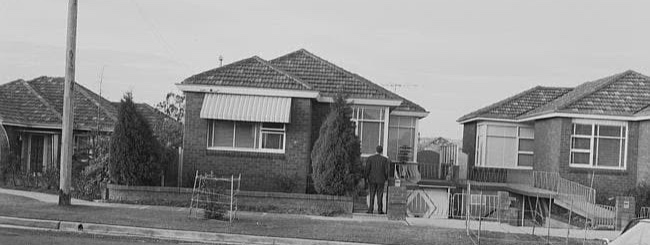
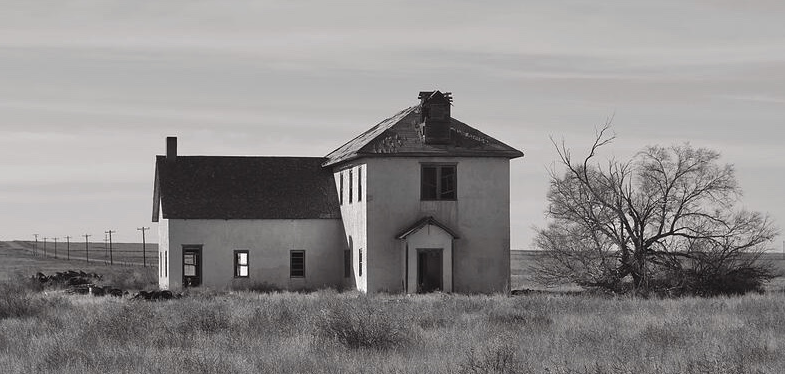
We decided to explore the derelict house. With its lone presence on the prairie right across from our suburb, how could we not, with its crooked shingles, shattered windows, and missing doors?
We were boys, even those of us that weren’t, growing up in the cold, straight world of men. Don’t cry, don’t run indoors, don’t be loud, don’t cuss, sit still in school, sit still in church, don’t talk back, do as you’re told.
There, though, across the highway we were told never to cross, sat something unowned, uninhabited, and unexplored. Something no adult had ever spoken of, but surely would not want us to touch.
We crept inside like burglars, as if some parental ghost of authority inhabited even this place, watching us. We moved from room to room, making sure each one was dead, finding only the remains of whatever the family that fled had left behind. When Eric broke the ancient headboard, it sounded through the house like the crack of a rifle, and everyone froze.
Nothing happened. There were no consequences. Then the laughter started and became a rampage. We broke everything in that house that hadn’t already been broken.
Hours later, dirty, dusty, covered in the scratches of our rebellion, glass in our hair, we rode our bikes home through clouds of spent mania.
We never went back. We knew we had taken everything from that place that it could give.