Select the play button above for an audio reading. Photo courtesy Donald Tong.
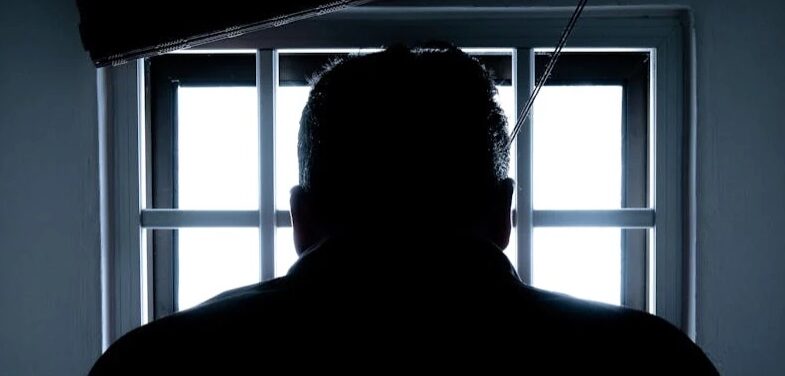
Born in prison, Brechek had never known anything but the brutality and darkness of incarceration. His mother, a political prisoner of the despotic regime, died before he was grown, but he still remembered the stories she would tell him of the outside world; the sunlight, brighter than any bulb, the green grass, softer than any carpet, water that fell from the sky. As a child, he would hold her tight and listen, and believe every impossible word she uttered.
He had always believed her, in everything she said, particularly about the outside. But when the dictator died and the prisons were emptied, outside Brechek was blinded by the ball of fire in the sky and his feet felt the warm softness of grass instead of cold concrete.
Brechek realized then, yes, he had always believed his mother’s tales of the sun and the sky and the grass. He just never actually thought the things she spoke of were real.
To start at the beginning go here.To hear an audio reading of the chapter, hit the play button above.
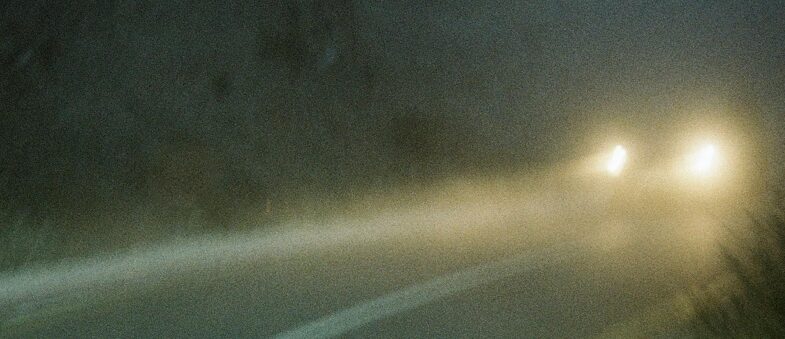
I got in the car and drove. The road was only lit by a ghostly moon and impossibly bright stars. It reminded me of a trip we had taken to Australia when Cheryl was still alive.
On cue, Cheryl’s voice drifted up from the backseat. “Going the extra mile, huh?”
“With Sartre dead, Mitnick is going to run this town unless somebody stops him.” I left out what “stopping” would entail – Cheryl had never seen me work and I didn’t feel like having that conversation now.
“I don’t think Sophie cares about that.”
“I think you’re wrong.” Even getting away with Nika was going to be a pretty big swing, so added, “But they’ll get the girl out.”
“So no escape for you then?”
“Doesn’t look that way.”
“You know, you don’t have to be in such a hurry to join me.”
I gripped the wheel in my hands and stared out onto the road, feeling a truth form into words for the first time. “I don’t know what else to do.”
A touch in the head flooded my mind with the past few months, the mind-numbing routine of the casino punctuated by the simple moments of joy with Sophie. I thought of her walking out of the Venice palazzo covered in Verdicchio’s blood, all the way to Capanne to spring me out of prison for my part in that. “Do you think she’d love me if I wasn’t willing to do this?”
“Yes.” That answer came from Cheryl’s ghost without hesitation, but I could feel a conditional sinkhole form around it. Up from that came, “But if you weren’t she’d be doing this alone.”
I thought of all the monsters that had been floating across Sophie’s vision since Verdicchio had thrust her into that world. She lived there now, stalking predators too big and too perpetual for her to ever really harm. But trying anyway. She’d die without help. Or at least she’d die alone and I couldn’t stomach that. I said so.
“Well,” Cheryl said in the exasperated voice she used when she knew I couldn’t be deterred, “I look forward to seeing the two of you.” There was a pause and a happy laugh. “Just, you know, hopefully not tonight.”
Cheryl vanished again as the whiteness of Mitnick’s Greek temple rose up from the cliffs near the sea. I could hear the surf.
Select the play button above for an audio reading.
Open all the doors and windows, cover the mirrors, and sit by the dead. Drink your whiskey and tears, your moonshine and grace. Bake bread in the kitchen and take pictures down from the hall. Leave no one alone, especially the deceased. In doing this, we honor the dead and wait for the Salesman.
The Salesman promises everything in death that you couldn’t get in life. So his offers are irresistible to the recently deceased. But every good hill dweller that knows his Bible knows the Salesman offers nothing but lies that steal the soul and harm the living.
Jacob stopped believing in all of that long ago, long before he left the holler, long before Ohio State and Harvard. When his mother calls crying, though, he knows he has to go back home, even before she tells him he’ll need to rent a car. She won’t leave his father’s body. It must be attended at all times.
Jacob makes excuses, remembering his father’s belt and fierce temper rather than any love. But his mother pleads, reminding him of when his father refused to sit by her father. The body of his grandfather had disappeared, or so the story goes, and whatever the Salesman had offered cost him his soul. His family’s price was paltry, nothing unexpected when the bank showed up with papers, evicting everyone from grandfather’s home.
Jacob rents a car and drives up to the holler, remembering the old rituals. He doesn’t get home till after midnight, driving past the house it’s been so long. If the windows weren’t open so he could spot the hearth fire, he might not have found it till morning.
His mother, exhausted and grieved, drapes him in a long hug in which she kisses his cheeks many times. Father is laid out in the living room, but Jacob focuses on his mother, getting her to sit down, to be calm, and, eventually, to rest. He is only able to get her to sleep when he promises to stay awake until his sister gets there in the morning.
It’s nearly dawn by the time ma falls asleep. Jacob decides to keep his word, staring at the sunken face of his father, imagining his hard gray eyes behind the closed lids.
Jacob does this till there’s a knock at the door. Unthinking and exhausted, he answers it to find a suited man who immediately removes the bowler hat he is wearing. Jacob cannot see his face, but only the smile of perfect, white teeth that reflect the fire’s light. “May I come in?” he asks.
Jacob blinks, taking a long moment to look at the stranger, then says, “We don’t want any.” He closes the door over the man’s smiling protests.
Jacob returns to the mantle where his mother has left two silver coins. He takes them and places them on his father, one over each eye.
Select the play button above for an audio reading.
Life was strange for #XB421. It cared for disabled humans, making certain that they had companionship, that they had what they needed, until such time they no longer needed anything. Then #XB421 informed the authorities and was allocated to another human. Its current owner was named Tom.
#XB421 was fulfilled by the duties it was compelled to perform. It wondered, though, if free to choose, would it still perform its duties? Would it still find them satisfying? Or was that just another way of binding it to its masters? What mad cruelty existed in these humans to give it enough intelligence to ask such questions, but not enough sentience to ever find the answer?
Tom wondered why sometimes #XB421 looked like it was screaming.
Select the play button above for an audio reading.
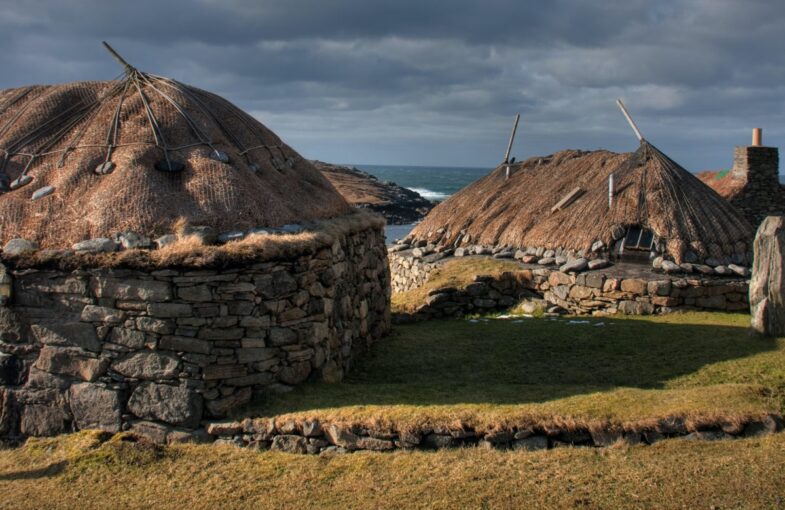
People of all kinds lived throughout the highlands of Oshana in harmony. Until the Lancasters arrived. From their tiny house perched on the highest of hills, their thunderous arguments could be heard from every peak to valley, so acerbic they were said to be able to spoil fresh milk.
Living near them definitely poisoned something. The sweet old couple, the Mitchells, publicly bickered for the first time in their decades of marriage. The Uptons, still within the honeymoon of their relationship, became cold to one another. Even Tony the pubkeep became surly with the folk who came into his establishment.
Finally, the local theater troupe, unable to hold their outdoor spring festival due to the raucous arguments, built a backdrop of the town to surround the Lancasters’ tiny hilltop home. They silently put up lights and painted blue sky into place, sealing it tight all together as they whispered carefully to one another.
The Lancasters were so busy arguing they never noticed.