Select the play button above for an audio reading. Photo courtesy of TJ Barnwell.
Jardin scoffed at the priests that told the people the stars were gods. They were just lights that moved, no different than a lamplighter walking through town, albeit at a much slower pace.
It brought her no joy to disagree with such dedicated and fervent men. But they insisted everyone in the village believe as they did, and to sacrifice burnt offerings. To Jardin, the question was, why waste animals in sacrifice to things that would never listen?
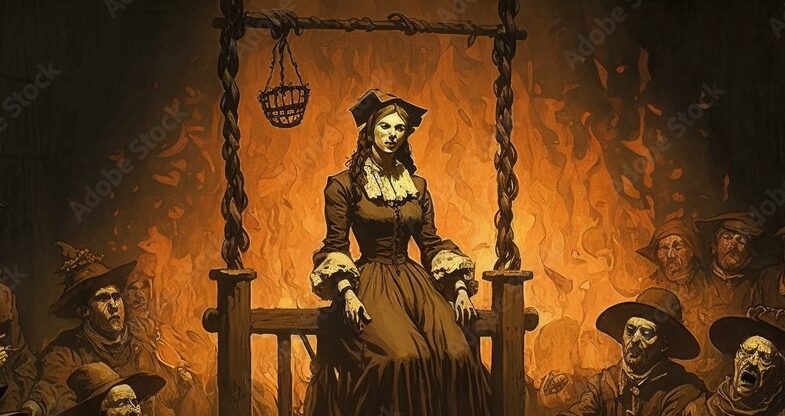
This was the argument she screamed as they tied her to the stake, placing bundles of wood around her while the villagers cheered them on.
Select the play button above for an audio reading. To see all cases, go here.
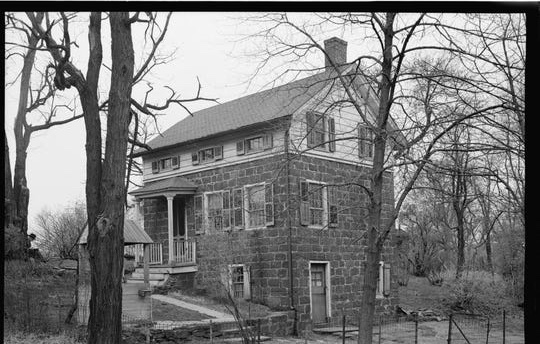
Opening the door, McPherson poked her head out into the subterranean depths under Naugle’s house. The hallway was empty. Korbin followed to see it was made of the same perfectly fitted but asymmetrical stone as the house’s foyer, stretching out in either direction, disappearing into darkness after a few yards pace. McPherson stepped out and instantly stopped, shoulders bunching up to her ears.
“McPherson?” Korbin asked.
The inspector raised her shoe, a thin translucent slime stretching between it and the floor. “Ugh. There go a perfectly good pair of Hermes.” She examined the sole then, “At least we know that whatever passed this way wasn’t our imaginations.”
“That’s good?” Oliver squeaked from behind.
“Yes,” Aggie answered, picked a direction and marched. Whatever ooze stuck to the floor made small suction sounds with every footstep, so she abandoned any attachment to her shoes or stealth.
Looking up and down the hallway, Korbin noted his door was the only one in the subterranean lair. “It must have been easy to find me,” he noted.
“Well, the house wanted you found,” McPherson shrugged.
“That’s not a comforting notion,” Korbin replied, stopping only a second later as he felt the same rumbling sound from before behind them, causing everyone to look over their shoulder.
“Then you probably don’t want to know what’s behind us.” As McPherson spoke, the door to Korbin’s room had disappeared beyond a veil of darkness as the torches dimmed where they had once been.
“Maybe we should move faster?” Oliver’s words were practically in Korbin’s ear, the other man so close he could have been wearing him for a backpack.
Moving faster proved difficult and somewhat purposeless until the hallway finally broke into an intersection. McPherson took a left, the torches that way briefly flaring as she proceeded down the ooze covered hallway. The suction of her footfalls stopped as the another rumble shook the hall. Ahead, an intersection’s dimly lit torches snuffed out as the wall of flesh that had slithered past the Judas hatch blocked the hall. It moved perpendicularly across the path they had picked, its surface rippling and squirming, threatening to push out towards the trio.
“OK, so we aren’t going that way.” McPherson turned and quickly went back to the previous intersection, selecting the opposite path. Not far down that direction, the same rumbling shook the hall and Aggie stopped. “Interesting,” was her only initial comment, squinting to see the snakeskin moving ahead.
Oliver squeaked, “We’re trapped.”
“Of course we’re trapped,” McPherson responded. “The question is why is the house giving us the illusion of choice.”
Korbin sighed, trying to use his irritation to keep his own fear at bay. “Etenia.”
“Hmmm?” McPherson responded to Korbin like he had asked a question in a library.
“Etenia is here. She’s baiting us. It’s a power move.” Korbin spoke as if Etenia were a particularly sociopathic CEO.
“How do you know so much about her?” Even in the subterranean lair, under his wife and the history of Slakterquay, Korbin detected some jealousy in the professor’s voice.
Korbin was glad the dim light and his partial transformation kept his embarrassment from showing. “She killed my Zuri.”
“Aren’t you glad you asked?” McPherson said, then reversed course to go back to the last intersection, returning to their original, straight course. The rumbling issued behind them, but the inspector made no effort to go faster. If anything, she became cautious as pantomime, picking up hands and feet in an exaggerated show of stealth, peeking around the corners of each hallway. The hall rumbled even as they proceeded straight, as if irritated by the diminutive analyst’s behavior.
Korbin found that the McPherson’s refusal to be intimidated by the house bolstered his own courage. The slowed pace, though, caused Oliver’s breath to become even more ragged.
A dot of light ahead slowly became an archway as they proceeded down the hall. Through it they could see the hallway’s stone floor widened into an open space. Lit by flickering torch light, the irregular stone of the floors stretched forward until it disappeared into a swirling darkness. Korbin squinted at it, noting it wasn’t an absence of light, but a moving effluence.
McPherson paid the murk no mind and stepped out into the room. From the change in her footsteps he could tell she stepped out onto dry stone.
In the room, McPherson studied the miasma on the large hall’s far side. Korbin found his eyes drawn to the hole in the room’s floor.
Naugle’s mine wasn’t the rocky entrance into the earth Korbin had expected, but a shaft like a well. Large enough to park a modern American car on, it was perfectly round and went straight down, with no wale to prevent anyone from falling in.
As Oliver found the courage to enter the room, or perhaps was just too cowardly to remain in the hallway alone, the effluvium at the room’s other end billowed. From it, beginning with the lowest step, emerged something like a ziggurat with irregular geometry, a huge, stone pyramid built by the hands of mad, ingenious idiots. The darkness stuck to it as the structure emerged, wiggling as it took physical form, like glow worms or coral, ctenophoric appendages reached out from it, stirring the air, searching for purchase.
In the center was a clear set of human-sized stairs, each emerging from the darkness until the highest point appeared, atop which sat a throne, upon which sat Etenia Ephraim. Korbin couldn’t help but stare at her. In trivial appearance, she was not dissimilar to the thing that had been in his room; pale, raven-haired, voluptuous and flame-eyed. There was no mistaking, though, this was the genuine article.
Etenia appeared to be naked, clothed only by a tiara, a green piece of finery mottled with the black to form the snakehead of her god, Kek. As she stood and emerged from the miasma, the dark tendrils of it wrapped themselves around her, barely covering a few select inches of her unblemished flesh. Without a word, she unfurled from throne, placing one foot lithely in front of the other as she made to descend the stairs.
“Breathe, boys,” Korbin heard McPherson command. Reminded, Oliver gasped for air. Korbin could feel McPherson’s stare at the priestess. Gesturing to her ephemeral garment, the inspector asked, “Can I fit dollar bills in that thing?”
Etenia smiled, an expression that filled Korbin with both desire and fear. “Have your fun, little thing,” her voice was calm and sweet. “This is almost over.” She turned to Korbin and Oliver.
“What’s that?” McPherson’s question was short and pointed, drawing the priestess’s attention back.
“What?” Etenia snapped.
“What’s almost over?” McPerson asked blithely as Etenia’s stare bore into her.
“Tiny thing, if you wish to live long enough to see what will become of this world, hold your tongue.” Etenia moved closer to McPherson, the tiara growing like the hood of a cobra, moving as a living thing. To Korbin’s surprise, McPherson retreated.
“I hate surprises,” McPherson replied. “Can’t you give me a sneak peek?”
Moving closer to McPherson as the inspector backed away, Etenia gestured to the dark miasma behind her. “Witness and despair.” McPherson looked over Etenia’s shoulder even as the priestess’s lunging words pushed her further back.
“Clouds? Your plan is clouds?”
“Fool!” Etenia spit at her, causing McPherson to close an eye. “This is the primordial chaos that lives under the earth. I will bring it forth to Slakterquay and then it will envelop the world.”
“That,” McPherson continued to step away from Etenia, the priestess’s hood hissing and spitting. “That looks really boring. Do you at least get a harp?”
“I will the first among Kek, sitting at the right hand, reshaping the world.” Korbin was impressed with how quickly McPherson irritated Etenia. Although her abilities at that were always impressive and Etenia’s temper never long.
As if thinking the same thing, Etenia’s gaze moved from McPherson to the pit. “In fact, I think you’ll be the first to be amongst the remade.”
“But why drag Oliver into this?” McPherson asked, ignoring the obvious threat. “I mean really, everybody wants to rule the world, but did you have to break up a marriage to do it?”
“Because he was weak and easily manipulated.” At those words, Korbin felt Oliver wilt like a rejected teenage boy. “Because I needed to find the stone, I needed to remove it, and I needed Naugle’s blood for the summoning. Oliver,” Etenia smiled, savoring the power and the cruelty, “was stupid enough to give me all three.”
“But I have the stone,” McPherson held the artifact in front of her, moving it in circles in front of her chest, her feet skirting the edge of the pit.
As Etenia moved to follow the analyst, Korbin caught a glimpse of Etenia’s predatory grin. “Do you know any of the spells of the ancient earth, little creature? Do you even speak the eldritch tongues of the Ogru Dem or what they stole from the X’Komish?”
McPherson let out a, “No,” stretching out the second letter to make the word into a very long syllable.
Etenia moved closer to McPherson, maneuvering herself and raising her hands in anticipation to strike. “Then what shall you do with your precious stone?”
“Catch.” McPherson tossed the artifact at Etenia with enough force that the priestess was forced to seize it. She stared at it, blinking for a moment, hissing as it burned at the primordial ephemera of what passed for her garment.
McPherson said, “Korbin.”
His name snapped him out of the trance Etenia’s presence had put him, Korbin saw how McPherson had maneuvered the priestess. With no small amount of satisfaction, he rushed forward to forcefully plant his foot onto the priestess’s perfectly formed rump. He did it with enough gusto that he nearly went over the edge of the hole with her.
Standing next to McPherson, Korbin felt Oliver rush to the edge to look down, his face slack with disbelief. He stared into the darkness, searching for his mistress, until McPherson said, “Say the words, professor.” When Oliver said nothing, McPherson persisted, “Professor. Speak the words on the stone.”
Oliver stumbled, “I don’t know if I have them memorized.”
“Well, you better give it a shot. Or you’re going to be the first to deal with her when she climbs out of that hole.” Korbin could hear the smile in the inspector’s voice. “She’s gonna be pissed.”
Oliver pulled his eyes from the emptiness and stood straight. The smaller man turned to the miasma surging forth from the ziggurat throne, chanting in words that Korbin did not understand but could:
“The words upon this stone bind you
soul thief, enslaver, seminal beast,
to the center of the world’s endless womb
Never die
Always live
Down below
To howl at the starless sky.”
“Whelp,” McPherson said, “let’s hope the sacrifice doesn’t have to be voluntary.”
The house rumbled, louder and more forcefully than before, dust and earth falling from the ceiling. “I guess that answers that.” Her smile made Korbin want to push McPherson into Naugle’s pit. Or hug her. He wasn’t sure which.
He did neither, though, as the dust falling from the ceiling became chunks of rock, pebbles, then stones big enough to crush a man. He scooped McPherson up in one arm and dragged Oliver by his elbow, moving everyone out of the room with a speed they could never have achieved themselves. Flying down the hallway, he was no longer concerned by any threat the house could make beyond crushing them.
He only stopped when Oliver screamed at him to do so. He pulled the small man up by his arm so they faced one another. Korbin could tell from Oliver’s expression he no longer appeared remotely human. His face had reshaped itself enough that he was no longer certain his language could be understood, but his eyes commanded the professor to speak.
“Where are going?” Oliver screeched. “The hallways are starting to collapse!” To make his point, a chunk of stone fell to crash onto the floor.
“He’s right,” McPherson said, slipping out of Korbin’s grip to stand on the increasingly shaky floor. “The house let us down here because Etenia wanted it. Now it’s reverting.”
Korbin asked what she meant, but his words came out as an angry, inquisitive squawk. In response, McPherson said, “You heard Etenia. This isn’t a house. It’s the primordial stuff of chaos.”
“So?” Oliver’s voice went high, desperate for an answer.
“So there is no exit. There is no anything.” McPherson grabbed each man by his elbow and pulled them to kneeling. “We need to bend it to our will. We need to make an exit.” Oliver attempted to say something as Korbin cawed, but McPherson slapped the professor while reaching up to hold Korbin’s beak shut. “Close your eyes and imagine an exit. Will it into existence. Imagine,” McPherson took a deep breath in, calming what Korbin realized were her own frightened nerves. “Imagine a door.”
In the houses’s crumbling, Korbin closed his eyes and envisioned an exit, like the door from the house’s foyer, or the Judas hatch on his cell. They are the same, he realized, they’re portals, from one point of existence to another, the Judas hatch growing in his mind till it matched the exit from Naugle’s home in every dimension, every crack and crook.
“There!” the analyst cried. Korbin opened his eyes to see McPherson pointing. Where once before there was nothing but a stone wall, now a wooden door, as real as any South Slope house but the one they were in. Without a word, Oliver jumped for it. Korbin and McPherson followed.
The trio burst into a room that was thankfully stable, the irregular stone floor unmoving, brilliantly lit in comparison to the mystifying tunnels under it. Korbin only fully realized where they were, though, when he saw Anne Derby pressed against the huge portrait of Naugle as if trying to embrace the settler.
Stunned at the sudden change, Korbin only moved when McPherson pushed him towards the house’s door. That’s all it took to get his feet moving again, his eyesight empty of everything but the exit.
The room rocked, causing everyone to stumble, but Korbin balanced himself by grabbing the doorknob. McPherson and Oliver piled behind him, only stopping when they heard a voice say, “See you next time.” A smiling, almost doting, Anne Derby had peeled herself away from Naugle to stare at them with vacant, happy eyes.
Under all of this, McPherson panted out, “You can come with us, Anne. Come now.”
In a voice that said the world couldn’t be in better shape, Anne replied, “Why would would I do that?”
Korbin felt McPherson forming an argument, some words to try and free Anne, but saw in Anne’s eyes she would never be free. He grabbed McPherson with one arm, opened the exit with the other, and hurled the small figure through it, grateful to see the analyst landed on the green, wet grass of a Slakterquay autumn day. He followed with the instinct of a bird swooping out of a tree.
While the inspector rolled across the lawn, dirtying her suit, Korbin landed on both feet, solidly, bending his knees slightly so there was almost no impact. He took a deep breath of the clean air before he remembered Oliver, turning to see the other man clinging to the house’s door frame.
Oliver had a death grip on the wood, but Anne had him by one arm, pulling him back into Naugle’s house. As if a wind blew on both of them, Korbin could see Anne’s hair came out of its tight bun to be sucked back inside, her calico apron and laughter both being swept back by a force that began to touch Korbin. Oliver stared at him with wide, panicked eyes, mouth open in a soundless pleading.
Korbin almost went back for him. But then he felt McPherson’s hand on his now human elbow. She couldn’t stop him, but it paused him long enough for him to realize the grass under his talons had begun to creep, like the sliding of a snake underfoot, pulling toward the house, which began to sink, into a brackish and impenetrable hole.
Korbin followed McPherson’s lead and grabbed for the sidewalk as if it were a cliff’s edge. Pulling himself onto the concrete with all of the force of resisting a hurricane, he gained purchase. His body pressed against the steady municipal pavement, he caught his breath, panting into the cold concrete.
When the world stopped moving underneath him, Korbin rolled himself over and sat up. Naugle’s house was gone, the Slakterquay green space the only thing in its place. He vomited then, the serpent tongue of the Ogru Dem coming out in his own juices, staining the sidewalk. The long, forked muscle twisted there for a few moments before it dissipated into the same dark smoke as the house.
Dirty, sweaty, and disheveled, McPherson popped up next to him, staring at the lovely park. She brushed some of the dirt off her sleeves and asked, “So, how do I get paid?”
Select the play button above for an audio reading.
When magick reentered the world its nation states immediately began to weaponize their folklore. Ultimately, much like nuclear weapons, these attempts were as destructive to their wielders as to their victims. The United States descended into a new civil war as the legends of its founding were rended apart by the much older stories of its soil. The Chinese Communist Party found that its ideas of control were diametrically opposed to the Taoist Immortals’ concepts of harmony. Germany became a dark place no man dared to tread.
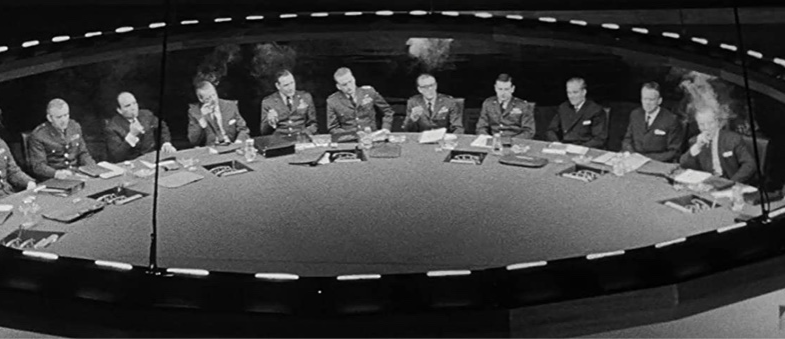
Later, sitting in a bunker, what world leaders remained gathered to discuss, in tones of barely restrained panic, how they might retake their world. The knocking that echoed throughout the chamber brought the whispers to a halt. It was only then that they realized how foolish it was to retreat to such a place, underground. Every culture in the room buried their dead.
Select the play button above for an audio reading. To see all cases, go here.
Korbin awoke in the dark. He was on a bed, he realized, the room faintly illuminated by a hearth, fire down to its embers. Without moving, he looked around to see a chamber made of perfectly fitted asymmetrical stones, no windows, only a single door. In the back of his head, a voice tried to call out, to tell him something was amiss. The bed, though, was comfort beyond compare, a luxury akin to anesthesia.
Trying to find some balance between the bed’s sensuous slumberousness and his mind’s pleading, Korbin stretched. He reached his arms above his head, then swung them down to his hips, interrupted when his left arm encountered a solid object that rose from the bed’s otherwise perfect form.
The subtle change caused the voice in Korbin’s head to jump several decibels. His kind mated for life and he hadn’t shared his bed in years. He shot up, head roiling so he couldn’t quite make it to placing his feet on the floor.
“Korbin,” the form next to him spoke, “what are you doing?”
The voice, soft, feminine, and unfamiliar, caused Korbin to push through his nausea to stand. He placed his hand on the wall to balance himself, finding that the stone was intensely warm. He blinked, trying to locate the door he had seen only a moment ago. It was only then he realized he was naked.
“Are you leaving so soon?” the soft voice asked from the bed. The question left an impression in Korbin that he had a choice in being here, that perhaps he had arrived of his own volition. His mind felt heavier than a rock with a hangover, though. He could remember an old friend, Temur, an earth elemental that loved mead, and that their hangovers were calamitous events akin to earthquakes. But he couldn’t remember how he arrived.
Balanced by the wall, Korbin risked a look over his shoulder. On the bed was a woman, lit like a waning harvest moon in the firelight, with smooth skin, a strong figure, and beautiful, dark hair. Like the embers, her eyes glowed a reddish gold. She spoke, “You just got here.”
Korbin shook his head, but it didn’t dislodge the cement around his brain. He could only mutter, “You’re not my Zuri.”
The woman stood up, sheets sliding from her. Even in his current state, Korbin was struck by her magnificence. She smiled with the same easy confidence his wife had possessed, a certainty she would have her way. With her black hair and curvaceous figure, he could almost convince himself that this was his Zuri, that her death had been a terrible dream.
He might have been able to persuade himself of this if the figure hadn’t responded, “Who’s Zuri?” He felt the question pull at his mind, wrapping around the memories of his wife and pushing them toward the same dark well where the memories of how he got here now dwelled.
He struck her then, fast and hard with the back of his hand, all the anger and loss snapping out in the blow. With the focus Zuri had taught him he was able to transform his hand into the Black Talon and grab this impertinent stranger by the neck. “If you don’t know who Zuri is, then I know I shouldn’t be here.”
Even through the tough skin of the claw that was now his right hand, Korbin felt the softness of the figure’s flesh quickly giving way to an unyielding warmth not unlike the room’s stone. The confidence fled from the creatures eyes, replaced with a burning anger. The golden red there, Korbin realized, was not a reflection of the fire, but from whatever magic this thing, this place, possessed.
Tightening his talon around its neck he asked, “What are you and what is this place?”
The thing in front of him began to change, becoming taller and thinner, a forked-tongue rolling out of its mouth as its legs lengthened, threatening to pull Korbin from the floor. The raven hair curled away from its face, skin pulling tight until its nose disappeared and its mouth stretched wide. A sound like steam escaping from a grave became its rancid breath as it spoke, “We could have had so much fun, you and I.”
Korbin wasn’t beyond fear, but he wasn’t naive to the ways of transformation. He might not have expected this, but this simulacrum certainly hadn’t expected him. He extended his metamorphosis into both hands and feet, digging into the stones with his talons to keep his stance, raising the other arm as to stab this creature’s eyes from its face. “Ravens eat lizards, thing.”
The rend he put across its face only widened its smile, tongue slipping out in sibilant syllables. “We’re much more than that, here in the house of Naugle.”
“Not for long,” Korbin replied before growing his sharp beak to snap the tongue out Naugle’s beast.
###
Korbin was covered in viscera by the time he heard the knock at the door. Blinking away the burning in his eyes, he looked to see McPherson peeking through the Judas hatch. Presumably standing on her tip-toes, she was barely able to get her chin up to the portal. The inspector, lit from behind, was identifiable to Korbin by her stature and voice. “Oh, good. It’s you.”
Korbin blinked, trying to clear his head. Looking down at his bloodied hands, he remembered he was naked. “I seem to have lost my clothes.”
“Look around,” a male voice made unrecognizable by fear and uncertainty. “All the other men had their clothes on when they left. They might still be with you.”
Misunderstanding the last sentence, Korbin swiveled his head to look for other men in the room, but only found the corpse of the thing he’d dismembered. The strange chunks wriggling on the floor in a pool of black liquid made him feel he was likely to vomit. Refocusing on something else, he asked, “Who is that?”
“We’re going to get you out of here,” McPherson replied.
“We?” Korbin barely got the question out before light streamed in from the torch-lit hallway. McPherson was there, lock picks still in hand, kneeling next to the door’s mechanism. Next to her, head frenetically searching up and down the hall, was a scrawny, bespectacled man, sweat covering his pale pate. He was, in absurd contrast to his flannel shirt and jeans, carrying a hot pink backpack.
McPherson stood, slipping her lock picks into the interior pocket of her blazer. “This is Oliver Derby. I believe you’ve met.”
Half-and-again as tall as McPherson, Oliver peeked around the doorframe and saw the carnage. If possible he became paler, glasses sliding down his nose.
With nothing cogent in his mind Korbin said, “I didn’t know you could break locks.”
“I don’t think reality is a factor in this place.” McPherson pushed Oliver into the room and closed the door behind her. “Let’s pretend this will give us some privacy.”
Korbin looked over his shoulder at the thing he had massacred. “I think we might be safe in here for awhile.”
McPherson guffawed, banishing any realism of the idea. “Korbin, we’re in a ghost house created by a deal with the Ogru Dem. This whole place is an open throat.”
“The Ogru Dem?” That got Korbin’s attention. “What? How did this happen?”
McPherson hooked a thumb at Oliver. “Ask the professor here.”
“I—” Derby began to answer, then stopped, sliding off the pink backpack. He set it on the floor by the fire, away from the still wiggling pile of parts. “I took this from the house.” Out from the bag he pulled a perfectly round, nearly flat stone. “I mean, there wasn’t a house here when I look it, but I dug it out of the park.”
“Why in the name of the seven winds would you do that?”
Oliver cringed, retreating from Korbin’s harsh tone. “I was being blackmailed.”
“You didn’t think to tell me that when you hired me?”
“Oh, it gets better.” The mischief in McPherson’s voice grated on Korbin. She elbowed Oliver. “Tell him by who.”
“A student, I, uh, was having inappropriate relations with.” McPherson poked Oliver, egging him on. “Her name was Etenia.”
Korbin found his head swimming again. “Etenia? Etenia Ephraim?”
Shock raised Oliver’s eyebrows. “You know her?”
Korbin dragged Derby to standing, pulling the smaller man closer. “Do I know her? Do I know the First Sorceress of Kek?” Korbin shook Derby, rattling him until his glasses sat askew. “I will eat your eyes for this, little man!”
With an unusual disregard for her dress, McPherson placed her hands between the two men. “Korbin, stop. He didn’t know. It’s your own fault for not recognizing the portrait of Naugle. You should have listened to Zuri more.”
Korbin dropped Oliver to turn his anger onto the analyst, “How dare you – “
“How dare I what?” McPherson’s question was as solid as the floor they stood on. “I’m not what the one ashamed of my own heritage.”
Eagerly seeking to steer the conversation away from his own wrongs, Oliver asked, “What heritage?”
“Korbin is X’Komish.” McPherson turned to Oliver to wipe the gore on her hands off onto his shirt. “Or part X’Komish, I should say.”
In a surprised tone that would have gotten him thrown off faculty staff, Oliver responded, “With a name like Korbin Halvorsen?”
Like straightening a child’s dress, McPherson set Oliver’s glasses straight on his face. “For a professor of local history, you’re pretty ignorant. Naugle wasn’t the only one interested in destroying X’Komish culture. Or did you think the chief’s ancestral name was Francis?”
Korbin burned with his own anger as he remembered meeting Zuri in the state boarding school that had branded him with the name of his father. Zuri had refused to give up her name for the Anglo one that they had tried to force on her. Despite everything; the starvation, the beatings, the shackles. By the time she escaped and then returned for him, he couldn’t even remember what little X’Komish he had known.
Korbin turned from this to search for his pants. Trousers in hand, he said, “Fine, we’re in a house that shouldn’t exist that sits on a hole that wants to swallow mankind. What do we do about it?”
“You can’t be serious,” Oliver spoke. The only thing that kept Korbin from throttling him was the look of utter contempt that McPherson leveled at the professor.
“You idiot. The darkness the X’Komish were enslaved to is still down there. It’s been waiting for a chance to rise. It’s always been waiting. And you’ve given it to it.” McPherson nodded behind her at the door. “Or did you think the army of men we snuck past were imaginary? You saw the look in their eyes. The only reason you got past them is because you look like them.”
Korbin chuckled unkindly, wondering how McPherson had snuck Oliver past his own wife. “What’s your plan, McPherson?”
“I was hoping between the three of us we might be able to figure out how to use the stone to seal this place back into the Earth.” McPherson bent down to the round, flat stone that Oliver had pulled from the backpack. Korbin felt his disgrace again, knowing he couldn’t recognize the symbols on its face.
“It was brought in here before,” McPherson continued. “It sealed the mine and destroyed Naugle’s house. I say we use it like a depth charge.”
Both Korbin and Oliver responded in confusion, causing the inspector to point at the eviscerated, still wriggling corpse on the floor. “That thing had to come from somewhere. If we can find the hole it crawled out of, dropping the stone down it might do the trick.”
“Or without the proper incantations it might just drop like a rock,” Korbin countered.
“Do you know how to read the symbols on the stone?” Aggie asked.
“I do.” Oliver spoke quietly, but his tone washed over the rising anger between Korbin and Aggie. “The runes on the stone are for a sacrificial rite.”
McPherson spoke softly and slowly, as if to a frightened animal. “What are you saying, Oliver?
Korbin watched the smaller man’s Adam’s apple move up and down. “Castillo never left Naugle’s house. And neither did the stone. He must have been the sacrifice that sealed the mine.”
Before McPherson could speak Korbin found his anger again. “Well, guess who just volunteered.”
Oliver boggled at the pair, protesting before Aggie rose to place a calming hand on his shoulder. “Oliver, does the stone specify what the sacrifice has to be?”
“No,” he said uncertainly.
McPherson disappeared the stone into her coat as she stood. “Then let’s take this a step at a time.”
“I, uh, OK,” Oliver muttered, wiping the sweat from the bridge of his nose before resettling his glasses. “But then – “
The door rumbled in its frame, rattling the Judas hatch open to show a solid wall of brackish flesh, glistening greenish black in the firelight, moving past the door. A long quiet moment went with it, only broken by Oliver squeaking, “What was that?”
Korbin made to answer when a smell like boiling sulfur caused him to choke. He glanced at the bedmate he had dismembered. While their attention had been elsewhere its separate parts had bubbled into a single, dark green slime that oscillated, pushing at the edges of its boundaries.
With a pitch in his voice that hung by a very thin thread, Oliver asked, “Is it dead?”
“No,” Korbin answered. “Ogru Dem don’t die, they just…reassemble.”
Oliver shakily tried to pick up the backpack. “I’m going to find my wife and get out of here.”
Korbin felt no small amount of satisfaction as McPherson slapped him. “You looked her right in the eye when we came in here and she didn’t blink. We need to get rid of this place if you ever want her to see the light of day again.”
McPherson looked back at the door, its Judas hatch now empty of everything but the torchlight of the hall beyond. “OK, Korbin, we’ll lead the way. Oliver stay close behind us.” Bones fused and feathers bristled up the once pale skin of his arms, Korbin stepped forward.
Oliver, eyes wide and dodging between Korbin’s talons and the remains of the Ogru Dem, refused to move. Korbin pointed a claw at him. “This is nothing, little man. If you don’t move you’ll see how far I can take this metamorphosis. And then I will fly my way out of here and forget your name before the next sunrise.”
With this threat hanging over him, Oliver stumbled toward the now silent door. Regardless, Korbin and McPherson approached it as if the portal might spring open of its own accord.
Reaching for the handle, McPherson stopped and glanced at Korbin. “You were bluffing about flying out of here, right?”
Korbin could feel his ears beginning to disappear under a plume of black feathers. He croaked, “You left me down here first.”
“Oh, come on!” McPherson caused both men to jump as she stood straight, raising her voice. “You’re fine.”
Korbin stared at McPherson as he felt his eyes (rather painfully) change color and shape. “Do I look fine to you?”
McPherson gave her tiniest harumph, acknowledging Korbin’s superior position. “Fine. Just try to give me some warning if you decide to go it alone.”
“No guarantees, analyst.”
Using the title of her occupation seemed to placate McPherson, who reached for the door handle.
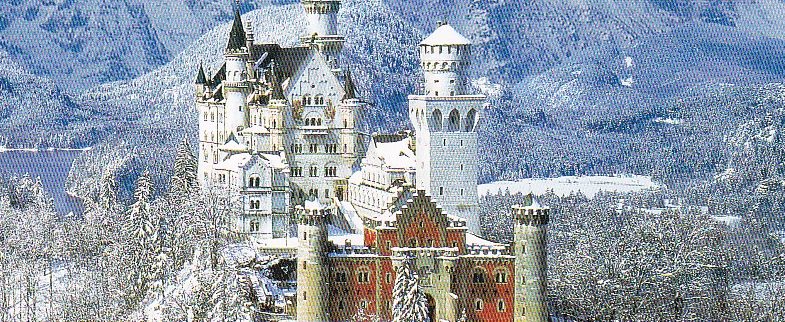
The girl stormed across the castle grounds, headed straight for the gate, only to be stopped by the crossed halberds of the guards. They screamed in shock as their bladed staves became snakes. Alerted, the archers dropped the portcullis, but this stopped in its descent as the girl gave a flick of her wrist, then walked under it without a worry of being crushed.
Seeing this from his balcony, the King said nothing. He had made the announcement some time ago: We had had enough of old men with pointed hats and starry cloaks who gave vague advice but never wisdom, who promised the vanquishing of enemies but vanished in times of danger.
This young lady heeded the call. The King had found Their new wizard.