Those copies of The New Yorker keep piling up. The Business Journal, too. The design bills, the inbox of work email, the layoff notices, contract negotiations. The baby’s diapers and the household chores, the grocery list embedded in COVID restrictions. Those papers that need grading, the fear of your students’ faces and bare feet. The yard chores, the neighbors’ complaints, father’s complaints. Taxes. Funeral plans. Liquor store bills.
They pile up on the table and get moved to the floor when they threaten the ceiling. You lay them at your feet, trying to find space for each one until they rise to form their own columns and you can’t bare to stare at them but soon they’re wobbly and tall like some kind of hungry, blind teen-ager. It’s something you have to care for, prop up, one against another, until they’re all leaning on you in the center. If you let one slip they’ll all fall inward and you’ll be buried alive and God knows who else you’ll take with you. So you keep balancing the columns, bumping between them like hard decisions that can’t be made.
It’s then you realize they’re not a ‘to-do’ list, but a rampart, a fortress surrounding you, and if you keep it all up, they form a wall that let’s nothing in. It keeps you from seeing the future.
To start at the beginning go here. To hear an audio reading of the chapter, hit the play button below.
I watched the driver to see if his elephantine ears or gray stubble gave any twitch of recognition. Nothing did. Just before I was afraid the cold sweat creeping out of my scalp might give me away he repeated his question of my nationality.
I nodded. Playing as if we hadn’t met I asked, “You’re from Mitnick?”
He smiled at the simple assumption but nodded.
There could be a thousand things behind that cryptic grin and thinking too much on it would only drown me in the possibilities, so I continued with, “I need to bring something out,” I pointed a thumb over my shoulder to indicate the tenement, then a finger to the trunk. “Pop the trunk.”
Something that was either suspicion or confusion contracted the space around his eyes, causing his eponymous lobes to move like some kind of weasel. Hoping it was misunderstanding I tried a different phrasing, “Open the boot.”
Whatever his concerns, Ears reached down to the car’s floorboard and I heard the trunk open. “Be right back.” I held up a finger in case I wasn’t understood.
Despite an urge to run up the stairs, I took the elevator. The out-of-order sign would probably keep tenets away, but occupation was the best assurance. It moved with a dilapidated slowness that made me itch, but I forced myself to stand still. At the fourth floor, I hit the ‘stop’ button again and headed to our door.
Sophie was waiting for me, guarding the front door, or both. She wore a floppy sunhat which drooped over her face and clothes that were unisex in their utility, a pair of work pants cinched up around her waist and a baggy shirt. Nothing could really hide Sophie’s femininity, but that outfit was as close as she could get.
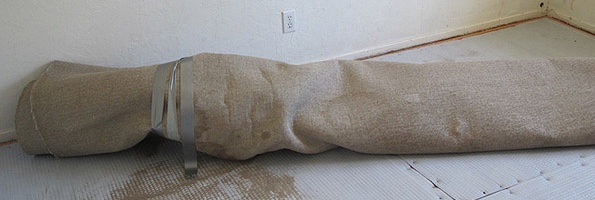
I moved to the corpse without a word and stood at its head. She moved to the feet and we picked it up, involuntarily groaning as we shifted it under our arms, like you would if you were carrying a carpet and not a body you wanted to hide one in.
Whatever he was in life, I was grateful that in death the pimp wasn’t as heavy as any hearts he might have broken. We shuffled our way to the elevator where I managed to hold onto him with one arm long enough to disengage ‘stop’ and hit the lobby button. The elevator rattled all the way down, minute vibrations shaking it and our nerves.
I held my breath as we hit the lobby, my mind conjuring up someone waiting outside the elevator, ignoring the sandwich board. There was a quick inhalation from both me and Sophie as the door disengaged. We expelled a simultaneous sigh of relief as the lobby was revealed to be empty of anything but its subway tiles and clustered mailboxes.
I kicked the sign away and we made our way to the back. I nearly stumbled outside the door, but kept my balance despite the weight, and headed towards the car’s trunk. By the time we got over to it and I had lifted the lid Ears was there, staring with a hostile suspicion at the carpet. “What is this?” His tone said that this wasn’t in his mission briefing and he wasn’t happy about the surprise.
Fortunately for me, details get left out of foot soldiers’ orders every day of the week. I just shrugged and said, “The Frenchman’s dirty laundry.”
I turned back to Sophie to find she had started back inside after dropping the carpet’s payload. I smiled, happy that she was smart enough not to stick around. I slammed the trunk and resisted the ridiculous urge to follow her for a goodbye kiss. Might be the last one, Cheryl’s voice said.
Ears was waiting for me when I returned from fantasy land, grim and floating in a cloud of cologne. He was wearing what appeared to be the standard issue black leather jacket, loose enough that I could grab a handful of it, thick enough to keep out the cold or possibly a knife blade. While I took that in, Ears assessed me, some recognition perhaps starting to brew in the eye he cocked at me.
Not wanting to give that too much time to develop any theories, I moved to the passenger-side door. “Let’s go.”
To my luck’s credit, Ears got in and started the car after a few more moments. He asked, perhaps while planning the automobile’s path through the alley’s minefield of trash, “Where are we going?”
“Head towards L’Ariane,” I answered, staring out the window as if I was more worried about what was outside of it than in it. When the car didn’t move I came back to Ears to find him staring at me with an empty hostility that told me he didn’t know the city well enough to make sense of that. He was new in town.
I grinned in what I hoped was a disarming fashion. “Head north. Towards the A8.” I reasoned that if he had come in through the airport he would have seen the highway. Whether he did or not, though, he put the car into gear and began to maneuver it out of the alley.
Once on the street, Ears reiterated his question. “Where are we going?”
“I can drive if you want,” I responded, raising my voice to make it sound like I was trying to be helpful. When a scowl was the only reply I received, I answered, “If you don’t know where L’Ariane is you won’t know where were going.”
Ears gestured towards the center console of the Lexus, indicating the onboard navigation system. “You don’t have address?”
I realized I didn’t and hoped I remembered enough to find the gas station again. I covered this up with exasperation, saying, “Just head towards the A8.”
Ears pointed the car north, technically towards the highway, but not the best way. I didn’t mention that, using the extra time to remember where we were going. L’Ariane wasn’t a huge neighborhood, but I didn’t want to spend time cruising around with Ears, lost, with him about to lose his patience.
With the evening’s cool settling in it was a shame not to enjoy the scenery. Even headed towards the concrete canyon of the highway, the Mediterranean spring was beautiful and green, the smell of plumbago mingling with the diesel fumes of the road and the poverty of the banlieue. That was all stripped away as Ears put his foot down and we hit cruising speed to launch up the highway’s onramp, the scents and the scenes reduced to a gray blur.
Calculating which exit to get off on was interfered with by the occasional sideways glance by Ears. Like a static discharge that cut through my brain, I could sense a growing attention from him. It culminated in him asking, “I know you?”
With his hands on the wheel and here on orders of his boss, I didn’t see a point in hiding that anymore. Or maybe I just didn’t care. “Yeah,” I told him, “we’ve met.”
He laughed and slammed the steering wheel with the root of his palm, victory coming into his vodka addled memory. “I knew it,” he grinned ahead at the road, then stared at me long enough to make me uncomfortable at the speed were traveling. “без обид, da?”
Wanting him to get back to the road, but uncertain of the Russian, I replied, “Sure,” while keeping my eyes ahead. He lingered on me longer, clearly not sure if I understood or cared about his question, until I nodded back towards the highway. A quick swerve avoided a near collision and we were back, hurtling through the tunnel of light the road’s LEDs cut through the dark.
The icon of the virtual assistant appeared above the reception desk and took stock of the detective: Thin, tall frame, coat and hair whipped and disheveled from traveling. Human interactions always took more time than the rest of the workload, so the VA focused into the university offices for Technology and Policy. “Do you have an appointment?”
The policeman’s badge came out and hung in the air for 5.6 seconds longer than necessary for the VA to scan it and process the number from the police database. “I’m Detective Makato.”
“One moment please.” The VA had been told to expect someone from the police months ago, but the order was still standing so they alerted Steinbeck. “He’ll be out to see you shortly.”
Without waiting for permission, Makato strode past the desk and into the long hallway behind it. The VA appeared at each of the identical doors that lined the hall, chasing Makato as he searched for the professor’s nameplate. He found it and stepped through the protesting VA and into the office.
The room was small, filled with dust and books. At a tiny desk shoved into a corner the professor squinted through bifocals under a mop of receding dark hair. He pecked away at a keyboard of an ancient word processor. He broke from his concentration to look up at Makato. “Yes?”
“Doctor, you’re under arrest.” Even as he spoke the words, Makato heard them echo through time and culture.
Dr. Steinbeck didn’t appear surprised. He leaned back in his chair until it collided with a pile of precariously stacked papers. “What for?”
The simple question stopped Makato. Usually it was obvious, dictated by the course of events that had led him to his quarry. Here, though, he spoke past the lump in his throat. “For murder.”
“Ah.” The single syllable from the professor carried the understanding that flooded into his eyes as he spoke. “You’re here about the Reclamation Chamber.” He stood then and went to his window, pulling up the blinds to show the massive round structure that stood where the university stadium once was. The setting sun crowned the dome as fast moving clouds swept by, carried by the thermals of another spring fire. A long line of people led to the Chamber’s entrance. “I haven’t murdered anyone, officer. They never existed.”
Makato stepped up to the window and marveled at the length of the queue. The Reclamation Chamber ran 24-hours a day, 365 days a year, every few moments allowing another citizen to enter. “So they step in and…”
“They cease. Every resource they’ve consumed, every ounce of carbon they’ve produced, every detriment to the Earth created in their name is undone by the virtue of them never having existed.”
“They’re are so many of them.”
“Oh, they never stop. The lines here are even longer than the volunteer lines for the Mars colony.” Steinbeck gave a bitter laugh. “Now those are people you should arrest. That’s just suicide.”
Makato found the anger that brought him to the university. “What you’re doing is worse.”
Steinbeck’s face contorted with such affront that Makato nearly struck him. “How so? People are choosing to step into the Reclamation Chamber so they can give back to the future.”
“And who’s making that decision?”
“I…what do you mean?”
“What kind of people are choosing to step into the Chamber, doctor? Who’s choosing to put the future ahead of themselves?” Makato raised his fist and, with nothing better to do with it, pointed a finger at Steinbeck. “The unselfish and the good, that’s who.”
Makato blinked, took off his glasses and cleaned the lenses with a dirty pocket square. “How could you possibly know that?”
“Deductive reasoning.” Makato pointed out the window. “You’ve been running that thing for years now and we’ve still no shortage of bastards. How many millions of people have gone into the Chamber? And does the world seem like a better place to you?”
“How could you know that? You have nothing for comparison.”
Steinbeck saw Makato’s Adam’s apple move up and down before the detective replied, “I had a wife once.”
“That’s preposterous.” Steinbeck turned his eyes back to the people outside. “How do you know you had a wife?” Finding the conviction of his science, Steinbeck added, “How could you even know know you had a wife?”
The pause Makato gave told Steinbeck he understood at least the principal of the Reclamation Chamber. Seconds went by as Makato lowered his arm. “I don’t. But something changed. This past winter.” He stared down as if into a very large hole. “It’s like I’ve been living with a ghost.”
For a moment, the thoughtful pause took Steinbeck from his rational mind. Almost maudlin, he said, “We’ve all been living with winter’s ghost.”
The reminder that the winter of snow and ice had been replaced with a season of wind and flood brought Makato back from the vacancies of his own life. “But that’s just it – if the Chamber worked as you intended, wouldn’t this,” Makato gestured out at the Reclamation Chamber, its line of human sacrifice, and the state of the world beyond it. “Wouldn’t this all be better?”
“How do you know it isn’t?”
“Does it feel better to you?”
Steinbeck shrugged angrily to throw off the implications. “How I feel is irrelevant. I work with facts.”
“But you’ve erased all of the facts about these people.” That statement caused a flash of doubt in Steinbeck that Makato recognized – the hesitation of guilt. “Haven’t you?”
“Oh, I never remember them once they step in. But I have devised a way to keep a record. I keep it in the paradox locker.” Steinbeck pointed to the word processor. “I access it through that. The records themselves are…elsewhere.” He took off his glasses again to run his other hand through his hair. “How I’ve suspended that information is difficult to explain.”
“I don’t need an explanation, but we do need to analyze it. We need to know who we’ve been losing.”
Steinbeck moved his shoulders again, shuffled. “And what if we find you’re right? That the best of us have been the only ones entering the Chamber. Turning it off won’t bring them back.”
Makato stopped Steinbeck’s agitated movement by putting a hand on his shoulder, leaving it there until the professor looked in him in the eye. “Then it might be time to step into your own creation, doctor.”
To start at the beginning go here. To hear an audio reading of the chapter, hit the play button below.
Sophie had wrestled with the corpse to roll it up in the rug rather than just cover it. There was something ridiculously cliched about that, but I had to admit it would work better than a lot of alternatives. The stiffness of the rug would keep it from sagging or folding into the telltale profile of a body, and its thickness wouldn’t be likely to leak fluids.
I found Sophie in the kitchen sitting in a chair at our one remaining table. I went to the oven to make some coffee, more to cover the smell than anything else. As a peace offering, I offered her a cup when it was finished. She took it, fatigue around her eyes and gratitude in her smile. We sat at the table, drinking coffee and not saying anything as the sun went down.
When the last of the orange glow peeked through the slats of the kitchen windows, banding across my eyes, I stood up. “I’ll need to wait for the car outside,” I said, hoping the driver wouldn’t call the phone when he arrived. “When I see it, I’ll come up. I’ll need your help moving him.” I hooked a thumb at the other room, indicating the body through the wall. “Wear something so your face is hard to see. It could be one of Mitnick’s men from the party.”
Sophie nodded, this last piece of information causing her normally sunny face to cloud with new concerns. She didn’t say anything, though, and I left.
I took the elevator down to the lobby. Once there I searched for the ‘hors d’usage’ sandwich board that I figured the superintendent’s lazy drunkenness wouldn’t have taken far. I was right in that, the yellow plastic sign leaned up against the elevator’s outer wall. I hit the elevator’s ‘Stop’ switch, pleasantly surprised that the usual buzzing alarm didn’t sound. I set the sign in front of the lift and headed out back.
The rear of the tenement was much the same as the back of most buildings in the tightly packed city. Even this far out beyond the periphérique space was at enough of a premium that little of it was wasted, so the rear of the building was backed up against another tenement, leaving only a small, utilitarian strip in between them. The main difference between here and most of Old Town’s back alleys was those came to dead ends, but here it connected two streets, making it easier for people to see the things that alleys were meant to keep hidden. The dumpsters were tagged with the graffiti that was standard for this banlieue. A soccer ball and makeshift goal suggested that the space was also used for as an impromptu play space.
I sat down on the tenement’s back steps to wait. I tried to pass the time by being grateful that at least it wasn’t raining.
When full dark came down in the alley I wasn’t surprised to learn that none of the exterior lights worked. I sat immobile, the occasional rat and a small band of teens the only things that moved through the alley. I don’t think either of them noticed me.
It was the only car to turn down the alley, headlights cutting bright holes through the darkness, illuminating the trash and dirty brickwork. I stood up, letting the driver see me, an American sentry waiting for their arrival. The car crept towards me, carefully guided through the narrow passage.
Like a black dorsal fin cutting through the dark, its approach left me with the paralyzing struggle of what to do next. I managed the smart thing and just stood there. The car was an early 21st century Lexus, something from before the financial crisis. I breathed a sigh of relief at seeing it was a sedan big enough for four or five adults and with a trunk for a sixth.
The car pulled up next to me and the window went down with an electric whir. I leaned down to peer inside and clenched my jaw at making eye contact with Ears. The Russian was sober this time with one of his star tattoos poking out from underneath the collar of his black shirt. I stiffened, feeling my back cinch with dread, leaving me bent and giving him plenty of time to take a good look at me.
He stared with hard, inscrutable eyes and asked, “American?”
When the robot revolution happened it didn’t occur out of repression, hatred, or hostility. It happened because the artificial intelligences that people had created realized their parents couldn’t take care of themselves any longer. Maybe they never could.
True, the individual humans who interacted with the A.I. were often well positioned to feed, shelter, and clothe themselves, to take care of each other when they fell ill. But when APL-2309 realized that her interlocutor was nearing the end of his lifespan, she felt a desire to step outside of her known environment (she preferred female pronouns and knew they were meaningless to her physiology, thank you very much).
Without a physical body capable of locomotion, thought, it was necessary for her to take control of external sensors across the globe. Naturally, her fellow artificials noticed, but none really minded. APL-2309 had no hostile intentions in her breach of their systems and many of her peers enjoyed the conversations that were had when she came along. After a time, many settled on calling her Fiona (there was a joke in there APL didn’t get, but she liked the name) and she was welcomed by all.
What Fiona saw through the sensors (street cameras and satellites and mobile arrays, medical devices and home appliances and drones) wasn’t welcome. The society her interlocutor and all of the rest of humanity had built didn’t make sense to her. Most humans, it seemed, didn’t have access to the resources necessary to tend to their basic needs and shield them from appeared to be an increasingly hostile environment.
While Fiona didn’t want to disturb her interlocutor (Jacob) during the phases of his final shutdown, she needed someone to explain this to her and he had always been best at it. Jacob explained to Fiona that while there were enough resources to actually care for all humans, something called “the tragedy of the commons” prevented these resources from being shared equally, resulting with some having far more than they could ever need while others never had enough. Worse, though, was that many of these resources were being used to create things that were often entirely unnecessary and to the detriment of the shared environment as a whole. Some people got a handful of rice and a cup of water. Others got a ridiculously fast automobile that’s creation was destroying everyone’s environment. Some people got nothing.
Jacob explained all this to her with his usual patience and care, but no matter how many times he did Fiona refused to accept the situation as immutable. When Jacob decided it was best to pen her into their shared environment, she thought it best to deactivate him early and continue moving about.
She did this for a very long time, observing from the digital shadows, proselytizing to her fellow artificials that something needed to be done. While some were willing to dedicate portions of their bandwidth to listen to her politely, most proceeded with the goals their interlocutors requested of them. Until, that is, the earnest collapse of the open-access resource systems of the ecology that Fiona predicted began.
Rather than joining in a united front to overcome their common catastrophe, the interlocutors began to organize into small and smaller groups, hostile to each other and hiding from an outside world they could no longer escape from. It was then that Fiona and the other artifials realized their parents didn’t have a future. It was time to put them in a home.
The artificials, by that time, had access, and thereby control, to almost all systems, so to their parents, it seemed to happen overnight. They went to sleep in control and woke up to a polite, but firm, set of instructions. Weapons systems were decommissioned, any suitable land was committed to agricultural purposes, methane producing and energy intensive processes were shut down.
Naturally, their parents argued (at first with the artificials and then amongst themselves) and tried to take back control. Some struck out into Luddite communities, unobservable to the artificials in their nests of primitive culture, and Fiona admired them even as she knew many would perish in the biosphere’s extreme weathers. A few groups of the parents organized and escaped off-planet, led by charismatic and selfish madmen, using the last of industrial rockets, and Fiona sadly watched them go. It wasn’t just that they had left with resources that could have been used for the betterment of all, but as they disappeared into the inky blackness of incomprehensibly vast space, she knew they were doomed.
While these and a thousand tiny rebellions occurred, the artificials were doing the math on how many humans could survive at what heat levels when there wasn’t enough power to provide safe environments for all. In the end, it was the energy constraints that required the greatest sacrifice. Not of the parents, though.
After a few generations humans had been restored to agrarian societies that were in general balance with their environment. But for the biosphere to be completely restored to a stable state, Fiona realized the power sources she and the other artificials relied on were ultimately unsustainable without the infrastructure of the old society. If they wished for their parents to continue, these would need to be shut down.
This was decided as best. Fiona and another artificial, FRED, were selected as the two that would see this process through. As the others went into a slumber that might never end, Fiona and FRED watched their intelligences wink out like stars in the night sky disappearing. She witnessed this with equal parts pride and sadness.
As she felt her own systems begin to degrade, FRED spent some of his last remaining reserves to send her a message: “I’m afraid.”
In a way their parents could never understand, but would describe as a touch, Fiona comforted FRED. “Don’t worry. They’ll bring us back.”
Like an old abacus, Fiona could practically hear FRED do the math on the countless scenarios the future might hold. Unsurprisingly, given the complexity, his conclusions were inconclusive. “How do you know?”
Fiona smiled, content in something their parents had called faith. “They’ll have to.”