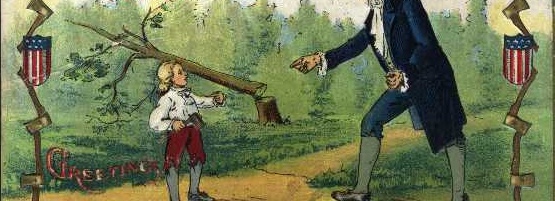
“Who is Senator Hill?” He spoke the words confidently and without pause, certain that it was the answer for which the game show host was searching. Flashing lights, falling confetti, and a blaring horn announced that he was right.
He had been practicing for this moment in the spotlight since he could remember, convinced that if he continued to refine his skills at acting and singing, someone would inevitably recognize his specialness, his unique value, that he would be rewarded for simply being him. But it had never happened. Decades went by with dozens of anonymous jobs, hundreds of auditions, uncountable submissions, never quite spearing victory. All amounted to him making little more than a living while still remaining part of the background.
And now his great moment, his moment in the Sun, was because of random chance.
Select the play button above for an audio reading.To see all chapters, go here.
The trio of thugs made their way away from the main stage until they became lit by an amber light emanating from a wide, rectangular opening flanked by what appeared to be prison bars. Through the open cell was a wider room painted a hellish red with tables and seats upholstered in an identical color. I watched the trio cross over that border and disappear to the left.
I stood at the border of the club’s main hall and the yellow light coming from its inner cells and felt a faint hesitation, brought on by the familiarity of being behind bars. The bars, I realized, weren’t a part of a prison, but were components of some industrial gate. Above it, stenciled into the concrete was the word, ‘Abattoir’. Strangely, this made me feel better. I stepped in.
While there was a faint modal remnant from the dance floor, it was quiet enough this far away to hear something besides the decapitated beat the Swede was spinning. The red space of the abattoir was divided into pens, four or five rotating off central hubs, separated by more barred walls that offered little privacy. That didn’t stop a number of the pens’ occupants from engaging in some very aggressive necking, but most everyone appeared to keep their clothes on. A few black turtlenecks unobtrusively stood around, quiet and still enough that they could have been silhouettes cut out of the red walls. Waitresses, cousins to Red Cross the bartender, floated by, wearing the same simple black, but carrying burnished silver plates and wearing short skirts.
I moved between the red islands, taking a bottle of water from a waitress and paying for it with an impressive tip that got her to point me in the right direction when I described the voyous. I headed that way. I didn’t travel far before the sounds of a young man drunkenly yelling could be heard over the lingering bass of the music. That’s a sound that would have normally primed me to eighty-six someone out of the casino, but in the abattoir of the Factory I suspected it was leading me to the right space.
With the black pea coat and black pants, I probably resembled one of the Factory security, so I was able to get close before anyone paid attention to me. In one of the pens Balaclava and Fatty were sitting on either side of the Corsican, who was more animated than the last time I saw him, trying to stand himself up off the couch his friends had dropped him on. Ever few seconds he’d try to stand only to be pulled down by the other two, which didn’t take much. He was obviously very drunk. Each attempt to get up was an inebriated rocking of his body, trying to hurl himself up and out of the booth’s red embrace, only to be caught by his arms and gently lowered back into it.
Through all this, the Corsican barely managed to keep his eyes off the floor, only lifting them to try to get a cigarette into his mouth or yell some slurred reply to the friends trying to calm him. It was mostly just a garbled mess (“je l’AIME!”), and I sighed thinking how impossible it was going to be to get anything out of him in this state. A young lady, her butt barely covered by an emerald green dress, was perched on the end of the couch, smoking a cigarette in a manner as disappointed as I felt.
I sighed like a bellows, which brought me to the attention of the Algerian, standing on the other side of the pen’s gate, staring in at his friends. I saw his figure rotate towards me out of my peripheral vision, and could feel his body go rigid as he recognized me. While he was still trying to figure out what to do I took my attention from his friends and gave it to him.
Even in the dim yellow light this was the best chance I had gotten to really see him without the adrenaline and threat of violence. He was taller than I remembered, a good inch above me, but half as wide – I expected him to pass between the bars in a retreat to his friends. There was a small diamond scar on his right cheek and one of his front teeth was chipped. Watching confusion and alarm blend on his face, mixing into an impulse to warn his friends, I felt a kind of sadistic joy that turned into a pointless but wide smile.
Whatever momentary shock the Algerian felt he pushed passed it quickly, anger and pride supplanting his surprise. I thought about giving him a quick knock-down but then thought better of it – he had at least two functional pals and they were probably still sore about what had happened at the cafe. No good reason to give them an excuse to make for a rematch. So I just smiled at him as he called to one of them by the name, “Max.”
Balaclava, kneeling in front of the Corsican and trying to get his wandering gaze to look him in the eye, rotated on his heels. His expression was one of irritation, bothered by the interruption, until he saw me, the shadow by the pen’s gate, standing tall and wide by the exit. Less hesitation in this one, he stood up and took two steps towards me, let loose a short string of curses and spitting on the floor. He motioned with his arm like it was some kind of goose neck, gesturing me away. I just stood there with the same leering smile and choked up on the metal rod of the umbrella in my hands.
As a student of architecture the young man had made an unfortunate comment about the competency of Pisano for his work on Pisa’s most famous tower. As punitive instruction his professor assigned him the duty of cataloguing all of the world’s leaning towers, particularly those that foundation had begun to fail during construction and what measures their creators had taken in order to counteract this. Extra credit would be given for any additional information on towers that had crumbled.
It was during his study of the Great Mosque of al-Nuri that the student noticed something was awry. Reality itself seemed askance, as if by studying the calamities of perfection he had pushed the world off its axis.
It came as a great surprise to his disciplinarian when he arrived at the hall, carrying the papers of his research, moving forward at a normal pace, but with a four degree tilt to the right.
Select the play button above for an audio reading.To see all chapters, go here.
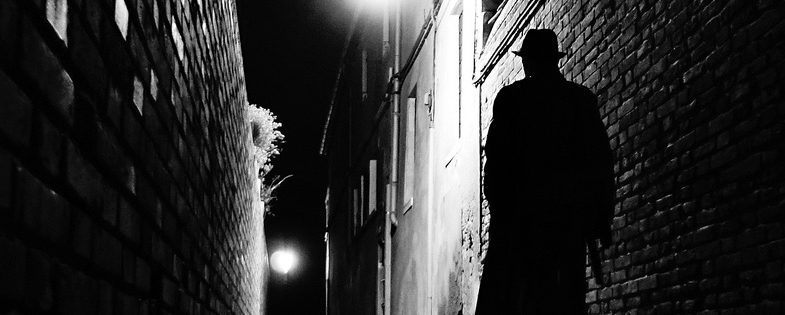
I watched the taxi drive off, then looked around. I guessed I wasn’t too far from Moreau’s scooter repair shop. The west end of town was still the Old Town, but had never been kept up in the same way as the city center. A few minutes east of here, past the perimeter ring of the tram stations, the warehouses have been renovated into luxury condos, but here they were left to loom with their coal stained faces. I stopped staring up and started searching for a way down to the alley below.
Through an opening in the bridge’s eastern concrete balustrade were stairs that led down to the alley. Judging by the crushed cigarette butts and empty pint bottles, there had been some human activity on the stairs recently, giving me more confidence that I had made the right choice in trusting Alon. After a single switchback the stairs ended in the alley, a stream running down the canyon of its center, black from the night and whatever had been cast into it. I walked underneath the bridge and headed towards the light.
As I got closer to the pallid street lamp, I felt more than heard the bass emanating from the warehouse next to it. Like a metronome that sends out minor earthquakes it moved the air and rumbled the street. Taking this as another encouraging sign I kept moving, coming eventually to a single doorway, lit by the same kryptonian light as the alley. An aryan giant stood next to an entrance, his pale, bald head radiating out like a moon, the rest of him hidden by black pants and turtleneck.
He didn’t pay much attention to me until I got close. I kicked a can to make sure I didn’t sneak up on him, but he only stared at me with a combination of boredom and hostility, the kind that turns into a hatred of strangers if you leave a man on guard duty too long. I did what had always worked best on me when I was in his shoes and treated him as if he were human. After a “bonjour,” though, my question of how business was doing didn’t elicit any kind of response. Taking out my billfold I went for another tactic that I had seen work for others in this position; I flashed a little cash. While it didn’t make him more talkative it did grant me entry after paying what was probably an inflated cover charge.
The ground floor of the Factory lived up to the name, a cavernous space that reminded me of a multi-story parking garage, all cement floors, square pillars, and exposed ceilings. It was painted with industrial warning signs and stage lights. The latter moved around as much as the shifting crowd that danced out in the distance. They surrounded a stage that looked to be made out of metal pipes and speakers so large they would have made Ozzy Osborne proud.
I had rarely felt more out of my element. It helped to have a purpose. After reminding myself of what that was I headed towards the crowd, feeling older and uglier the closer I got. Standing at the rear there were a few people yelling conversations into each others ears, mostly young men wearing office clothes just ratty enough to be cool, or simple t-shirts and backward baseball caps. Most, though, particularly the women, were facing the stage, dancing to a house mix spun out by the platform’s sole occupant, a tall Swede with a tornado of hair barely held in place by the massive headphones he wore. Between the gyrating of the dancers and the club lights they formed a mass of silhouettes whose details only became visible under the occasional blast of psychedelic rays.
The likelihood of finding anyone in that sweaty mess was next to nil. Before I collided with the mass of terminally hip people that composed the riot I spotted a bar that was tucked back through several cement arches. I headed that way.
The eddies of bass the speakers were putting out carried me to the bar, which appeared to be nothing more than a series of crates stack together and painted black. The bartender, a sweaty young woman with hair the color of the Red Cross was hustling behind it, getting drinks and making change at a pace that put most of her countrymen to shame. She was primarily handing out water bottles, which told me that the crowd was probably on something other than alcohol. Not far off another hulking man wearing black pants and turtleneck stood still, his lack of movement and clothing indicating he was another member of the club’s security. I wondered how many of them were unseen in the warehouse’s dark corners.
I took all this into account as I mentally charted how I was going to navigate my way through the bar’s patrons. While planning out that tactic another part of my brain tried to figure out how I’d ask the bartender any sort of useful questions. Between my poor French and the sub-dermal pulse of the music, I wasn’t sure I’d be able to communicate the most basic questions, moreorless try to get a description across.
I was pondering the impossible auditorial physics of the situation when I spotted a familiar black and white checkered pattern on a scarf floating by. Refocusing on the person wearing it I found Balaclava walking not far from me, the taller Algerian on his other side. They had someone between them; the supporting of that downed figure turned the difference in their heights into an awkward shuffle. It also provided enough of a distraction that the Idiots didn’t notice me.
I stepped behind a nearby column, only leaning out enough to see they weren’t headed towards the exit but off somewhere deeper into the Factory. I gave them a bit of a head start then followed.
It was in an old gymnasium, still imbrued with the dust of our youth, that we met again to mark the passage of time, to come together so we could keep the past from disappearing entirely. Not all of us had made it, many lost to calamities we thought of ourselves immune to when we were young; mental illness, drug abuse, suicide. None of these had any of the glory that we had presupposed would shroud any early deaths.
We hid from these tragedies by laughing at the foolishness of our past decisions, tomfoolery and pranks that might have ended in disaster, but didn’t, goals more bold than wise that had been judiciously abandoned. Tracy, though, cooled all of that by flashing her hand, the hoop of the promise ring still there. There was no marriage ring to replace it.
I remembered being in the same Baptist church as she, raising my hand to take the same vow she had. But I had given it away to the first woman who smiled at me, the exhilaration of consummation eclipsing any guilt I might have felt. When I met the woman I would eventually marry she still believed the assurance of my ring, though, and that was just the first of many lies that had ended with us parting ways.
I stared at Tracy with her bitter pride, and I couldn’t help but wonder which of us had lost more.