Select the play button above for an audio reading. Image courtesy of Vin Gattuso.
The archipelago of Nome was famous for the skill of its fishermen and its wizards. There were plenty of fishing folk who practiced hedge magic and plenty of wizards that fished, but few were equally competent at both. Unless you counted Bad Bart. He was his own equal in fishing and wizardry, which unfortunately meant he was terrible at both.
Which was the subject of the Council of Elders’ discussion. Each wise adult at the table knew that the Bad affixed to the Bart’s name had nothing to do with malfeasance of the hapless Bart, but the damage he did was still real. The sat in their stone chamber, dank with the smell of the sea, and discussed this.
Spotted and gray with age Harleg, impatient since the day he was born, let his frustrations show. “When Bart tried to call forth a northern wind to help my trawlers return to harbor faster, he sank half the fleet.”
Imogen, red of hair and kind of spirit, held her latest babe on her hip and said with an almost hidden smile, “Twasn’t long ago he thought he had found a new and secluded fishing spot.” She waggled a finger at her infant as if playing a game. “But it was a breeding ground for the codfolk, who promptly punched a hole in his boat.”
With his peaked hat and starry-robes, Theodore of the Rain (or of the Vain as he was called behind his back), spoke. “And while he rode others’ boats so he could feed his family, I had to quell three storms!”
“Did he try to bring forth the storms?” asked Gerald, lifting his voice as his legs could no longer raise him.
“No. It was just bad luck. The man is cursed!”
The Council of Elders muttered in agreement. They thought of Bart, absent from the chamber, brave but hesitant, intelligent but short-sighted, personable but a handful of bad luck for anyone around him. Each council member ruminated on what to do with a man who had committed no crime, but was a danger to everyone.
Gerald stroked his long red beard for a time until he proposed, “We know the Norsemen, those plunderers, are coming. Bart has volunteered to travel north and brave the icy waters to spy on them. Some say they have constructed an armada as never before, and may destroy us all. Best to know if that’s true.”
Each member of the council fell back to muttering, knowing that sending Bart alone would surely be as dangerous for him as the most competent among them. Then it was said, unknown by whom as it was stricken from the record, that if they let Bart go, at least they wouldn’t need worry about him while preparing for the piratical horde.
There was no ceremony, no sendoff, but Bart departed in the dead of night, as was appropriate for spying. In the weeks that followed, though, while Nome set about readying its boats and building fortifications in preparation for the invasion, no one heard nor saw of Nome’s spy.
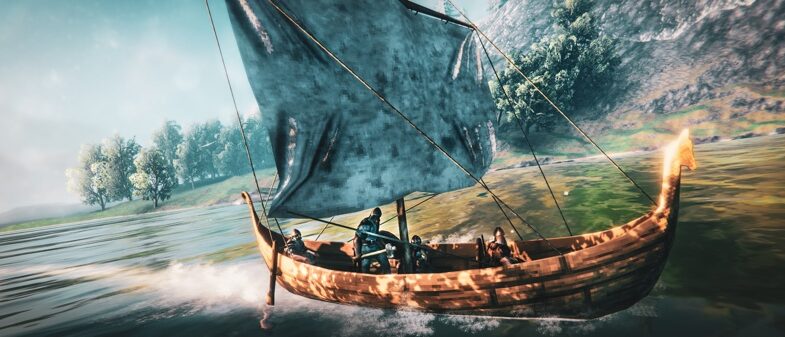
Eventually, to everyone’s surprise and relief, the only thing they saw was Bad Bart returning alone. He floated home towards Nome in a slowly sinking Norsemen longboat, sail full of holes, a horned helmet on his head.
To start at the beginning go here.To hear an audio reading of the chapter, hit the play button above.
Simon’s cafe was closed by the time we were done, so I took Rotella to get a cup of coffee while Sophie went for the map. The alcohol and adrenaline were fading from Rotella’s system so we sat in silence until I said, “That was pretty convincing.”
“It went well, yes.”
“Almost like you’ve done this before.”
“This is not the first time I have needed to convince someone I am less than what I am.” Sipping his coffee Rotella made a face of disgust that wasn’t from its bitterness. It was passing, but it was enough that I dismissed any worries about his integrity.
We stood at Sophie’s return. She strode forward and, in the midst of a Continental kiss, slipped a rolled up copy of the map under his arm. The two of them, stylish and slightly shabby, could have been a pair of fashion industry veterans sharing tailoring plans. Rotella didn’t examine the map, but said, “If I have any questions, I will let our friend know.”
With Rotella gone, I offered Sophie my arm, which she took with a smile. We stepped out into the cool of the evening, the day’s clouds blowing inland. “How do we get her out?”
“There is no need,” Sophie laid her head against mine and I felt one small trouble disappear. “Nika will meet us at midnight. She has been planning an escape of her own. Now we have given her someplace she may go.”
“So what did you two talk about?”
“The truth. She is a prisoner. And a hostage.”
“Hostage?”
“She is the daughter of another member of Mitnick’s Avoritet. Oleg Churbinov, a man important amongst the vory.” I realized now the word didn’t just mean gangster, but an entirely different tribe from Mitnick’s. “There is a dispute. While it is being resolved, Mitnick is watching Nika. But she has no interest in being a chess piece of her father’s world.”
I thought about Mitnick’s house and his lifestyle and his money and wondered if Nika, or anyone, would be willing to give up all of that for something as elusive and dangerous as freedom. Then I thought about all of the women that had to spread their legs for men they hated. Nika at least deserved the chance to find out for herself what she wanted. The trouble that was about to come Mitnick’s way only made me smile.
As I guided us on our idle walk Sophie asked, “Where are we going?”
“Back to the apartment.”
Sophie laughed at that, a lascivious quality to it that translated into a touch of my arm that felt like an electric shock. “And what did you have in mind to pass the time?”
I felt myself blush and fumbled out the words, “I thought I’d get some new socks.” The encounter at Mitnick’s had left my feet in pools of perspiration.
Sophie laughed louder as she guided us back towards the apartment. Pinching her dress by the fabric, she lightly moved it around. “Perhaps a change is in order.” Given everything that was going on, I wondered at our ability to focus on such practical matters.
We manage to get to the Distributeur International warehouse shortly after dark, though. The gates had been locked against squatters long ago, but vandals had made it easy to get inside by smashing windows. I pulled myself through one to open the large front doors from the other side, ushering Sophie in.
I left one of the doors slightly ajar, for when Lanzo arrived. I didn’t worry about the exposure; the entire district was quiet with abandonment. The rare set of headlights that went by sent beams of light spinning through the warehouse’s broken windows to rip around the interior like a searchlight across a prison yard. I tensed at every blinding circle, worried that Nika might get caught in her escape. If she did and she gave us up, I had seen first hand what Mitnick did to men who interfered with his stewardship of the girl.
Sophie found something relatively clean to sit on, keeping her focus on the door. After a time she got tired of watching me pace and pulled me closer, wrapping her arms around me. She pointed us both towards the entrance and we waited.
When Cheryl’s voice came I realized I wasn’t hearing it as much lately. Even now, it was only to say something she would often say to me when we were together as Sophie and I were now. “This is nice.” As if her ghost suddenly realized she wasn’t there, it added, “Isn’t it?”
I kept my eyes on the door even as my mind ping-ponged between past and the future. Feeling Sophie’s stillness, I marveled at her ability to be in the present. I was only happy when Lanzo arrived before the appointed time.
Lanzo had dried his eyes, though they were still red with anger and loss. Not a great look for a man about to make a romantic rendezvous. I ignored this, moving away from Sophie to step out of the shadows. “Get inside,” I told him.
Lanzo closed the door behind him. “You spoke with Nika?”
“Oui,” Sophie answered, coming forward. “She was happy to read your note.” She smiled in a way that told Lanzo the world should be happy. “She will meet us. Here. Tonight.”
Despite the many things Lanzo was troubled about, this news brought him relief. He breathed out a sigh, his shoulders drooping. Fumbling for a cigarette he placed it in his mouth and gazed into the cavern of the old warehouse as if he could see the future in its darkness. Whatever he saw in those shadows wasn’t comforting, He lit his cigarette, burning a hole in the night.
Calming jittery young men buffeted by the forces of love, murder, and betrayal was not something I was practiced at. I’m not sure why I didn’t keep quiet and let Sophie speak for us, but I stepped forward. I was relieved to pull out the roll of Euros I had been carrying around. “This isn’t a lot, but if you’re smart it can take you far.” In the dark, I took his hand in mine and put the money in it.
Lanzo took it, feeling it before he realized what it was and its value. It was probably the most money he had held in his life. He stared at it, rotating it in his fist, examining the cash like it was a meteor fallen to Earth. He managed to take his cigarette in hand before it fell out of his mouth. Once he was convinced it was real, he stared at me, all new questions bubbling up.
I waved these away. “I stole it from Mitnick.” Whatever questions were on Lanzo’s lips were replaced with a grin. He disappeared the money roll into his jacket.
We waited. Switching roles, Sophie disappeared into the dark of the warehouse, stalking in absolute silence. Every once in a while I would see her shadow peek through one of the windows.
In between the cigarettes he was chain-smoking, Lanzo asked, “Where is the Russian?”
“You mean Mitnick?”
“Oui.”
I repeated my contradictory impulse from earlier. “He’s not Russian. He’s from Belarus.”
Lanzo chuckled, clearly not seeing or caring about the distinction. “What is the difference? They are countries run by czars.”
In the dim, I cast a side-eye to reevaluate Lanzo. He was than I thought. I chose not to pursue that, though, and stretched my trench coat against the growing cold. “I guess it doesn’t.”
“So where is he?”
I felt pride make me reluctant to answer. If I had thought to ask back at the house, a simple question probably could have revealed Mitnick’s evening plans. Lanzo, though, had earned a straight answer. “I don’t know. At home, probably.”
Lanzo only grinned from behind his cigarette, this bit of known unknown causing his teeth to sprout into a raptorial grin under his aquiline nose. I ignored it. After all, if Mitnick walked in the door right then, Lanzo would get a chance to kill him.
Time marched towards midnight and passed it. Silence filled the cavern of the warehouse. Sophie walked the perimeter while Lanzo and I pondered vague futures.
Another quick spin of lights through the windows was the only warning we got before a car that sounded like a thousand hot pistons roared to a halt outside. It made such a racket that every nerve that I had on standby jumped to attention.
The headlights died out a second after the growling of the engine ceased. I rushed to the entrance to see the silhouette of a low-slung bullet parked out front, its tire up on the curb. I cursed, even as Nika stepped out of the vehicle, imagining her rocketing away from Mitnick’s house in what appeared to be the most easily recognizable car in France.
Select the play button above for an audio reading.
Every Spring I can feel the eyes of our neighbors watching us from their big, white houses. While my wife gardens and I mow the lawn, I know they’re staring from the homes I built for them. If they come out to speak, I wave at the noise of the lawnmower and don’t stop. I used to – after all, they’re all friendly at first. As friendly as anyone from down South can be, but in the end they all get around to the same questions. Did I know Stanton Murdoch? Whatever became of him? They all knew him, either in his role in as a lawyer or a banker, and wonder why he vanished from a community he helped create. They don’t know he was only a small and final part in how we all ended up here. They’re all too high-class to ask the Silver Dollar boys, but they’ve all heard the rumors.
Before my wife Carrie and I arrived in our small Mississippi town, we came from a magical place where people minded their own business. For many years in our home state of Wyoming I ran a custom furniture and restoration business that had done well amongst the jet-setting crowd of Jackson Hole. While this had allowed us to rub elbows with the wealthy with their second homes and ski chalets, it hadn’t done so well as to make us one of them.
Not to say that we didn’t offer a bit of variety into their lives. Carrie enjoyed a bit of flamboyant dress and somehow always transformed her art history degree into some phantasmagoria (“Did you know that Louis XII died receiving oral sex while oil painting?”). I often came straight to whichever party we were invited to from my workshop, rumpled chinos and work shirt stained with paints of a wide spectrum, my hands rough from sanding or stitching.
However, when the plumbing of our country’s banks became so backed up with its sewage that the spigot of easy money ran dry, all the trickling down ended, as did my business. Gone were the brunch invitations, the gift of ski passes, the buying trips to Europe. None of these things had come our way because any of the lobbyists or tech bros or real estate magnets had a desire to pry into our private lives, but because of the quality of my work.
More than a decade after the Financial Crisis, though, it’s hard to remember some times how frightened people were, particularly the rich. It’s hard to imagine sleeping on the ground after you’ve spent a lifetime on 1000 thread count Egyptian cotton sheets. As to my business, it was like how Hemingway described bankruptcy: It was fine until it wasn’t. One day the order I was working on, a new dining set for a young couple with old money, was the last order. There just wasn’t anymore. I borrowed some from wealthy patrons who had the charity to think of us as friends, but it didn’t last and neither did their largesse.
At that point Carrie’s grandfather, Orwell, had been ailing for a number of years, somewhere deep in Mississippi.He refused to leave his home no matter how many reluctant invitations he received to come live with his children or grandchildren. He stayed on the same patch of backwoods that he and his forefathers had used for moonshining and rumrunning since America had been taxing whiskey. He had only left it to serve in Vietnam, an experience which had taught him to hate both communists and his own government. It might also explain why he never wanted to leave Mississippi again. Rumor had it he kept at the moonshining until he wasn’t physically capable of operating the stills anymore, and when that lucrative work had dried up his medical bills stacked up. As a result he had been forced by the bank to sell parcels of his land to a developer with plans to turn the once impenetrable woods around him into a quiet commuter community. But the same crisis that had killed my business hit the developer just as hard and he fled to the Grand Caymans with as much money as he could embezzle.
Which left Carrie and I without a home and a grandfather no one wanted anymore, surrounded by land that was no longer his. With our home about to be foreclosed on I sat in our soon-to-be erstwhile living room and listened to Carrie speaking to Orwell on the phone, convincing him that it would be better for us to take care of him than some stranger he would never trust. I can’t tell if it bothered me more that she practically had to beg him to this or that my failure had led it to being necessary.
Under this pretense, we moved from the high plains of Wyoming to the low-country of Mississippi. We stayed with him for, gratefully, a short number of months while I completed one of the unfinished homes the developer had started.With the embezzler gone, I was able to bargain with the bank, buying the house for practically nothing and exchanging a loan for materials against the completion of another home that would remain property of the bank.
This was, as you can imagine, exhausting work. Not just the building of the home, which was physically intensive but at least satisfying. Negotiating with the bank, its Byzantine regulations, and its own institutional fear in the wake of the housing collapse was far worse. It was mentally and emotionally draining, and I would often longingly stare outside into the Mississippi spring yearning to be out in its awful humidity.
This was only sharpened when we couldn’t meet even the tiny payments that I had negotiated with the bank. This initiated a series of demanding and increasingly panicked phone calls. Carrie had managed to secure a research job at a small liberal arts college, but it paid as well as you’d expect. My work on the house paid nothing and we both had to split our time taking care of Orwell.
Or so I thought. One day while Carrie and I were discussing how we might feed ourselves and an increasingly fussy old man, Orwell yelled for me from the garage. Me and Carrie exchanged looks like I had been called to the principal’s office and I went without a word.
In the garage, Orwell ushered me outside with a grunt and led the way across his land. Out past the skeletons of the other homes the developer had started, we went deep into the woods. I didn’t ask about our destination – there wasn’t any point with Orwell. If I asked where he was taking me, he’d only growl some incomplete answer such as, “This way.” So I went, knowing the well-being of me and my wife were currently, and perhaps forevermore, tied to this curmudgeon.
It took me a moment to realize we had arrived at our destination. Deep among the trees were a series of camouflage tarps strapped over big barrels, like oil drums set on their sides. Each was a sickly green from their exposure to the elements. I realized I was looking at Orwell’s legendary stills, but I couldn’t imagine it would be sanitary to drink anything that came out of them. Then I realized it would be unhealthy for completely different reason.
Out of a spigot, Orwell poured a clear liquid into a plastic cup. “Drink this,” he commanded, handing it to me.
I eyed the liquid, then Orwell, knowing that to disobey would result in weeks of increased surliness. Gratefully, there wasn’t much, so I downed it in one go. A terrible mistake.
I wheezed at the heat of the moonshine, my throat feeling like I could use it to strip varnish off old furniture. Orwell hooted with laughter, slapping my back as I bent over with coughing. “That’s Mississippi moonshine, boy. Gotta take it easy with that.”
For the lack of anything better to say, I lied. It was great. Orwell grinned wickedly, swatting away my falsehood with a, “Some local boys’ll pay good money for it.”
I stared at Orwell with my watering eyes. “What are you saying?”
“You got that big van,” Orwell mentioned the one asset we had owned outright from my business. It was big enough to haul furniture and burly enough to traverse the rough country of my more isolated Wyoming clients. So it had been more than capable of moving us here.
Through the icepick the moonshine had put into my brain, I began to get an idea of what Orwell was saying. Sensing an opportunity as dangerous as any swamp predator, I told him, “Speak your mind, Orwell. You don’t usually mince words.”
Orwell smiled, enjoying my candor. “If we fill up that truck with this moonshine and sell it to those boys, we’d have the money we’d need.”
My skepticism and caution were eroded by the months of unemployment, the abandonment of our old home, and the burning of the moonshine. “How would we do that?”
That is how I ended up driving Orwell in his big Chevy down into Oswauska. We pulled up in front of a rundown shack, longer than it was wide, its length rolling away from the town’s main drag. Above the door hung a sign proclaiming the establishment “The Silver Dollar Saloon.”
I stepped out of the truck and over to the other side to help Orwell out. Settled onto the sidewalk, he reached out and buttoned my jacket, patting my chest. “Pretend you got a gun in there.”
I side-eyed the ramshackle saloon and then back to Orwell. “Friends of yours?”
Orwell laughed in the same way he had at the still. “Don’t you worry. I’ve got enough gun for both of us.”
I escorted Orwell into the saloon, past a bartender who nodded at Orwell, and into a backroom. Handshakes and grunting introductions were made with three heavy-set rough men who clearly only tolerated my presence as Orwell’s son-in-law. I stood in a corner, hands in my pockets, and listened to an hour’s worth of negotiations. Between heavy accents and jargon, I didn’t understand much, units of measurement and money only distinguishable by numbers.
Eventually, Orwell shook the hand of the biggest man with the same fierce determination he had when he had shook mine at his daughter’s altar. As I walked Orwell back to his Chevy, I thought, is this how people get rich? Some specialty knowledge, connections with the right individuals, and a willingness to skirt the law? Are these types of deals how my old clients had afforded second homes, private flights, and custom made furniture?
Operating the stills again seemed to renew Orwell, a vigor that spread to his every day life. With my willing accompaniment he restored all of the remaining stills and even shanghaied Carrie into buying mash from different places around Jefferson and Oxford counties so the amounts purchased wouldn’t attract attention. His silent surliness became a boisterous anger at any delay. After six weeks, I backed the furniture van into the woods and filled it with jugs of his moonshine. A midnight meeting later, not far from the Silver Dollar, we had a pile of money instead.
Cheap to make and without taxes, the moonshine was profitable. Of course, that’s what made it illegal. I couldn’t deposit all of it at the bank without attracting attention from the IRS, so I hid it in our new home. When my crawlspace began to fill up with money I had nowhere else to put, I mentioned stopping, or at least pausing, but Orwell only asked, “Why?”
“Because I don’t want to go to jail.” Recalling the suspicious glances I was getting at the bank I added, “Every teller at the bank has noticed the regular, cash deposits.”
Orwell laughed and introduced me to the head of the local bank the next day. I had only been negotiating with Stanton Murdoch’s underlings to that point, but he was keen to meet with Orwell. In a surprising frankness that set my eyebrows to rising, Orwell detailed our illicit enterprise and its gains. I had to restrain myself as Murdoch smiled wide. I didn’t want to deal with someone who was incompetent or crooked enough to let the developer get away, but I didn’t see a choice. Stanton was obviously crooked enough that, after intense negotiations, Orwell and I left with a business account to deposit our money into a fake enterprise.
Murdoch, though, was clearly not to be trusted and would sell us out to the first regulator that asked hard enough. And despite his renewed spirit, Orwell’s body was still failing him. Even if he wanted to continue breaking the law by engaging in a business practice that gave him the excuse to be mildly drunk much of the time, he wouldn’t be able to last forever. He didn’t even bother depositing his cash into the fake account Murdoch set up.
I did, though, and with that gray money, I began buying up the plots of land Orwell had sold and picking up what the old developer had fled from. With a good knowledge of how much we were making from the moonshine, Stanton Murdoch negotiated nastily, squeezing us more for the otherwise useless land than he could have from anyone else. After Orwell nearly attacked him during one of these sessions, I stopped bringing him to the bank, and smiled bitterly at Murdoch when signing the final terms. To add insult to injury, I was the one who had to listen to Orwell’s constant remonstrations about the raw deal at home.
There’s a lot of waiting in the moonshine business, though, and once I had secured the terms I used it to start finishing the other houses. After a time, I even hired some of the local boys from the Silver Dollar to help out. They didn’t mind I paid in cash.
With the land now being the most expensive part, I built the houses bigger to make up the extra cash, bigger than ours or Orwell’s. As if they knew about the coming pandemic, our remote location began to attract individuals who wanted to escape from New Orleans, Shreveport, Jackson. Stanton Murdoch started to become a regular fixture around the neighborhood speaking with these individuals, usually couples that were clearly monied, showing them the houses and discussing how his bank might help them secure one. When we caught each other’s eye, he’d wink at me with a knowing smile. Maybe it was Orwell rubbing off on me. I did not wink back.
I was happy to let Murdoch deal with the prospective neighbors. As nice as some of them were they reminded me too much of my patrons in Wyoming: Happy to deal with me and the quality of my work, but in truth regarding me as a servant that it was useful to have nearby. I took their money anyway. Like some kind of magic trick, depositing their legitimate money into Murdoch’s bank made our once fake enterprise real, good money tumbled in with the dirty till no one could tell the difference.
Soon, Orwell had neighbors that weren’t kin for the first time, and he didn’t like it. He complained about it endlessly to Carrie until I stepped in and listened. Like most things Orwell, it took digging to get at the root of his unhappiness, but one day, with moonshine on his breath, he said, “What if one of these city eejits decides to take a walk in the woods and finds my stills?”
I had been giving that thought as well and provided an answer I thought would salve Orwell’s concerns. “You think any of these folks will go stumbling out into that swamp you call a backyard? There’s mosquitos out there bigger than most of their dogs.”
That got a laugh out of him that rocked the table and he left that worry alone for awhile. Truth was, with Orwell’s failing health and increased alcohol consumption his mental faculties weren’t once they what they once were. He hadn’t noticed I had begun to disassemble the stills.
Someone had.
The Silver Dollar Boys bunched up like angry badgers when I told them we were shutting down the operation, but they settled once I told them we’d be willing to sell the stills. They added a new footprints around the muddy ground when they came around to help salvage them. Afterwards, I noticed something out of place. I wasn’t any Cheyenne tracker, but the flat imprints of dress shoes were apparent among the heavy tread of work boots. I decided to finish the rest of the job myself under cover of dark.
The following night, I backed the van up to the camp, hoping to breakdown the last few stills and be done with it. Waiting for me there, though, in between the red of the taillights and the ghost of the new moon, stood a figure blocking the path. My chest snapped shut on my beating heart as I thought the regulators had finally sprung their trap, but a stranger sense of dread fell over me as I recognized Stanton Murdoch standing in the swamp.
I stepped out of the van with a slow caution. The ground this deep into the woods could shift at times and I felt Murdoch’s presence only added to it. I put a flashlight on him to make sure he was real. “Murdoch? What are you doing out here?”
“I was about to ask you the same thing.”
I corkscrewed my expression at him even as I knew he couldn’t see it in the dark. “You know what I’m doing out here.”
“Well, I thought you were making moonshine, but it looks like I was wrong.” Murdoch whizzed his own flashlight around at the depressions the removed stills had left, like fossils of massive creatures that died holding the poison.
I flicked my own light to the remaining stills, calculating the time it would take to get them into the truck. “I’m having a going out of business sale.”
“You didn’t think to ask me about that?”
“Why would I do that?”
“We’re partners.”
That was news to me. “I’ve seen the statements, Murdoch. You’ve gotten your cut. And that’s after you gouged Orwell to get his own land back. So you’ll have to forgive me if I didn’t think we needed your permission.”
“This isn’t Orwell’s land. That stops back yonder. This belongs to the county. Add that on top of everything else, you could be in a heap of trouble.”
I circled Murdoch as we spoke, keeping the flashlight on him, hoping between its clarity and the red taillights I might discern his intentions. “You’re the one who forced Orwell to sell his land to pay for his medical bills. You’re the one who sold it the developer who ran off with all the money. You’re not Orwell’s partner. You’re a part of the problem.”
“I don’t see it that way. What you and your grandpa have brought in have helped paper up the thin veil that holds this community together. We can’t have you stop now.”
“What community? I didn’t see anyone taking care of Orwell until we showed up. The only community here is the one that’s going to be living in the houses I built.”
Murdoch stepped forward, his pale skin putting him into a ghostly illumination in the flashlight’s beam, his smug smile shining in the glow. “Let’s be civil about this. I need you to doing what you’re doing and you need to stay out of jail. And think of poor Orwell. Do you want him to die in prison?”
That must have been the wrong thing to say. It was answered with a metal on bone crack that came out of Murdoch’s head as his mouth dropped its grin so his tongue lulled out. I was too surprised to say anything as he dropped to his knees, showing Orwell standing behind him. In his hands, Orwell clutched an entrenching tool, a nasty spade with a serrated edge and a short but sturdy handle. It looked like something he had brought home with him from the jungles of Vietnam.
Before I could say anything, Orwell stepped forward and brought the heavy spade down on Murdoch several more times. After three or four more bone-crunching smacks, there wasn’t much point, but I stepped forward to stop him. It didn’t take much. I grabbed the tool when Orwell raised it again and he practically collapsed in my arms. He called Murdoch a sunuvabitch and muttered something about someone named Charlie. With the moonshine on his breath, I wondered if he knew what he had done or even where he was. Some part of him must have guided him here, but that was no guarantee he’d remember what that was in the morning.
I got him into the truck, more disturbed by his listlessness after the burst of violence than by the violence itself. On some level I must have known that Orwell was capable of something like this and I suppose the Silver Dollar boys were as well.
I dragged Murdoch’s body out into the brush. Mississippi wildlife would make short work of it. I was relieved to discover he didn’t have his phone on him. I found his wallet and keys and threw both off into the brush. I hadn’t seen his car on Orwell’s road, so he must have parked somewhere else and walked in.
I disassembled the few remaining stills and got them into the truck in record time. Driving away, I prayed that rain would come to wash the tire tracks away, but the sky was an impenetrable wall of darkness. Taking the bumpy ride home, Orwell came to long enough to ask where we were. “You wandered off, Orwell. Carrie sent me to find you. We’re going home.”
Carrie and I got him settled in his house, but I was already looking over my shoulder. The next day, when Orwell’s disorientation lessened but continued, we drove him to the Oswauska hospital. While we waited I kept watching the lobby doors for uniformed officers to walk in with questions.
It ended up I didn’t need to worry about it. After a few days, the local news ran a story on Murdoch’s disappearance, including that he had been under investigation in the developer’s embezzlement scheme. Several quotes from his wife suggested flatly that he had run off with an unknown mistress. It didn’t seem that the Stanton Murdoch was going to be missed by anyone in Mississippi.
Other than our new neighbors, of course, who couldn’t help but wonder why they had been spared Murdoch’s pilfering. Maybe that’s the reason that after his disappearance our new neighbors stopped talking to me as a servant, but as a potential partner. They nose around about where the original development money had come from, ask how I got this all set up. Are you interested in further investment opportunities, they ask.
No, I am not. Orwell, confined to a wheelchair now, watches me refuses these offers from his porch and just smiles.
To start at the beginning of the story go here.To hear an audio reading, select the play button above.
Her attitude put a stone in Mitnick’s eye. He leaned forward, bending at the waist to hover over her. “Good afternoon, Nika. I would like you to meet some friends of ours.”
Nika glanced over her shoulder at we trio of strangers. With me strapped into a too-tight, secondhand trench coat, Rotella with his cowboy boots, and Sophie’s reposed and scarred beauty, I can’t imagine what she must have thought of us. She returned to Mitnick. “What is it that you want?”
“Don’t you want to meet our friends?” While they bickered, Sophie unfolded herself from the chair and glided over.
Nika’s expression pinched in a way that said what she really wanted Mitnick to go do. Instead, though, she replied, “I want to go down the cliffs today.”
Sophie caught her attention with, “Hello, Nika. Would you like some champagne?” Sophie held out her glass as if it had always been intended for the other woman.
“No,” Nika looked like she’d prefer a shot of vodka. “Who are you?”
While Mitnick said something chastising about being rude, Sophie only laughed. “I’m Sophie Carbone. I am new to the city as well.”
Nika’s hostility, having found no place to roost on Sophie, returned to Mitnick. “Are you arranging playdates now?”
Sophie ignored Mitnick to laugh at the jab. “As if we were children. You are funny. Mitnick said you were funny.” Sophie shook her head. “But no. I was hoping you could tell me about the city.”
Nika stared at Sophie with her height and beauty and scars as if she might be some kind of trap. “I am not a tour guide.”
Sophie leaned forward to set the champagne onto Mitnick’s desk, bringing her close to Nika. “Who wants to know such things that a tour guide can tell you?” In a conspiratorial whisper she added, “Where is the fun in that?”
Nika pulled on the front of her sweatshirt, bunching it into a fist. “Russians don’t do fun,” She emphasized the last word like someone might a venereal disease.
Still close, still quiet, Sophie said, “That’s not what I hear.”
If it were possible, Nika grew a shade paler. Before she could respond, though, Sophie took her by the arm. “Russians drink and share stories, recite poetry, tell bawdy jokes.” Sophie gestured towards the closed French windows. “But there is nothing but silence here. Aren’t you bored?” Sophie winked at her. “Let us go down to the cliffs and leave these men to the business of being boring.”
Stunned by the frontal assault of Sophie’s charm, Nika slowly nodded. Sophie took a step towards one of the French doors, the younger woman moved with her. Before any of us really knew what was happening, the pair of them were gone, outside onto the long green lawn that stretched towards the cliffs Sophie had rescued me from.
Mitnick nodded to Brick who moved to follow Nika and Sophie. He said something to him in Russian, then in English, for our benefit, “Keep your distance. They have requested privacy.”
I hoped no one would notice that Sophie knew which exit to take to get to the cliffs. Rotella, watching the curtains float in the wake of Sophie and Nika’s departure said, “She can be very persuasive.”
Mitnick replied, “So I see.”
“Then you see why the men you seek the friendship of will believe her.”
Mitnick’s smile returned, happy to be back on familiar territory. “And what will that cost me?”
A part of me marveled that Mitnick considered the large wad of cash he had given me to be just the cover charge to get Rotella in the door. I tried not to think about the fact that it was a month’s pay for me.
I sat down on one of the library’s settees and watched them while pretending to not pay attention. In different circumstances I might have been able to doze. Now, though, my mind kept wondering to the Russians and how one might look out a window and think to himself that perhaps Sophie appeared familiar.
The conversation caught my attention again when I overheard Rotella say, “When you first came here, you did business with Sartre?”
Mitnick snorted, a quick exhalation to push the Night Governor far from him. “He is a greedy man who wants too much for himself.”
Rotella nodded. “Your independent moves have sullied that relationship, then?”
Mitnick raised his shoulders and spread his hands as if all of Old Town were between him and Rotella. “I make a few inquiries, ask about the casino, perhaps if they are open to partnership, and he flies off. Does damage that cannot be undone.”
“You mean the scene he caused?”
“Yes! How is that a way to treat another man?”
Rotella sadly shook his head. “So you see Sartre’s impunity. His roots here are deep. All can be made to look the other way.”
“I would never make such a display. I only wish to conduct my business in peace.” Mitnick’s words moved him, marching back-and-forth like a czar heading towards a peasant village he intended to burn to the ground for its insolence.
Rotella nodded. “Our business here, if concluded favorably, can provide against such encounters from happening again.”
I sat there for the better part of an hour, listening to Rotella and Mitnick speak in language that became more direct the more liquor they consumed. Rotella was very good at playing the dirty cop. Before I had time to really worry myself about this, Sophie returned. “Dur is escorting Nika to her tennis lesson,” she explained, and I smiled, admiring that she had learned Brick’s Christian name in their brief time outside.
Without pause, Sophie crossed the room to Rotella, taking his whiskey from his hand to sip it. “She is unhappy. But she is safe and no one’s prisoner.”
Rotella openly admired Sophie in the way that Frenchmen do that somehow doesn’t offend women. He turned to Mitnick, smiling to share this esteem. “This is excellent news. For both of us.” The alcohol glow around him only added to his performance.
Mitnick’s wide and toothy smile reappeared and the two men fell to finishing their bargaining. The negotiations took on a friendly intensity.
Sophie, as ever, played it cool. It was only in the car later, as we careened down the canyon roads with a slightly drunk cop at the wheel, that she said, “She has the note.”
Select the play button above for an audio reading. Image courtesy of The Bell Hotel.
The specter roamed the grounds for years and did no harm. Unless you count attracting tourists. Mary loved the apparition, its ghostly white beauty that floated through the night, and she hated those who came to stare at it.
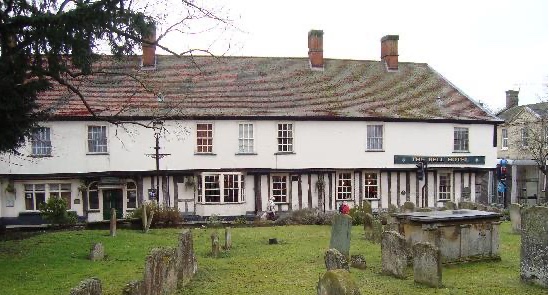
Particularly Peter Wool. He had bought the local inn and shortly thereafter announced he knew the identity of the ghost. A countess, he declared, who had been buried in the local cemetery. She died waiting for her husband to return from one of the country’s many civil wars and waited ever since.
He even began to lead tours to an ancient cemetery outside of town. A clearing studded with gravestones whose engravings had long been washed away by time and the elements, he pointed to one of them as the countess’s.
The story only brought more tourists, which Mary suspected was Peter’s plan all along. What she hated more than that, though, was she knew it was a lie. Mary’s possessive love had, after all, created the ghost. And, one day very soon, Peter would learn where her body was really buried.