Select the play button above for an audio reading.
The coven had come together and debated the matter at length and, at times, with great ardor. After much discussion, the three witches decided they had enough of the Prince and it was time for a lady to show him his place.
Who to send, though? The witches were elderly and preferred to spend their time reading and in quiet contemplation. The Prince, however, had committed too many crimes to be ignored, so they examined his wrongs for a suitable subject.
Among his philandering, plundering, payoffs, and seizures of property, the sisters found a young lady, once happy on her family’s farm. Taken from it by the Prince when he had confiscated the land she, like the rest of the house, was separated and sold into slavery. Since then, the back-breaking and dirty work she was ordered to do hid her grace and beauty. Her true name had even been lost in the brutal transaction of her bondage, her new owners only calling her Ash for the perpetual dirt that now covered her. In short, for the coven’s purposes, she was perfect.
The three witches began visiting her at night and, while she was frightened at first, she came to view them as surrogate parents, for they taught her so many things. They reminded her how to sing and dance, to charm, and taught her how to read and write, of magic and alchemy. All of them, together, spent a year in preparation, the magic of her new godparents keeping all of this secret from the women who held her in slavery.
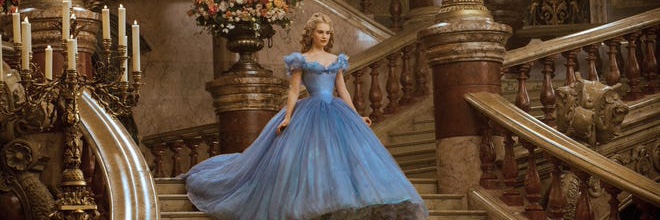
Then one day close to a royal ball celebrating the Prince’s conquests, they provided her with a final gift, an outfit of grandeur as beautiful and durable as Ash herself. The illusion of the formal dress hid many things besides Ash’s identity; a bandoleer of flintlocks and daggers, many pockets with vials of explosives and noxious agents. Her shoes, as exquisite and shining as a crystal goblet, gripped the floor like a spider and their heels struck with as much venom.
Between its radiance and Ash’s beauty, no one questioned her presence at the ball. She waltzed in, alone and unannounced, and the servants made way for her. And who could blame them? She carried herself with the calm confidence of any noble. Any courtier who saw her was quickly charmed. She was light on her feet, an exquisite dancer, a fluid conversationalist, well-read and well-spoken, so no one suspected she was one of the kingdom’s many slaves.
The witches’ gifts, and all of the training and learning done in secret, would have been for naught though without the will to wield them. Once at the ball, with its grandeur and splendor, dancing with the Prince’s charming sycophants, Ash herself could have been lost in the illusion. The woman she had become, though, remembered the girl she had been and held the Prince in her mind’s eye. She remembered the evening that he roughly awakened her, hands pulling her from her bed, while the burning of her family’s farm lit the scene through her bedroom window.
The Prince, having done such many times, did not recognize the girl he had sold into slavery, but only saw a beautiful stranger ripe for the taking. She demurred at first when his seneschal delivered the Prince’s desire for a dance, saying she was not worthy. But when she saw the hungry look in this eyes, she agreed.
Once close to the Prince on the ballroom floor she fluttered her eyes coquettishly, giggled modestly at his compliments, danced him out into the center of the gallery, and slid the first dagger between his ribs. When the red of his blood stained the floor, all realized the assassination and gasps echoed forth. Ash only smiled a razor grin. After all, the now screaming nobles had sworn fealty to the Prince, were the power structure that allowed such a man to rule. They were, of course, the reason she had brought all those explosives.
The next day, in the burned remains of the castle, amongst the crumbled stone and charred wood, the kingdom’s constable, Inspector Pleasling, only found one clue. It told him nothing about how such destruction had been wrought. It was a small, miraculously unbroken, glass shoe.
To start at the beginning go here.To hear an audio reading of the chapter, hit the play button above.
For the note to Nika to work as intended, it would need to contain a day, a time, and a place. At that moment, I had none of those.
I headed back to the phone near the cathedral. I kept an eye out for Russians, feeling like I was dragging a long shadow behind me through the sun-bleached streets of Old Town.
Visiting the phone booth so many times in such a short period made me wish Atwell had setup more than one dead drop. He didn’t, though, so I performed the increasingly ridiculous charade of making a phone call while writing out a note. After far too much contemplation I only wrote, “Meeting with Mitnick and Rotella.” After a moment, I added, “Stay away from the Night Governor.” I hadn’t yet told the lie about Atwell saving Sartre by setting the fire, so I wasn’t sure what kind of reception he’d get if they ran into each other. And I might need Atwell yet.
I stood at the telephone, paralyzed by the speed in which things were moving. I hadn’t expected the meet with Mitnick to happen this quickly. I decided there wasn’t enough time to wait for the Idiots to sleep off their hangover. I had an idea of where Lanzo might be, though, so that would have to do.
I was about to point my feet to the nearest tram station when I remembered Brick and Whip interrupting my meet with Moreau at his scooter shop. If one of them had told the Russians about my working at the casino, it was possible they would have mentioned the shop. As unlikely as it might be, it was there, and Moreau had already demonstrated a willingness to leave me to my fate.
I thought about this until I picked up the receiver to call information. I got the number Petit Moto Moreau and dialed. In a surprisingly short amount of time, Moreau picked up, the creaking in his bones coming out in his voice. I didn’t waste any effort on trying to make small talk, but had the decency to speak in French. “I need to speak with Lanzo.”
I could have dropped a depth charge into the silence that followed. Eventually, words bubbled up in return. “He is asleep.”
“Wake him up.” The urgency I tried to channel sounded hostile, so I followed with, “It’s important.”
Moreau either didn’t want to speak to me or took me seriously because the line went quiet. I stood and began to sweat, telling myself it was the growing morning heat. My hand was growing damp against the receiver when a voice came on that sounded like a hangover that had been baking on the beach. “What?”
“Things are moving fast,” I repeated the phrase into the phone. “Meet me at the botanical gardens as soon as you can.” I gave Lanzo a moment to process this, then asked, “Do you understand?”
He said “Oui,” and I hung up.
Stepping away from the telephone, I looked down the alley at the tall onion domes of the cathedral. There was a time in history such a place might have acted as a sanctuary, that the institution itself would have held enough authority that even men who could have breached its walls wouldn’t have dared to do so. Now though, less than two decades into a new century, I could only imagine men like Sartre and Mitnick breaking down its doors if what they wanted what was inside. Atwell would probably cheer from the sidelines. The city might have been held together with some kind of holy authority back when it was just Old Town, but now it was held together with greed and sunshine. Neither church nor government garnered much respect anymore and, looking at a structure created by the last Czar, I couldn’t help but feel like I was waiting for the next round of executions. It was just a question of which side of the firing line you were on.
I shrugged out of navel-gazing and double-timed it to the nearest tram station. I took one west, hopped off before I hit the periphérique.
In Grenoble, I headed south. Walking past the black-armored gendarmerie I wondered how fast they could respond if I lifted the visor of one of their helmets and punched the cop underneath it in the face. There was something about their hidden stares that provoked the idle curiosity and a part of my brain gleefully imagined the chase I could lead them on before they caught me and beat me to a bloody pulp. If I knew I was going to get caught, I might as well lead them into a local museum and cause as much havoc as possible. The image of running down the uniformly white halls of one of Old Town’s historical institutions, though, reminded me too much of an old palazzo in Venice. The thought of the real violence that happened there took the fun out of my fantasy.
By the time I had arrived the sun was out in full force, banishing any cloud from the bluebird sky. The grounds of the botanical gardens were an oasis of well-tended palm trees and shrubs crowding around a glass pyramid greenhouse at its center. The vegetation grew right up next to its honeycombed walls as if the structure had pushed itself out of the ground like the plants surrounding it, making it look like an abandoned set from some sci-fi movie. It was built between the ocean and a lagoon, limiting the numbers of approach. With its wide walkways, these were easy to surveil from the raised platform that was the greenhouse’s entrance. This was added to by the lack of tourists. With the beaches, casino, and glamor of Old Town to compete against, not many people visited.
Select the play button above for an audio reading.To see all cases, go here.
He was a wizard that carried a sword, which marked him as a dangerous man. The Little Wyoming Casino had hosted some interesting conventions, though, so if someone had strode across the gambling floor dressed in a pointy hat and starred robe and it would have only drawn a few amused stares. This one, though, wore the regalia of a stage magician: a bright silk shirt matched the blue inner lining of his black cape; somber gray slacks ended in shoes so well shined they threw stars every time they emerged from his billowing shadow.
Claire noticed him from her table as he crossed the casino floor. At first she thought it was Henry, one of the house performers and one of a series of unfortunate recent choices she had made. She breathed a sigh of relief when she realized it wasn’t. Both the height and length of this one’s hair were too short to be Henry, the stature a bit elfin. This was a departure from the men Claire usually found attractive, but there was a devilish quality to the features enhanced by his beard and mustache.
His confident stride drew the attention of more than one admirer. It was this and the naked blade that the magician carried which drew Claire to the conclusion he must be a part of the entertainment. Perhaps, she hoped, he was a replacement for Henry. This wasn’t Vegas, though, and the Little Wyoming Casino only had so many places a magician should be headed and towards her table wasn’t one of them. Claire kept flopping the deal, though, certain if the purposeful stranger was walking around with a sword, security must have let them in.
Hers was a full table on a busy afternoon, dealing to five strangers, and everyone was enjoying themselves for a change. Everyone but the big winner in the center seat, which was strange, but sometimes gambling addicts didn’t muchenjoy their addiction, which made them a lot like drunks in Claire’s opinion. He sat hunched over the table, buried in a long brown coat, a wide-brimmed fishing hat squashed down over bristling, straw hair. He only spoke as necessary, preferring to signal his desires with scratching at the table. His voice had a hollow, droning quality that was unsettling, so Claire returned the favor.
The flamboyant appearance of the magician had gotten her attention but she needed to stay on the cards, on the players. She had made too many small mistakes lately and she needed this job. Out of her peripheral vision, though, she was only able to watch the sword conjuror as he approached the table, making a beeline for her winner.
Both men were odd, certainly, but Claire’s time at dealing cards had given her a rather long and extended acquaintance with the shortcomings and peculiarities of humanity. None of that, though, included violence.
There was a rustle from the other players at the table as they felt the magician’s blue and black cape fluttering behind them, sneaking looks over their shoulders, perhaps expecting a waitress or a gawker. Most did a double-take when they spotted the bearded magician, who only stared at the back of Claire’s winning player with an impish grin almost hidden by the mustache. Her winner only noticed something was wrong when Claire missed his signal for another card. He turned a pallid cheek to see what had her attention, just before the magician swiftly pointed the sword and plunged it into his back.
Claire gasped in surprise, her mind throwing up a shield of deniability, telling her this must be part of a spectacle, ordered up by the casino’s unpredictable and rarely seen boss. Whatever protective measure this thought offered, though, fell away to horror as the sword’s silver tip pierced her winner’s lapel, pinning him in place. The other playersstumbled away from their chairs in shock, the one in the cowboy hat unsurprisingly fumbling for a pistol under his jacket. Before he could draw or security could react, the winner, lanced through with the silver blade, arched his back, open mouth in a silent gasp towards the ceiling, and began to melt.
More than one person had lost consciousness at Claire’s table, but even the sudden onset of a blue-lipped fentanyl overdose was nothing like this. The winner’s hat fell away, followed by the straw of their wig. Under a slick pate, hisbeady eyes receded in their eye-sockets, until rubbery sludge rolled down its cheeks. It stood there, skewered on the sword, melting like one of the wax statues from the Ripley’s Believe It Or Not next door.
The real panic set in, though, at the appearance of the first bristling brown membrane that emerged from the oozethat was the winner. Like some sort of awful, fat wasp emerging from a cocoon, the first of the flyers peeked composite eyes and a brown chitinous shell out of the melting mass before the buzzing of its membranous wings appeared and carried it into the air. Then another, followed by another, emerged. The hall echoed with screams as players and employees added to the cacophony, knocking over furniture or anything else in between them and the exits. Claire stood at her table, transfixed by it all, caught between the shock of unbelievability and the terror that monstrous insects were circling her table.
The cowboy had managed to get his pistol out but only stared, eyes darting between the magician and the insect creatures, unsure who or what he should be shooting at. There wasn’t any hesitation from the magician, who withdrew the blade from the deflated skin of the gambler and began slicing and skewering the flying nightmares. Seeing this, the cowboy drew a bead on one of the buzzing flyers.
“Don’t!” the magician yelled in a voice that wasn’t as masculine as the beard, which was peeling off around the edges. Even at its higher pitch it held enough command that the cowboy stopped, having the good sense to point his pistol towards the ceiling and away from anything human.
The creatures didn’t follow the fleeing crowds or bother with the cowboy, but congregated around Claire like a bombinating tornado. One came buzzing towards her face, some part of her mind begging her to close her screaming mouth. It was halted by the silver flash of the magician’s blade, slicing it in half.
Beyond the flying horror, as it fell into two viscous pieces, Claire saw the magician had torn off their mustache and beard, revealing feminine features with a button nose. The stranger stared at her with startlingly violet eyes before winking at her.
For whatever reason, this allowed Claire to close her mouth. As she watched the stranger continue to swing and slice at the wasps, the air was filled with shrill, short bursts of noise that were quickly repeated. Each whistleaccompanied an arrow that skewered a bulbous insectoid, littering the floor around Claire’s table with shells that had all the charm of dead roaches. When one of the arrows buzzed close to the cowboy, he ducked down under the mundane threat of the barrage and wisely fled.
The arrows came from the bows of a man and woman, of equal height and similar stature. The arcane weaponry would have looked crafted for their hands except both of them were dressed in suits that looked more at place on Wall Street. With their sun-browned skin and raven black hair, they might have been brother and sister. This impression was only encouraged by their flanking a taller, heavier, older man, similarly garbed with his dark hair pulled back in a severe ponytail.
This was Chief Whatsit, a name no employee of the Little Wyoming would say to his face, but everyone used behind his back because so few were introduced to him and, of those, not one could remember it. As he stalked closer to the table, Claire thought, “Oh god, he’s going to fire me.”
The Chief, instead, approached the smiling, beardless magician, who wiped the gore from the blade onto what Claire was now certain was Henry’s cape. To Chief Whatsit, though, the imposter only said in a high if husky voice, “Hi Frank.”
The Chief frowned, clearly not happy at being address with such informality, even as the archers by his sides hid grins. Rather than address this, though, Frank replied, “Nice work, Aggie.”
With a flourish of the now gore spattered cape, Aggie took a melodramatic bow, her own dark bobbed bangs over her face. “My pleasure.”
With a cynical smile that couldn’t hide some warmth, Frank replied, “With the fee we’re paying you, I’m sure it is a pleasure.” He examined the floor, now covered with a dozen dead bulbous wasps that were already hollowing out. “Some day your gonna tell me how you figured this out when I couldn’t.”
“It’s not your fault, Frank,” Aggie said with a wide grin. “All white people look the same to you.”
To everyone’s surprise, except perhaps for Aggie, Frank (“Chief Frank” now forever in Claire’s mind) laughed out loud. She thought he might start back-slapping people when he stopped laughing altogether. He indicated the cowboy, who had been stopped at an exit by additional casino security, arguing with them as they relieved him of his pistol and prepared to escort him out. “That’s the kind of white people trouble we’re used to around here. How’d you do it?”
“You would have figured it out eventually, Frank. The magic is inside of you.”
Chief Frank’s heavy eyes settled on Aggie with a weight that could have curdled milk. “Fine, keep your secrets. Head to the cashier’s cage and they’ll pay you out.” He eyed the sword. “Where’d you get that thing?”
With a magician’s flourish, Aggie whipped the cape around, briefly obscuring her from view. When the fabric settled, both of Aggie’s hands were empty. “What thing?”
Chief Frank shook his head, then spoke to his escorts. “Don’t forget to pick up the arrows. We don’t want this waṡicu grabbing anything that she can walk off with.”
“Frank, now you’re just being nasty.” Claire could hear the mock hurt in Aggie’s voice, but lost sight of her as her knees finally gave and she sank behind her table. She didn’t really begin breathing again until she heard the heavy tread of Chief Frank move away.
Claire was still sitting on the floor, holding her knees to her chest, when the violet eyes of the stranger, almost covered by the dark hair of her long bangs, appeared over the lip of the table. “You OK?”
Claire felt shame heat her cheeks, hiding behind the table like a child. This Aggie person hopped over the table, the cape fluttering around like the wings of a magpie. She landed next to Claire, everything but her black hair, pale skin and violet eyes wrapped in the cloak’s outer dark. She flicked one of the chitinous shells away. “Pretty nasty, huh?”
Claire stared, trying to keep her eyes inside her head. “What was that?”
“It’s a goetic luck demon. But it’s gone now.” A small foot in a well-polished shoe swept out from under the cape to kick another bifurcated carapace away. “You’re safe.” Watching the dead thing tumble away didn’t free Claire from her fear, though, and she felt her breathing begin to intensify again.
Seeing this, Aggie spoke. “Can I tell you a secret?”
Claire blinked, trying to flutter the horror out of existence. “Sure.”
“This thing has been coming here for months.” Aggie indicated the casino with a swing of her head. “Frank couldn’t find it because he thought it was drawn to the casino. I found it because I figured out it had locked onto you.”
Claire’s eyes widened in horror as she heard this, watching one of the warriors bend down to collect an arrow from a pierced wasp, shaking its dust off. Aggie continued with, “You noticed, maybe the past few months, nothing quite works out for you? Particularly here at work? Maybe you’ve felt trapped, like you can’t do anything right.” Claire thought about the losing streak every table she dealt at had possessed, to the unfortunate choice of the love affair with the pompous Henry. “It’s ’cause of this thing.”
Claire felt a small, soft hand take her chin and guide her eyes to look into Aggie’s violet ones. “You’re free now, Claire. Go home, get some sleep. Wake up tomorrow and come to work. Or drive to Oregon. Go for a swim. Visit your mother. Do whatever you want. It can’t hurt you anymore. Whatever happens to you now…it’s just what happens.”
It was only then that Claire felt the sting of tears in her eyes. Looking at this odd stranger, she could only think to say, “Thank you.”
“Goodbye, Claire.” Aggie stood, seemingly much taller than before. “Good luck.”
To start at the beginning go here.To hear an audio reading of the chapter, hit the play button above.
Rotella nodded again, then did the cop thing and asked the obvious question, “How would we prove this?”
I smiled, feeling the repercussions of my statement before I made it. “I ask her.”
Rotella’s astonishment caused him to fall into French. “Qu’est ce que?”
I nudged the roll of money towards him. “You take the cash, go flash it around town for awhile. Make a show of it. I tell Mitnick you’re in, but you’ve got one concern – you’ve heard a rumor that he’s holding someone against their will. We play the ‘This is a serious offense’ kind of thing and tell him you can’t play ball if it’s true. I tell him you’ve even heard rumors of a raid – which would be seriously embarrassing for Mitnick and put a dent in his social climbing plans.
“So I tell him you want me to meet with this girl, confirm she’s there of her own free will. Once I do that, I say, you can cooperate.”
“And this comes to what end?”
“She probably won’t be able to have an honest conversation, so I slip her a note to speak up if she’s safe. If she doesn’t, then we know she’s being held against her will.”
“That proves nothing.”
“It gives you a reason to raid his house. Even if she’s too afraid to come out, a raid would cause all kinds of problems. Maybe get Mitnick in trouble with his partners.”
“And possibly end my career. Why would I do this?” This sounded like such bureaucratic bullshit I felt the flicker of fire in my chest grow, but I had anticipated that Rotella might not be the naive crusader I hoped for.
I took out an address I had copied from Sophie’s map, and slid it across the table to Rotella. “This is the location to one of Mitnick’s cathouses.” When Rotella didn’t understand I added, “His brothels. There should be enough evidence there for you to corroborate what I’m saying.”
The inspector put a forefinger on the note and slid it closer to himself, flipping it over as if evaluating the latest playing card dealt to him. After thoroughly reading its contents he said nothing, but cocked an eyebrow at me in a very clear, very French way. “And…?”
“I’ve got a map of every illegal brothel in town. You help Uncle Sam out with this and I’ll give it to you. You can bust every operation they’ve got running, maybe expose the entire human trafficking ring.”
“If you have this map, why bother with the girl?”
“She could link Mitnick directly to kidnapping. There’s not going to be anything in those cathouses that’ll do that.”
Rotella read the note again, flicking the edge of the paper with his thumb. “This is Atwell’s plan?”
“Would it make you feel better if it was?”
He stared levelly at me, tugged at his mustache and then came to the conclusion of, “Non.””
“Then we’re good?”
“Non.”
A temporary dip into confusion quickly became rising anger, my feet swelling beneath me as I asked, “What?”
“I must meet this girl, this Nika. I will come with you to Mitnick’s.”
I have to admit that surprised me. I hate being surprised. “Why?”
Rotella leveled his cool stare on me. “Because I do not know you. I do not trust you. And I wish to meet Mitnick for myself.” He disappeared the note into his pocket. “I will visit this house. Mitnick will wish to meet me then.”
That seemed backwards to me and I said so. Rotella only replied, “This is the way it will be. Or it will not be at all.”
I stared hard at him across the tables, reminding myself that I couldn’t intimidate him and that violence wasn’t an option. Rotella sipped his coffee, bathing in my hostility with all the calm of a duck in water.
“OK,” I said, palming the mobile. In some pissant way of reestablishing control I said, “Order some breakfast,” and stood to walk away from the table. I felt Simon sweep in behind me as I moved to the front of the cafe and out the front door.
I slipped around the cafe’s front into a side alley, dialing the mobile’s only number as I did. Its buzzing was quickly answered with the same guttural Russian as before. I didn’t bother with any preamble, just stating, “Tell the boss that the inspector is willing to play ball.”
“What?”
I shook off the American colloquialisms I kept slipping into. “The inspector is willing to cooperate.”
There was the sound of a muffled hand over the phone, covering some conference on the other side, until a quick reply came back with, “Good.”
“He wants to meet.”
“Why?”
“The inspector has some questions. And I’ve had a visit from some Russians. Until I get that settled, I’ll feel a lot safer in the company of a cop.”
Another muffled consultation took place and ended with, “Call you back.” The line went dead.
I stared at the phone as if its screen, like some magic 8-ball, could give me an answer on what to do next. When it provided no useful advice I dialed another number. The phone buzzed until a recording of Max, sounding bored and slightly hung over, spoke in such a heavily accented French that I wasn’t sure it was French. There was a beep, though. “You’d better have the hideout for your princess ready soon. Things are moving fast.” I hung up.
Outside the morning sun was beginning to heat the cobblestones, chasing away the moisture from the night’s rain. Even this far from the ocean, a salty breeze gently rolled down the alley.
I breathed that in, the narrow, bleached walls of the lane reminding me of Capanne, and the golden light reminding me of Sophie. Between the two things, I stamped my feet, trying to get my anger to abate. There was still a lot of work to be done.
In the cafe, Rotella was eating the breakfast he was smart enough to order and speaking ebulliently to Simon. It sounded like they were talking local politics. From the cafe’s entrance, a stranger like myself might think he was happy. As I crossed the distance, though, I saw the gestures of his arms and rapid motions of his head were animated by a nervous energy, like an alcoholic who’s found a group of strangers to drink with. If he was happy, it was a tense happiness, brought on by possibilities and dangers.
I got to the table and opened my mouth, but the mobile buzzed in my pocket. I read the number on its display and then conveyed surprise to Rotella with raised eyebrows. “It’s Mitnick.” I flipped the phone open before he could say anything and spoke a quick, “Yes?”
“You are welcome, with the inspector. Come to the house tonight.”
I put the mobile to my chest and spoke to Rotella like we were old acquaintances making dinner plans with dubious friends. “Tonight?”
Between mouthfuls of delicious galette Rotella responded, “Non. Tomorrow afternoon. During the day.”
I stared at him, briefly impressed with the entitlement that apparently all cops, even French ones, had. I blinked that away and repeated what he said into the mobile.
There was another muted conference on the other end of the line and then a, “Da. We will speak then.” The line went dead.
I the phone down, picking up the coffee. “Tomorrow afternoon it is, then.”
Rotella wiped his mouth, then said, “I will visit the address tonight.”
It was my turn to cock an eyebrow. “Why bother? I just told you we’re meeting with Mitnick.”
“It will demonstrate my seriousness.”
I slowly nodded, uncertain how that was going to play. However, Mitnick had exhibited an ability to deal with bluster and violence, so I was confident things wouldn’t get out of hand. “He’ll be expecting me with you.” Before Rotella could offer his own plan, I said, “I’ll pick you up in a taxi and we can travel together. Where do you want me to find you?”
The inspector shrugged, then asked something loudly in quick French to Simon. Whatever it was, Simon responded in an equally fast fashion and Rotella said to me, “We will meet here.” He checked his wristwatch, a black and utilitarian thing, and added, “At 5:00.”
“OK.” I stood up, by way of announcing my departure said, “Enjoy your breakfast.”
Rotella, predictably ensnared by the wonders of Simon’s breakfast, nodded and held up his coffee cup in a mock toast that he tapped the money roll with. “Do not forget your Euros.”
I waved it off, but Rotella made no move towards it, continuing to eat as if it weren’t there. I couldn’t really blame him for not wanting it, so I took it over to the counter. I set the money and the mobile down, asking Simon if he could hold onto them.
Simon stared at the cash with a restraint I think is singular to French waiters. After that brief pause he shrugged, disappearing both the money and the phone under the counter. Uncertain as to what I had done to earn such loyalty, but grateful for it, I said, “Take as much as you want.”
I walked out before he could protest. With the inspector behind me in the cafe, it left me with a little over 24 hours to plan a kidnapping.
Select the play button above for an audio reading.
I was the one who brought it to Denver.
I didn’t know that I brought it. I took the test the day before the flight just like I’m supposed to. I swear that I did. I admit, I was in a hurry, so maybe I didn’t look at the results as close as I should of. But that’s what the chip in the test is for! If the test comes back positive, the chip alerts the authorities. I never should have been allowed on the flight!
Now I’m here, in a concrete cell under DIA, waiting for more news. Last they told me, there are 130 people dead. It’s been 14 hours.
I can hear them shuffling around outside the door. They’re trying to decide what to do with me. I can’t blame them. I don’t know what to do with me.
But I know what the law says. I won’t be going home to Charlotte.