Select the play button above for an audio reading.Image courtesy of Order in Chaos.
Welcome to the graduation for the School of Order and Chaos. This is your commencement speech. If you are looking for the commencement speech for the School of Chaos and Order, you should be in Moorcock Auditorium. Please go there now.
Everyone settled? Good, then let’s start this. Or end it rather. If you’ve successfully graduated without cheating, you know they’re basically the same thing. If any of you are using multiverse pathways to revisit a fond memory, welcome back.
When this school was established, there was much hot debate (and cold refusal) of the idea that Order and Chaos could be taught and mentored within the same institution. As I was on both sides of the debate, I’ve been invited to give the commencement speech to its first graduating class.
Pause for laughter.
Oh, sorry, I wasn’t meant to read that part out loud.
Anyway, we proved them all, most of all me, wrong. Each of you here now, engineers and visionaries, clerics and anarchists, accountants and marketers, are on your own path into the world after having spent years studying and honing your skills with and against one another. For having survived that alone, you deserve congratulations. Unfortunately, there is much work to be done. There are challenges big and small.
For you radicals of Chaos, there are authoritarian regimes that subjugate their citizens, corporations who crush everything in their mindless pursuit of profit, autocrats that use nuclear holocaust as a bargaining chip and those that prop them up, buying and selling politicians in order to protect and project their own singular plans. There are dictators in every shape and form waiting for you to break their tyrannical hold.
For you disciples of Law, there are those that would use violence rather than reason to get their way. There are people who would tear down venerable institutions that protect the innocent because it is politically expedient. You stand in the way of those who would sell revolution from the safety of their palaces.
If you’ve come this far, I know you have big ambitions, but I urge you not to forget about the individuals, the people downtrodden by the systems and individuals you wish to destroy (or reform, depending on which side of the aisle you’re sitting). Most are merely trying to survive. Even those who seem willing participants in the forces you seek to countervail may, in fact, be captives of them. There are people all over the world that would like to change the systems, norms, and brutality they participate in, but fear if they make too much noise the forces their lives rely upon will crush them. These individuals may be your greatest allies or lead a mob to your door, depending on how you treat them. Your actions will have more effect on them than any on those that pull the levers of power, even if you bring the powerful to their knees.
So go forth and work your magic. Bring balance to the world. And if you do, you will accomplish what no other generation before you has.
To start at the beginning go here.To hear an audio reading of the chapter, hit the play button above.
I pivoted to a direction that would take me to the nearest tram station when Lanzo said, “Wait.”
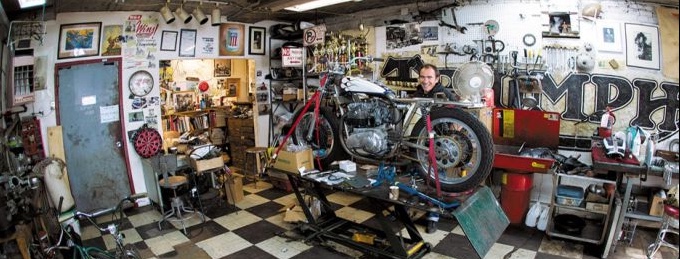
I turned back to him. Lanzo’s eyes were watery and worried and he looked like the kid that probably used to play in front of his uncle’s motor shop. It gave me a bit more patience than I was expecting, but when he continued not to say anything I asked, “What?”
After a long moment of moving his mouth around like a dying fish he said, “Will they know?”
I shuffled the trench coat and umbrella from under one arm to the other and tried to figure out what he meant. “The Idiots?”
Lanzo corrected me. “Mes hommes.”
Worried that Lanzo was losing his nerve, I found that I had genuine sympathy for his conflict of fraternal loyalty. “You heard it out of their own mouths – they were planning on betraying you and Nika from the beginning. What difference does it make if they know you got the better of them first?”
Lanzo’s eyes drifted down to the sidewalk, his shovel of a nose nearly hiding his uncertainty and shame. I realized that Lanzo knew by absconding with Nika he wouldn’t just be leaving his friends with a bag of trouble, but would be escaping with their best ticket out of poverty. Once you got out beyond the periphérique there weren’t a lot of economic opportunities. Particularly if you had an abundance of skin pigmentation.
“Lanzo,” saying his name directly to him for the first time got his attention. “Your friends are using people as pawns. You. Nika. Me.” I was about to say, “You’re better off without them,” but realized those words had never helped any young person. Instead I said, “She’ll only be safe when you get her away from them.” In some small consideration to his feelings, I added, “I won’t tell them what happens to you and her. That’s all I can promise.”
Lanzo nodded, taking whatever consolation he could from that. I switched the conversation to something more practical. “Tomorrow night? Bring the pistol.”
For the first time, Lanzo grinned at me, closing an eye against the brilliance of the afternoon sun. “Ça ne marche pas.” I blinked as I translated the words, genuinely impressed he had successfully bluffed me with a broken revolver. I let out a short, single, “Huh.”
When the humor of that moment passed, I saw an opportunity and executed on it. “Do you want me to fix it?”
Lanzo blinked, an entirely new possibility entering his world. “Oui.”
“Where is it?”
“My uncle’s.”
I tried to keep my groan from audibly escaping. That was back towards Grenoble, which meant making our way across town again. However, I had wanted to lay my hands on a firearm since the henhouse. “OK. Let’s go.”
Thank God for the tram system. Even as the edges of town had begun to decay with the Financial Crisis and all that had happened after it, the tram system still nearly extended out to the river, making it easy to get near the moto shop. I didn’t let Lanzo drag ass, though, moving at a double-time pace.
Once there, not wanting to deal with Moreau, I sent Lanzo into the shop alone. I waited outside the alley where he had bluffed shooting me.
I waited for a long time, watching what few tourists had made their way out into the town’s outer banks eddy around, either lost or wandering. I gave it more time than I should have, figuring that Lanzo had run into his uncle and the two were having a heart-to-heart. Eventually, though, I lost my patience and made my way to the shop’s back entrance.
The screen door that I had banged through in my chase of Lanzo was pulled askew on its hinges. I tried to remember if I did that on my last visit. I couldn’t recall, so I moved cautiously. I laid the trench coat out of the way but kept the umbrella in hand, using it to push open the shop door.
There was nothing inside but a hot stillness, the air baking from the day’s sun. I waited just inside, hearing nothing, until the faint sound of child crying came back me. Confused, I slowly into the shop.
In the garage, kneeling next to a broken down pile of scooters, Lanzo faced the motley heap of metal and shook with sobs. The scooters themselves were spread out like the rings of an impact crater, Moreau’s body in the middle. His head was darkened with blood and bruises. The rest of the shop was in disarray; tools, electric cords, and scrap metal thrown about the place.
The only sound in the shop was coming from Lanzo, hiccups of uncontrolled weeping pulled out of him by the sight of his broken uncle. Uncertain what to do, I quickly made my way through the garage to confirm we were alone. Whoever had killed Moreau was, for better or worse, not in the shop anymore.
I approached Lanzo from behind, examining the room as I did. Moreau wasn’t restrained, a lug wrench not far from his grasp. Someone had shown up at his shop looking for something and Moreau hadn’t taken kindly to the avenue of questioning. He hadn’t gone down without a fight, though – I suspected not all the blood on the floor was his. From what little I had known about the man, that wasn’t a surprise.
Certain the questions Moreau’s attackers asked had involved one of us I bent down to take Lanzo by the elbow. “We have to go.”
Lanzo threw off my hand and continued to cry, unable to process his loss or that we might still be in danger. In an attempt to reach him I whispered, “Whoever did this still might be here.” Or, as unlikely as it might be in this neighborhood, someone might have seen something suspicious and called the police. Either way, we didn’t want to be there.
Lanzo latched onto those words, though, and his eyes flew open, red rage. “Why?”
What little I knew about Moreau ran through my mind, thinking about the whispers from him and Sartre that had hinted at a relationship, remembering Whip and Brick following me to the shop. Both of these provided a number of reasons someone might have killed Moreau, none of them his fault. “I don’t know. But we can’t find out if the police show.”
Eyes laced with bloodshot madness, Lanzo jumped up from the corpse and ran upstairs. Uncertain of what he was capable of in this state I followed, slow enough that by the time I got to the bottom of the stairs Lanzo was headed back down. He breathed heavily, showing me the heavy black revolver.
I reached out to take it but he snatched it away, the violence in his eyes making me glad the pistol wasn’t functional. I kept my own anger from rising in response to his and only said, “What are you going to do with it?”
The question landed on Lanzo, deflating him till he lowered himself to the stairs. I laid a hand on his shoulder in an imitation of comfort. With the other hand, I slipped the revolver away from him. I let a few moments pass, then reminded him that we had to go. Guiding Lanzo by the shoulder, we moved towards the exit.
On the way out I picked up the trench coat again and wrapped the revolver in it, juggling this while moving Lanzo along. I pushed him the opposite way we had come, not wanting anyone who might be watching to see us twice.
I hustled Lanzo down the back alleys for as long as I could, staying off the streets. I was getting a little too accustom to fleeing murder scenes.
Select the play button above for an audio reading.
The Persuader is a moniker that has been given to any number of weapons throughout history. And the billionaire known as Peter Conroy is determined to collect them all.
The appellation of said weapons began as a joke, as many serious things do, a long time ago. In Imperial China, a diplomat at the Emperor’s court witnessed the sovereign’s weaponsmith demonstrate a portable iron tube packed with black powder blast a mock formation of enemy soldiers, reducing them to little more than chunks of wood. The diplomat suggested The Persuader as a moniker, saying it would persuade a neighboring kingdom to see the error of its ways. The smith had wanted to call his new invention The Dragon’s Breath. However, the Emperor had laughed so heartily at the diplomat’s proposal that no one dared question the decision.
The earliest firearms were unreliable so, naturally, men still relied upon sword and spear. However, by the 15th century every soldier had come to fear the sound of cannon and gunfire and to be relieved by the one element that consistently spoiled them – rain. However, a starving artist, but brilliant engineer, was persuaded by the amber-eyed consigliere of the Duke of Milan to put his genius to work in developing a new firing mechanism that kept powder dry in the worst of conditions. Thus, when enemies of Milan attacked in in the rain, they were persuaded that this was no longer a winning strategy when met with volleys of gunfire. The consigliere pointed this out and his Duke found it as humorous as the old Emperor did. He christened the new firearm with the same moniker.
The name, The Persuader, began to take on a legend of its own, a name barked in fear and relief by soldiers when they saw the other side or their own mount such a weapon. The single explosions that announced its firing could make brave men tremble and weak men cry. Of course, it still only had the one argument, a simple if loud ‘bang,’ which took quite a long time to repeat.
Times of great violence, though, often lead to great innovation, and the conflicts between European settlers and the native peoples of North America were no exception. A group of scalp-hunters, about to setoff into Comanche territory, were intrigued by a local politician who drew their attention to a posting for a new firearm. This “revolver,” he said, would persuade any enemy to let off. Even the brutish bounty hunters knew the Comanche were clever and dangerous folk, having honed the tactics of firing many arrows while white men struggled to reload their single-shot rifles. Each man purchased this new Persuader and carried it for their expedition. Not far afield, the Comanche descended upon the slayers, hid amongst rocks and made noise, frightening the jittery killers into firing off their shot so they could descend and make short work of them. The Comanche were persuaded indeed when they found these fools had not one shot each, but many, as if the Devil’s right hand had multiplied their numbers.
At the advent of the first world war a man named John Moses attended an exposition when a visiting delegate said to him, “John, if you want to make a lot of money, you need to invent something that will enable these Europeans to cut each other’s throat with greater facility.” Seeing the money that every country was pouring into their armies, Moses followed the advice of this handsome stranger and created a man-portable machine gun. His weapons, all dubbed The Persuader in one form or another, made their way across five continents and two world wars, doing the talking for delegates and diplomats over decades and millions of corpses.
At the advent of each new weapon, whether with Mr. Moses or any of his successors, there was always a charming diplomat, delegate, or politician to suggest the name The Persuader. It was only during a European summit between wars when such a man spoke that he became the victim of violence himself.
When the man extolled war as a virtue, that it led to the best of technological advances, culled the weak from the population, brought forth the lion in leaders, Winston Churchill interrupted with, “To jaw, jaw is better than to war-war,” and demonstrated this by striking the diplomat. While many who read about this in the next day’s papers celebrated Churchill’s actions, the bulldog was voted out of office after his war ended.
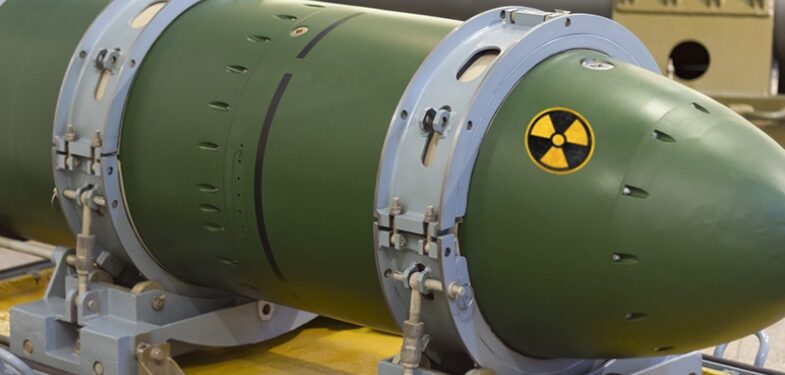
Perhaps due his rude treatment by England, the same diplomat made his way to the Americas. There he befriended a young genius and assured him that only the overwhelming force of a new weapon would persuade the militaristic Japanese to surrender. This seed of an idea blossomed into an explosion so bright, destructive and dirty that the Japanese refused to believe their enemy could do it twice. So the Fat Man fell on Nagasaki and the Japanese surrendered, cowed by a new and terrible weapon.
There were three such weapons, not two as the history books would say, and the last (inert) version ended in the collection of Peter Conroy. The billionaire used it as an example of crude and dangerous weapons, tirelessly lobbying the United Nations on the virtues of the new “smart” bombs, things not so crass as those that dropped on Japan, but high-precision bombs capable of hitting within meters of a single target. Of course, the explosives were only one component of these new weapons, each one bristling with sensors that plug into the airplane that drops them, or coordinate with the soldier that designates the target, or relay between satellites flying high over head. From the ground to the sky, this new system cocoons the world in a blanket of information that helps nations kill each other with a facility that Mr. Moses could never have imagined.
The Persuader is a moniker that has been given to any number of weapons throughout history. And the billionaire Peter Conroy is determined to have them all. When asked why a diplomat of his stature would acquire weapons, he only smiles in the mysterious way that he’s become famous for and says he has a personal interest. Who knows what will happen when he completes his collection?
To start at the beginning go here.To hear an audio reading of the chapter, hit the play button above.
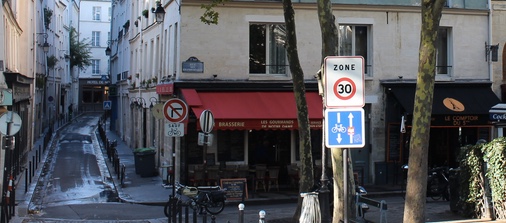
I took Lanzo to Simon’s cafe. Any cafe would do, I suppose, but I suspected that Simon might know how to write a love letter.
It didn’t appear like he’d be interested in the job, though. While the Corsican hadn’t been with the voyous when they had threatened us, Simon stared at Lanzo in the same guarded way. Fortunately, there was still enough of a lunch crowd that I didn’t have to make immediate introductions.
I steered Lanzo through the few occupied tables, happy to see no one paid us any mind. The diners finishing meals were so wrapped in their own plans that they wouldn’t suspect we were up to nefarious ones. I was grateful to find my usual table empty. I sat with back against the wall. Lanzo glanced around, then snorted before taking a seat, the entire scene too bourgeois for him, I suppose. My friendship with Simon made it hard to ignore this, but I did.
I was pleasantly surprised, though, that when Simon came over Lanzo asked permission to smoke. He didn’t say anything to the older Frenchman, only took out his cigarettes and held them up with a monosyllabic query. Ambivalent at first, Simon took stock of his remaining lunch crowd and then nodded. Addicts are always happy to have company. Lanzo actually smiled in return, grateful to have landed on a friendly shore.
“Unusual to see you twice in one day,” Simon noted to me.
“I love this place. I’m showing it to all my friends.” I waved at Lanzo as he lit up.
It was Simon’s turn to snort. He said no more, though, and I ordered two coffees. I asked, “Do you have a pen and paper?” I waved a finger between me and Lanzo, “We need to write a letter.”
Knowing that younger generations had abandoned written correspondence, Simon cocked his head at me as if he misunderstood. Knowing it would make him happy to hear it, I clarified with, “A love letter.”
Simon smiled like the sun had come out. Maybe he thought I was constructing an ode to Sophie and had pulled some starving poet in from the street to help me. Within moments he was back with two cups of coffee, a pen, and a pad of stationery. He set these down, then moved off into the cafe to tend to his remaining customers so this Cyrano and I could work.
Lanzo sipped his coffee and then picked up the pen, skewing the pad for a left-handed writer. To encourage him, I said, “Keep it simple.”
Lanzo gave a short, bitter chuckle, eliciting the same tacit sympathy that I had felt when we met at the casino. Yes, he was a punk, but he was also about the same age I had been when I had fallen in love with Cheryl. What had started out as something so promising had laid down a path that was so full of pain and joy that the two were hardly distinguishable. A part of me, then, wanted to warn Lanzo, to wave him away from his current course, to tell him to flee from the heartbreak that would surely be his if he pursued the girl.
Instead I reminded him of the critical information that the letter needed to contain – the warehouse, tomorrow night. He only dismissed this with a wave of his hand.
I watched him smoke nervously, drinking his coffee, trying to figure out what to write to a woman I suspect he was beginning to realize he didn’t know very well. There were perfunctory pen scratches that ended in him pulling pages off the pad and tossing them aside. I tried to think of something that I might say to Sophie in a similar situation, decided that it hardly applied.
As his lunch crowd dwindled, Simon made circles between us and them. He kept an eye on Lanzo as the younger man became increasingly frustrated. Eventually, the old waiter began to pick up bits of discarded paper as he swung by, quietly unfolding the crumbled balls. Because it was more entertaining than watching Lanzo, I observed Simon’s expression as he read these. In general, his raised eyebrows and distended cheeks indicated he agreed with Lanzo’s appraisement, although once or twice he pursed his lips and cupped his chin, nodding thoughtfully.
When the cafe emptied, Simon sat down with us and lit one of his cigarillos, staring at Lanzo. The younger man eventually noticed this and came up from the depths of the notepad to ask Simon, “What?”
Simon leaned forward and, with a finger, pinned the paper in front of Lanzo to the table. “If you want something,” he said, looking the youngster directly in the eye, “you must ask for it.”
Lanzo returned Simon’s stare, his eyes shaded with hostility. However, Simon held the younger man’s gaze, a growing intensity between them. Time passed until an understanding flickered there. Lanzo’s enmity remitted and he nodded. Simon released the paper. He returned to his duties and Lanzo to his scribbling.
Lanzo scratched out something, ripped off that sheet of paper, and tossed it to the ground to join its mutilated cousins. He then wrote out a few lines with a quickness like they’d burn him if he didn’t get them out. These completed, he slapped down the pen and pushed it away. He picked up his cigarette, sucking on it as if it contained the oxygen he needed after too long underwater.
I slid the pad over to me. The message was in English, their shared language I supposed. It read:
“I am leaving. In our time together, I sensed you are unhappy here in much the same way that I am unhappy. Come with me and perhaps we can find happiness together.”
I read over it again. It was brief, direct, and had the compelling element of what I suspected was the truth.
Not knowing what else to say, I decided on, “Very good.” If Lanzo took any pleasure from the compliment, it didn’t show.
I instructed him to add the time and meeting place. He did so, scattering cigarette ash over the paper like he was drying the ink with sand. The addition complete, I gave a final inspection, nodded when satisfied. The paper was small and light enough that I could fold it up into a square that would fit into the palm of my hand.
I got up and took out money to pay. Simon stopped me with a wave of his dishcloth towards the bar. “No need. I will put it on your tab.” Remembering the wad of Mitnick’s cash I had left with him, I nodded. At least if something happened to me, Simon would have reimbursement for his trouble.
I walked Lanzo out of the cafe. On the street, I realized I wasn’t sure where I was heading, but decided it was better if Lanzo and I weren’t together. I escorted him away from Simon’s then said, “If I don’t see you before, be at the Distributeur International warehouse tomorrow after dark.” Being there that early almost guaranteed we’d be waiting a good long time for Nika, but that was better than missing her.
I pivoted to a direction that would take me to the nearest tram station when Lanzo said, “Wait.”
It was a tiny black kitten that found the boy when he didn’t want to be found. It may have been malnourished, but it was dextrous and keen of eye, so leapt before the boy as he sat.
The most natural action of the world for a kitten is, of course, to hop into the nearest lap. The angry red in the boy’s eyes, though, paused it, and he spoke his first petulant words to the kitten. “What do you want?”
“I see you,” the kitten said. “I see your heart. And I see it’s cat-shaped hole.”
The boy stared with a new fascination at the kitten, but said, “Go away.”
Instead of obeying the kitten jumped into his lap, causing the boy to pull his hands away as if the tiny creature were made of hot iron. But he didn’t throw the kitten from his lap.
The kitten settled, following its tail in circles until it nestled into the boy’s lap, purring loudly and gently. Sensing the boy settle under him, the kitten said, “She must have been very special.”
With a pretense of anger, the boy asked, “Who?”
“The one who came before me. The one who left the hole in you.”
The air calmed around the two and the kitten felt the boy gently place a hand on its back. “She was.”
“Tell me how she was special.”
There was a long hesitation before the boy responded. “She was beautiful and sweet as she was stubborn and brave. She loved everyone but especially me. But she didn’t love me enough to stay inside and got out one night and a car hit her.” The kitten, eyes closed, could hear the anger and tears in the boy’s voice. “Now she’s dead.”
“That’s so sad. Was she young?”
“No. She was ten.”
“Oh!” the kitten sleepily exclaimed. “That’s ancient. Was she a wizard?”
A small, involuntary laugh escaped the boy as he reflexively began to pet the kitten. “No. That’s not very old for a cat. You don’t need to have magic for that much life.”
“Then I’ll be sure to live that long.”
The gentle hand petting the kitten stopped. “But she broke my heart.”
“All good things do.”
“She could have stayed inside.”
“You can’t ask something to change its nature just because it loves you.” The kitten snuggled into the boy, urging him to continue his petting. “Besides, I’m different.”
“How?”
“I’m a boy,” said the kitten, “I won’t go outside. Everyone knows all boys are cowards.”
The kitten was jostled in his lap as the boy chuckled. After a moment, he picked up the kitten in his hands to take him home. “Maybe so.”