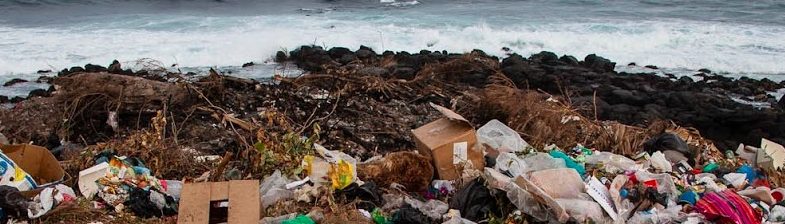
Jacob probably wouldn’t have slapped the child if they hadn’t been standing at the edge of the world. But they were – like the billion or so humans left, they had watched as the cascade of events had finally pushed the ecosystem over the edge, and the food distribution network and all the other lovely benefits of globalization followed it. The politicians had pontificated the entire time, wrapping everyone in the same spell of helplessness they had for decades, right up until their staffers ate them. Jacob couldn’t remember the last time he had seen a stray dog.
He hadn’t bothered to learn the child’s name or that of the mother, the woman following behind, a sad shadow as they combed through the plastic debris along the shore, searching for anything that might be useful. And the child would. not. stop. crying. Didn’t he understand everyone was hungry now? Everyone was cold? Bitching about it wouldn’t change anything. The human race had rushed towards this inevitable moment seemingly with nothing that could change it.
His hand had left his side and connected to the child’s cheek before he realized what he had done, the cold stinging in his fingertips announcing the violence to his brain. He turned to the boy, anger burning his eyes as if it were the child’s fault. It jolted the mother out of the stupor she had been walking in, though, and she moved faster than anything he had seen, wrapping her arms around her babe in a manner that demonstrated how he had survived this long.
The fierceness in her eyes conversely cooled his own, mellowing it with the shameful recognition of what he had done. He realized, then, they weren’t standing at the edge of the world. They had arrived at the end.
To start at the beginning go here.To hear an audio reading of the chapter, hit the play button below.
First, though, I had to meet Atwell for breakfast. After my shift I headed away from the ocean and the Promenade, deeper into the city. Old Town was mostly empty at that hour, a few late night revelers still walking the narrow, cobblestoned streets that criss-crossed amongst the high and narrow old buildings. Occasionally those streets collided to form a nexus, a small public space, this one around a pin-and-ball fountain of white marble, emblazoned at its base with a long forgotten coat-of-arms, its water no longer running. The small square was lined with mostly unopened shops and stray cats. Off one of these squares through a tall and ornate gate and under an ogive arch was a bistro that, as far as I could tell, never closed.
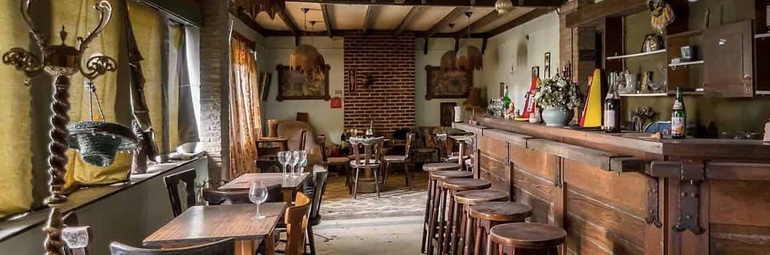
The inside was an odd combination of the city’s grand architecture and what resembled a public school cafeteria. Fluted columns rose to the ceiling at the corners, with the walls painted a subdued shade that matched the pastel exterior. The floor was a cheap linoleum that my shoes squeaked on and the furniture was molded plastic and metal piping. You could sit and be waited on or you could go over the counter and order any of the pastels or dishes that sat underneath the sneeze-guard. Fake plants were placed at seemingly random intervals, trying to give the impression that this was some kind of garden in the city.
The building itself, like much of Old Town, had once been a residence or some kind of single purpose unit, but had since been cordoned off into sections for renters. Sometimes this gave the new subdivisions odd shapes and the bistro was no exception. Through the gate it was barely wide enough to hold a table on either side with room to walk between them, then it T’d at the back, but at such an odd angle the wings were offset from one another. Which made the rear of the restaurant a good place to meet as you couldn’t be seen from the street or the restaurant’s other branches.
I strolled in passed the wait staff, only two at such an early hour. Both of them just nodded, clearly tired from being out all night or tending to the drunk rush that accompanied the night life winding down. I grabbed a cup of coffee from the counter, mostly to guarantee the waiter wouldn’t bother me, then headed to the back.
Atwell was there, already sat, playing with a lighter and pack of cigarettes. I had never seen him smoke. He smiled as he always did, but the circles under his eyes made him look like a lost brother to the dark-haired prostitute, wary and a bit frazzled.
I stood next to the table, blocking his view of the entrance and gave him a poke. “I don’t understand why we bother with a dead drop if we’re just going to meet in public like this.” I spoke quickly and quietly, minimizing the chances the wait staff would overhear or be able to understand.
There was a tightening around Atwell’s eyes and they darted as if they were trying to find a way around me. That passed quickly, though, and he waved my objection away, pulling the blanket of his false geniality over whatever anxiety he had been sharing his bed with. “Relax.” As usual when I didn’t immediately respond to his command he hardened with an imperiousness. “Sit down.”
I sat. “How have you been, Atwell? You look a little tired.”
“No rest for the wicked. Judging by your appearance, you know that.”
My erratic schedule had been keeping me from a good night’s sleep, but unlike Atwell I didn’t think of his comment as some kind of personal attack. People doing dangerous work sometimes couldn’t sleep at all. “True. I’ve been busy.”
“With
what?” As usual, his attempts at nonchalance fell away quickly. I
had been giving some thought on how much to share with Atwell during
the walk here, so I did.
“I
got in touch with Mitnick. Or rather he got in touch with me. He
asked me to keep an eye out in the casino for him.”
“Why?”
The flatness of his question suggested that he had known or
suspected this.
“He wants to know if anything changes – new faces, old faces that disappear, anything out of the ordinary. I suspect that he just wants an excuse to have a casino employee on his payroll.”
“So you may not be the only one.”
I thought about Jasper but only replied with, “Yeah.”
Atwell leaned back in his chair, pleasantly surprised. “I’m shocked he would take Sartre’s beating so lightly.”
“He’s not as established here as he wants to be. He wants the casino but he’s not in a hurry, so he doesn’t want any trouble right now.” I decided to slip something in. “Plus, one of his guys has gone missing.”
Atwell narrowed his eyes and leaned forward. “Who?”
I took out one of the Belarusian’s picture and slid it across to Atwell. “Sergei Molotov.” I thought about it and mixed things up a bit. “I’ve been asked to find him.”
“By Mitnick?”
“By Sartre.” It was hard not to enjoy the reaction of Atwell learning something he hadn’t anticipated. It happened frequently enough, but the discomfort it gave him was always fun for me.
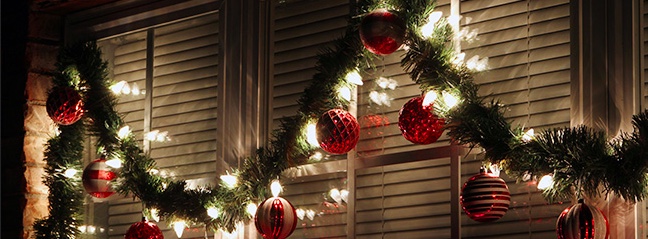
At the beginning of every holiday season, as we begin the dark slide into winter, we gather those we love around us and tell each other for which we are grateful. We then cover our homes in lights, making them welcoming beacons for those who must travel during this cold, benighted season.
For the following weeks, we huddle around our fires and pray that this time, like every time before it, the days will cease becoming shorter and the nights getting longer, that this natural course of things will again reverse itself. At its apex, though, that long night lingers, for three long days, and if you go out on the cold evenings it’s not hard to imagine our ancestors huddled in the freezing temperatures and waiting for the end.
And like a child crowning from its mother, three hard days later the sun stays in the sky just a little bit longer than it did before. Whether this is called Christmas, or Dongzhi, or Yuletide, we all recognize it as the mercy of the universe in allowing us to live a little longer, to grow and to celebrate in the face of the worst conditions. No wonder a short time later we celebrate the New Year, that we’ve turned a corner and can celebrate a fresh beginning, a time to reinvent ourselves and set new goals in the face of lengthening rays of the sun. We are, again, born in hope.
Merry Christmas to you and yours, and a Happy New Year.
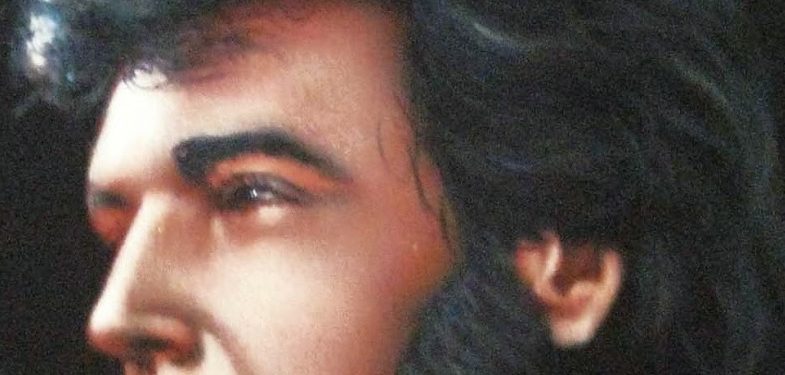
Odd, but it’s true, it was the Velvet Elvis that set me at ease. When I first met Mrs. Beeks, I found her unsettling, all jangling gold jewelry and a cloud of perfume, her too white teeth set against yellowing skin. But I needed a place to board and, with the local foliage changing, I was running out of options.
Then I saw the Velvet Elvis hanging in the hallway – it reminded me of my mother and her harmless fascination with the King. So I signed the registry in Mrs. Beeks’ vestibule and was barely put off when she raucously laughed.
Even with the early Autumn nightfalls to help explain it, though, sometimes the house feels like someone has draped the windows in heavy velvet, plunging the house into an interminable dark. It’s disorienting and I’m unable to locate the exit or my room, only the eyes of the King following me as I pass under the portrait time and time again.
With Elvis’ yellow spangles the only light to see, I’m uncertain how long I’ve been at Mrs. Beeks’ or why I arrived. If I didn’t know better, I’d say the portrait was changing, or changing the house, but I don’t dare look at it. Every time I pass under it now, I hear the jangling of Mrs. Beeks’ gold jewelry and – I swear to you – it sounds like it’s getting closer.
To start at the beginning go here.To hear an audio reading of the chapter, hit the play button below.
“Breakfast, 4:00.”
I shrugged at the cryptic-sounding note. I could get off a bit early and be at the bistro by then. I crumpled up the note, sticking it in my pocket as I left the booth.
The casino was busy for the relative early hour, the twilight from recent sunset still burnishing the terracotta roofs of the nearby buildings. As I walked around to the employee entrance I noted a string of luxury automobiles lining up out of the promenade’s motorway to the casino’s porte-cochère. I stood at a corner watching the wealthy and the well-dressed exit their vehicles and head inside. It was the usual parade of unctuous middle-aged men and their younger escorts, the occasional grand old couple out for a night of proving to themselves they weren’t old, and young, carelessly stylish people playing with their parents money. Most of the slightly less affluent arrived looking for their excitement on foot. I didn’t recognize anyone important so headed inside before my lurking became conspicuous.
Changing out of my coat and into the casino blazer I saw Thibalt in the locker room. The bruise around the left side of his mouth made me realize how little time had actually passed since Sarti’s stunt in the main room. I asked him how he was.
“I am fine,” came the unsurprising reply. He motioned a circle that encompassing his entire face. “I think the punch might have made improvements.” He smiled showing the chipped tooth he hadn’t had the time or money yet to repair.
I chuckled, trying to show some appreciation for his stoicism. He asked me which sector I was working and said that I didn’t know, using that as an excuse to head to Central. Picking up my earbud and signing in I noticed Jasper wasn’t there. I stepped to the back of the room and picked up a house phone, lifting the receiver from the cradle. I dialed the number I had gotten off the mobile.
A heavily accented and cautious, “Bonjour,” answered. In reply I identified myself. “You aren’t calling from the phone.” It wasn’t Mitnick. I had heard Whip speak very little, but I was fairly certain it wasn’t him either. Brick maybe. Mitnick probably had a stable of heavies that I hadn’t met yet.
“I forgot it at home,” I lied. There was a muffled consultation on the other end of the line. “There is a party tomorrow night.” The voice provided an address, someplace not far from the villa I had met Mitnick at, maybe even the same one. “You are welcome,” was the conclusion and the line went dead. The last words didn’t sound like an invitation, but some mistranslation of an order.
I spent some time in my sector, staring blankly into space, the buzz of the casino security in one ear, the constant noise of the slot machines in the other. This was only broken by the occasional whoop of victory or groans of frustration. Most of the gamblers in this part of the casino didn’t interact with each other, but stared dead-eyed at whichever machine they thought would pay out, only moving to refill their stock of coins. I could feel myself mirroring that, but me mentally staring at the intractable problem of the dead Russian. If Sarti hadn’t had him killed, that left the entire town as a suspect. But who else would want to kill him? He had been at the Factory before he had gone missing and had very likely gone missing from the vicinity. And the Factory was a routine hangout for the Corsican and his crew, who were also somehow connected to Mitnick. The coincidences piled up high enough that it struck me as very unlikely that the killer was a new player.
An idea came to me then that was outrageous enough that I heard Cheryl’s voice, this time asking me if the implementing this plan didn’t seem like a good idea only in the boredom of my working shift, safely behind the thick walls and security layers of the casino. It reminded me that I wanted to protect Sophie.
“We’re only in this ‘cause Sophie wanted to be,” I countered out loud, surprising a couple of pensioner tourists walking by, old enough that they looked at each other to confirm I had spoken, and it wasn’t some aural hallucination of elder years. Watching them pair scuttle away with an awkward burst of speed made me think Sophie was probably as restless as me, the women she brought home a product of that and her compassion.
I decided it was time to stop trying to hide Sophie away and let her out to play.